EV Charging Permit Requirements in Oregon
Oregon has one structural advantage over most states: a statewide EVSE permit and inspection protocol that applies uniformly across all jurisdictions, including smaller counties that haven't developed their own process. Portland is the exception, running its own permitting authority on top of the state baseline.

Do you need a permit to install an EV charger in Oregon?
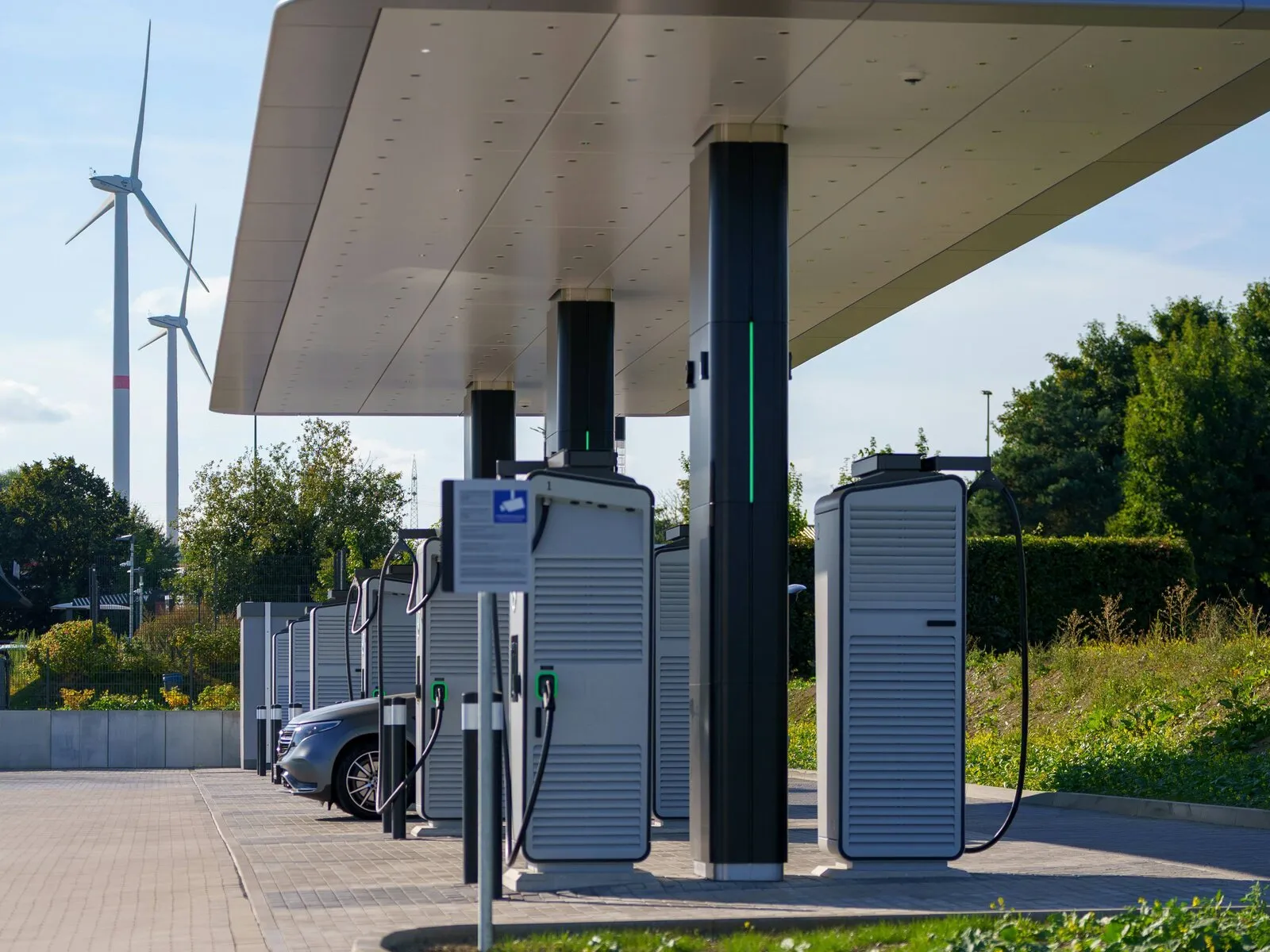
Yes. Persons installing an electric vehicle charging system must obtain a permit from the inspecting jurisdiction for the EVSE. This applies statewide under OAR 918-311-0065, Oregon’s dedicated EV charging permit and inspection rule. For commercial installations, fleet depots, DCFC corridors, workplace charging, plan review is required and the permit must be pulled by a licensed electrical contractor.
One thing Oregon gets right that most states don’t: this Electric Vehicle Supply Equipment (EVSE) permit covers the installation of all electrical components dedicated to the operation of an electric vehicle charging system. No other state building code permit is required. That single-permit structure reduces the chance of a project getting caught between two separate permit tracks, a gap that costs weeks in states like California, where electrical and building permits run independently.
How EV Charger Permitting Works in Oregon
Oregon’s permit authority is split between the state Building Codes Division (BCD) and local jurisdictions. For most of the state, the BCD’s statewide EVSE protocol governs directly. Portland is the main exception: it administers its own commercial permitting through Portland Permitting & Development (formerly the Bureau of Development Services).
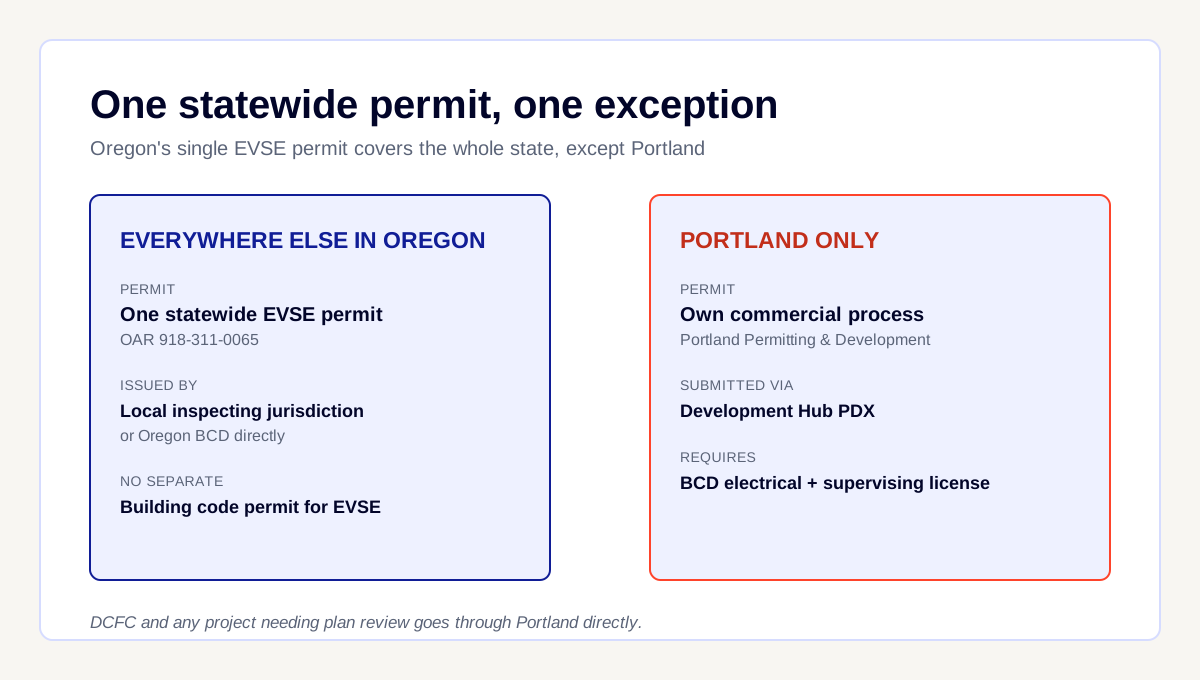
The statewide EVSE permit is issued by the local inspecting jurisdiction under OAR 918-311-0065. Building officials and inspectors must permit and allow installation of an electric vehicle charging system that has a Building Codes Division special deputy certification label without further testing or certification. Inspection scope is limited to specific Oregon Electrical Specialty Code provisions: grounding, bonding, wiring methods, disconnecting means, and circuit sizing. Inspectors cannot require additional scope beyond what the rule specifies.
The minor label provision is worth knowing for smaller projects. A licensed electrical contractor employing a general supervising electrician is authorized to use a minor installation label to install a new branch circuit limited to 60 amps for the purpose of installing an EVSE unit. This streamlined pathway is available for qualifying installations and avoids full plan review. For commercial DCFC installations, it doesn’t apply; those require full engineered drawings.
Portland is its own track. Any electrical work in commercial buildings needs a permit, and only a licensed contractor can buy a commercial electrical permit. Contractors must have a license to work in Oregon issued by the Oregon Construction Contractors Board (CCB). To do most electrical work, contractors must also have their BCD electrical license and a BCD supervising electrical license. Portland commercial permits are submitted through Development Hub PDX. DCFC installations and any project requiring plan review must go through Portland Permitting & Development directly.
EV-ready requirements apply to new construction in select jurisdictions. Under OAR 918-020-0380, the cities of Portland, Eugene, Salem, and Gresham require that 5% of open parking spaces in new parking facilities with 50 or more open parking spaces must be available for future installation of electric vehicle charging stations. Any municipality can opt into this program through a local amendment process. Verify current participation before design on new construction projects.
Oregon also has a load calculation requirement specific to larger EV projects. Per practitioner documentation, Oregon requires load calculations to reference local utility interconnection specs on larger commercial EV projects, a requirement that sits on top of the standard NEC 625.41 continuous load calculation. Confirm with your jurisdiction and serving utility before finalizing electrical design.
Active Jurisdictions in Oregon
Oregon has 36 counties and 241 incorporated cities. The state BCD protocol covers most of them. These are the jurisdictions with the most commercial EV charging permit activity:
| Jurisdiction | Authority | Notes |
|---|---|---|
| Portland | Portland Permitting & Development | Separate from the statewide BCD process. Commercial electrical permits submitted through Development Hub PDX. BCD electrical license and BCD supervising electrical license required. |
| Eugene | Eugene Building & Permit Services | Follows state BCD protocol. EWEB (Eugene Water & Electric Board) serves this area, a municipal utility with a different interconnection process than PGE or Pacific Power. |
| Salem | Salem Community Development | Follows state BCD protocol. Mixed utility territory; Salem Electric serves some residential areas, PacifiCorp/Pacific Power and PGE serve others. Confirm utility before design. |
| Bend | Bend Building Safety | Follows state BCD protocol. Pacific Power territory. Fast-growing commercial market with an active EV charging development pipeline. |
| Gresham | Gresham Development Services | One of the four named jurisdictions under the EV-ready parking rule (OAR 918-020-0380). PGE territory. |
| Smaller jurisdictions (statewide) | Oregon BCD | For cities and counties without their own building department, the Oregon BCD administers permits directly. Permits are issued under the statewide EVSE protocol. |
Don’t see your jurisdiction? Contact us at hello@rhonda.build if you need requirements for a specific Oregon jurisdiction.
Relevant Code References
OAR 918-311-0065, Electric Vehicle Charging Systems Statewide Permit and Inspection Protocol
The foundational rule for EV charging permits in Oregon. Establishes the single-permit structure, defines inspection scope, and sets the minor label pathway for qualifying smaller installations. Applies statewide, notwithstanding contrary provisions in the Oregon Electrical Specialty Code.
Oregon Electrical Specialty Code (OESC)
Oregon’s adopted electrical code, based on the NEC with Oregon-specific amendments. NEC Article 625 governs EVSE installation: circuit sizing, disconnecting means, continuous load calculations, and grounding requirements. Oregon adopts updated code editions on a periodic cycle; confirm the currently adopted edition with your jurisdiction before design.
ORS 455.417, Electric Vehicle Ready Buildings
Requires provision of electrical service capacity for EV charging in newly constructed buildings. The specific ratios and thresholds are set by administrative rule and vary by building type and occupancy. This is the statutory basis for the EV-ready parking requirements in Portland, Eugene, Salem, and Gresham.
OAR 918-020-0380, Electric Vehicle Ready Parking
Implements ORS 455.417 for new parking facilities with 50 or more spaces in participating jurisdictions. Requires 5% of open parking spaces to be conduit-ready for future EVSE installation. Portland, Eugene, Salem, and Gresham are named participating jurisdictions; other municipalities may opt in.
OAR 918-309-0000, Electrical Permits
Governs who may purchase electrical permits in Oregon. The signature of a signing supervising electrician or limited supervising electrician must be required on each permit. Applications without a qualified supervising electrician on the license are rejected.
Common Permit Corrections and Rejections for EV Charging Projects in Oregon
Oregon’s statewide protocol reduces some of the jurisdiction-to-jurisdiction inconsistency that makes permitting unpredictable in other states. But the corrections that delay projects are consistent across the state, and Portland adds its own layer on top.
Electrical
Missing or incorrect load calculations
The branch circuit must be sized at 125% of the EVSE nameplate amperage per NEC 625.41. Oregon also requires load calculations on larger commercial projects to reference local utility interconnection specs, a step teams unfamiliar with Oregon’s requirements regularly miss. Projects that submit load calculations without the utility interconnection reference on qualifying projects receive a correction.
Supervising electrician not on the permit
Providing false or incorrect information, or a false or incorrect signature, to obtain a permit can trigger compliance action by the board. More commonly, applications are simply missing the required BCD supervising electrician designation entirely. This is a rejection at intake, not a plan review correction.
Minor label used outside qualifying scope
The minor label pathway is available for branch circuits up to 60 amps on qualifying EVSE installations. Using it for DCFC installations or for circuits exceeding the amperage limit is a common error, particularly from contractors new to Oregon’s EV-specific rule structure. Full plan review is required for those installations.
Wiring method not specified
Plans that don’t specify conduit type, support intervals, and routing are flagged routinely. The OESC requires conduit in commercial installations; NM cable where conduit is required is among the most common inspection failures.
DCFC installations missing engineered drawings
Commercial DCFC installations require PE-stamped engineered drawings before most Oregon jurisdictions will open an application. Submitting without them doesn’t trigger a correction, it triggers rejection at intake.
Site / ADA
No accessible route shown
Plans must document a continuous accessible route from accessible parking spaces to the charger controls. This is the most frequent ADA correction on commercial EV submittals in Oregon, consistent with the national pattern.
Clear floor space not documented
The U.S. Access Board requires a minimum clear ground space of 30 inches by 48 inches at each accessible charger, not sloped more than 1:48, and unobstructed by curbs, wheel stops, or bollards. Plans that don’t document this receive a correction.
EV-ready parking ratios not addressed in new construction
In Portland, Eugene, Salem, and Gresham, plans for new parking facilities with 50 or more spaces that don’t address the 5% EV-ready requirement are flagged during plan review. This is easy to miss on projects where the EV charging scope is added late in design.
Signage omitted
Accessible EV stalls require specific marking and signage. Consistently missing from civil and site sheets on first submittal.
Utility Coordination
Starting utility coordination after permit approval
Oregon’s primary commercial utility is Portland General Electric (PGE), which serves the Portland metro area, Salem, and much of the Willamette Valley. Pacific Power serves eastern Oregon and parts of the coast. Eugene Water & Electric Board (EWEB) is a municipal utility serving Eugene. Each runs its own interconnection process on its own timeline, separate from the permit. Filing the interconnection application in parallel with the permit application is the biggest schedule compression available on commercial projects.
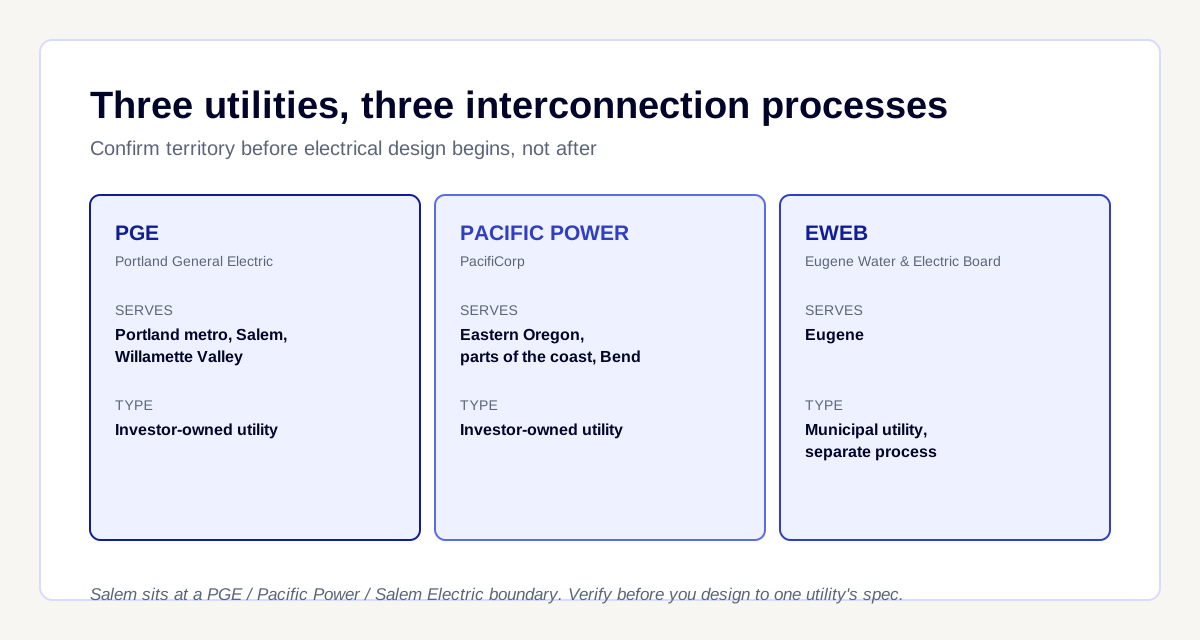
Not confirming utility territory before design
Salem and some surrounding communities sit at the boundary between PGE, Pacific Power, and Salem Electric service territories. Designing to PGE interconnection requirements for a site served by Pacific Power, or vice versa, creates rework. Confirm utility territory before electrical design begins.
DCFC load triggering extended engineering review
DCFC installations requiring service upgrades or new transformer capacity trigger extended utility engineering review at PGE and Pacific Power. The timeline depends on the size of the service upgrade and the utility’s current queue. This runs on the utility’s schedule, not the jurisdiction’s; treating it as a sequential post-permit step adds months to the project.
EWEB interconnection not treated separately
Eugene Water & Electric Board operates independently of PGE and Pacific Power, with its own interconnection process, program requirements, and timeline. Projects in Eugene that apply PGE or Pacific Power assumptions to their utility coordination will encounter gaps. Start EWEB coordination early and separately.
Permitting shouldn’t be the bottleneck on your next charging site.
Rhonda makes permitting for commercial solar, battery storage, and EV charging infrastructure predictable. Pre-check your plan set against Oregon’s state requirements and the specific local requirements for your jurisdiction before you submit. See what Rhonda catches before your jurisdiction does.
← Back to the State and City Requirement Guide Library
Footnotes
- OAR 918-311-0065, Electric Vehicle Charging Systems Statewide Permit and Inspection Protocol (Oregon Public Law)
- ORS 455.417, provision of electric service capacity for EV charging in newly constructed buildings (Oregon Legislature)
- OAR 918-020-0380, Electric Vehicle Ready Parking (Oregon Public Law)
- OAR 918-309-0000, Electrical Permits (Justia Oregon Administrative Rules)
- Oregon BCD EVSE rule update, effective January 1, 2026 (Oregon BCD rulemaking document)
- Portland commercial electrical permits (Portland.gov)
- Oregon CCB and BCD licensing (Oregon CCB)
- U.S. Access Board, EV Charging Station Accessibility (access-board.gov)
- OAR 660-012-0410, Electric Vehicle Charging in Transportation Planning (Justia Oregon Administrative Rules)
- Portland EV charging in the public right-of-way (Portland.gov)