The Secret Ingredient in Bagels Is Density
The secret ingredient to a great bagel is people, and outside of New York, there aren't enough of them.

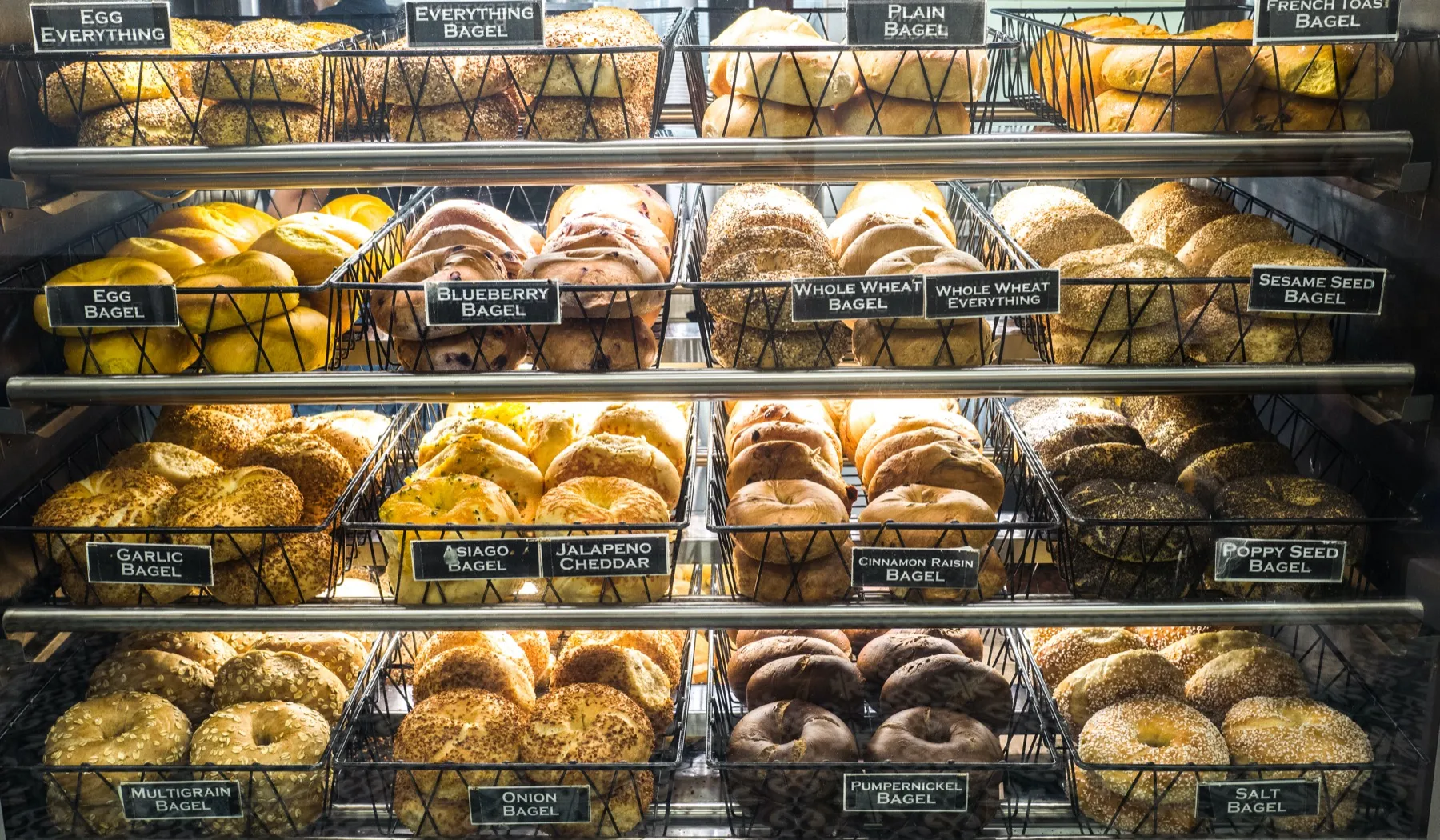
The one thing in the famously argumentative bagel industry that everyone can agree on is that New York City’s bagels are in a class by themselves. But why? You used to hear that there was something special about New York City’s water. A more scientifically grounded explanation is that bagel shops in New York tend to boil their bagels prior to baking, a traditional method that hardens the crust and locks in the liquids, according to an old NPR story.
But maybe what makes New York bagels so good is urban density.
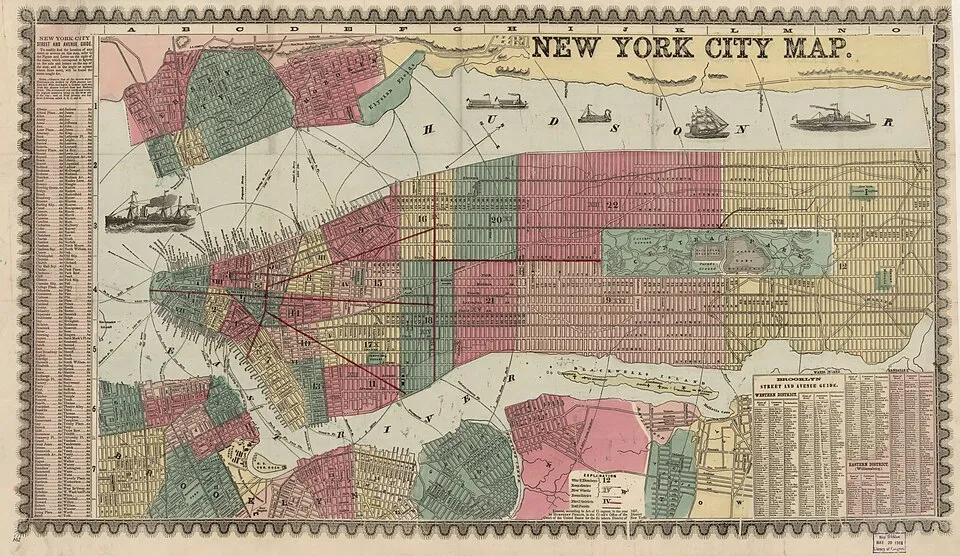
New York is by far the densest city in the U.S., with 29,300 people per square mile, according to the most recent Census data. (San Francisco comes in a distant second at 18,800 people per square mile.) That explains why New York feels different from the rest of the country — it’s crowded, it’s noisy, it’s chaotic. It’s also full of businesses to feed that massive population. Everywhere you go in New York you can find bodegas, delis, and pizzerias, some the size of a narrow hallway, many of them bursting with people during lunch and dinner rushes.
Public domain, Library of Congress
And, of course, there are the bagel shops. At least 200 of them, all over the city, with baskets constantly being renewed by freshly baked bagels. Emphasis on the freshly baked, because bagels are meant to be fresh. “The authentic bagel experience is a bagel that’s still warm out of the oven and that does not require any toasting,” says Sean Keeley, who writes a newsletter about bagels called It’s a Shanda. “A bagel should be this mixture of a very fluffy but not too airy interior and a slightly crispy exterior.”
Toasting a bagel, for connoisseurs, ruins this subtle interplay of textures. J. Kenji Lopez-Alt, an award-winning chef and food writer, once wrote that in the Manhattan neighborhood where he grew up, “I don’t think I saw a bagel shop that offered to toast your bagel until the mid-’90s. It just wasn’t an option, nor was it something you’d want to do.” If you toast a bagel, you might be able to refresh a stale one, but you’ll ruin a fresh one. “There is no more thin, crackly crust, there’s just toasted crust all around,” Lopez-Alt writes. “There is no more chewy-yet-tender, dense-yet-light crumb with that slightly malty aroma…there’s just toasted bread flavor.”
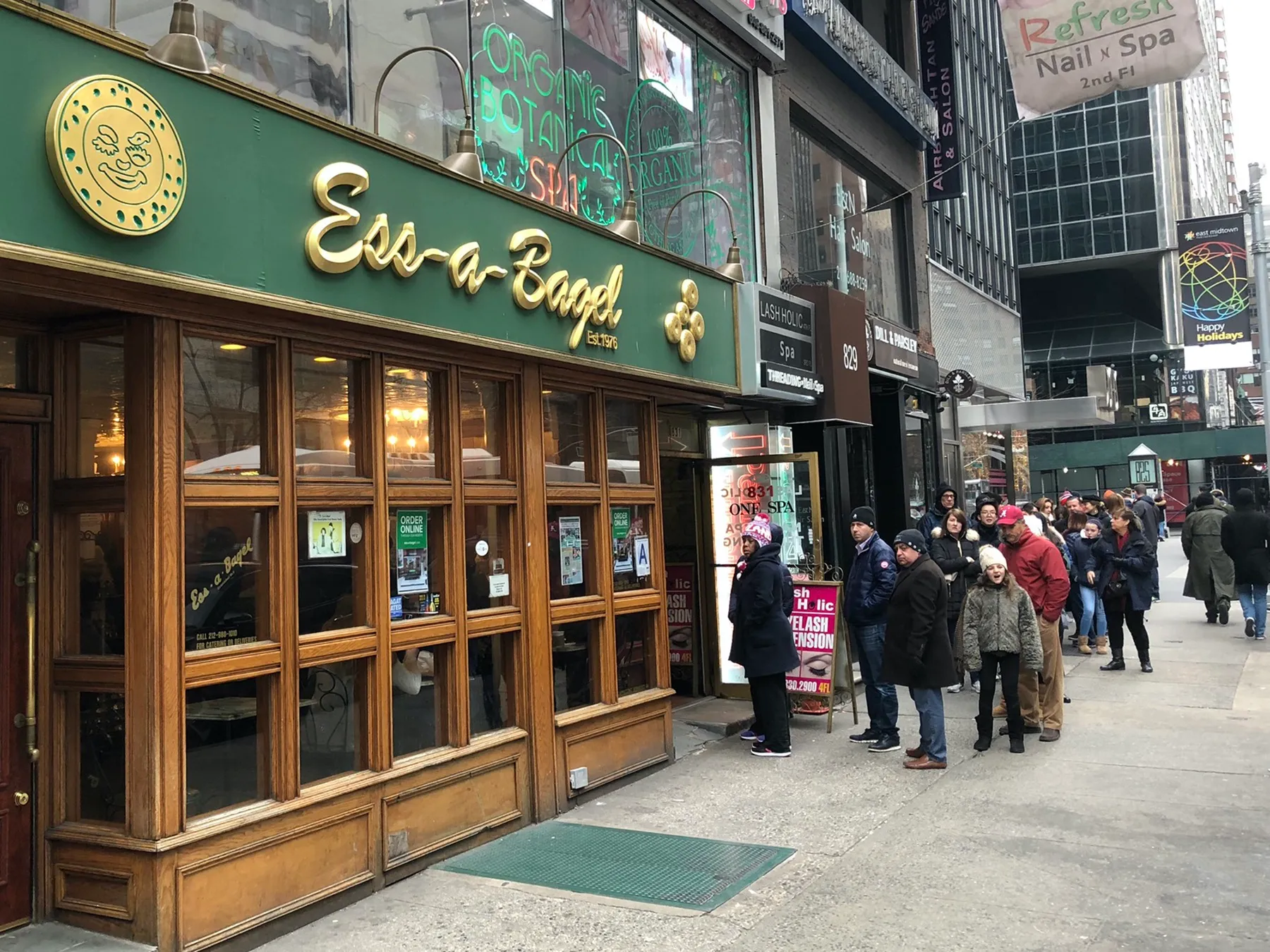
Serving fresh bagels throughout the day is easier when you have a steady flow of customers. That’s possible in New York thanks to the sheer number of people there. In less dense cities, it’s tougher. When acclaimed bagel-maker Andrew Rubinstein ran his namesake shop Rubinstein Bagels in Seattle — home to just 8,900 people per square mile — he found that there was a morning rush, but as the day went on, “we became a sandwich shop.” There weren’t enough customers to justify baking bagels throughout the day, and if you showed up in the afternoon, you would get a bagel that had already passed its peak of freshness.
After Rubinstein moved on from that business in 2023, he geared up to launch a new shop called Hey Bagel. One of his goals was to be able to serve warm bagels throughout the day, which led him to open inside University Village, a bustling high-end outdoor mall. Hey Bagel has been lavished with praise — BagelFest just named it the best bagel on the West Coast — and that positive buzz has resulted in lines out the door pretty much from the moment it opened in 2025. Its status as a bagel destination and the foot traffic from mall shoppers has given it the “critical mass,” as Rubinstein describes it, to bake into the afternoon.
“I’m doing my best to honor a warm to hot bagel as much as possible throughout the day,” he says. On slower days, this means keeping a watchful eye on bagel production and not baking too many when the stream of customers is drying up. On weekends before 2 p.m. however, there’s no slowing down. “All we’re doing is baking,” he says. “Every 20 to 22 minutes, 180 bagels are coming out of the oven.”
Hey Bagel is an exceptional case, though. In most of Seattle — just like in most of the U.S. — there isn’t a volume of customers sufficient to sustain an all-day baking operation. The secret ingredient to a great bagel is people, and outside of New York, there aren’t enough of them.
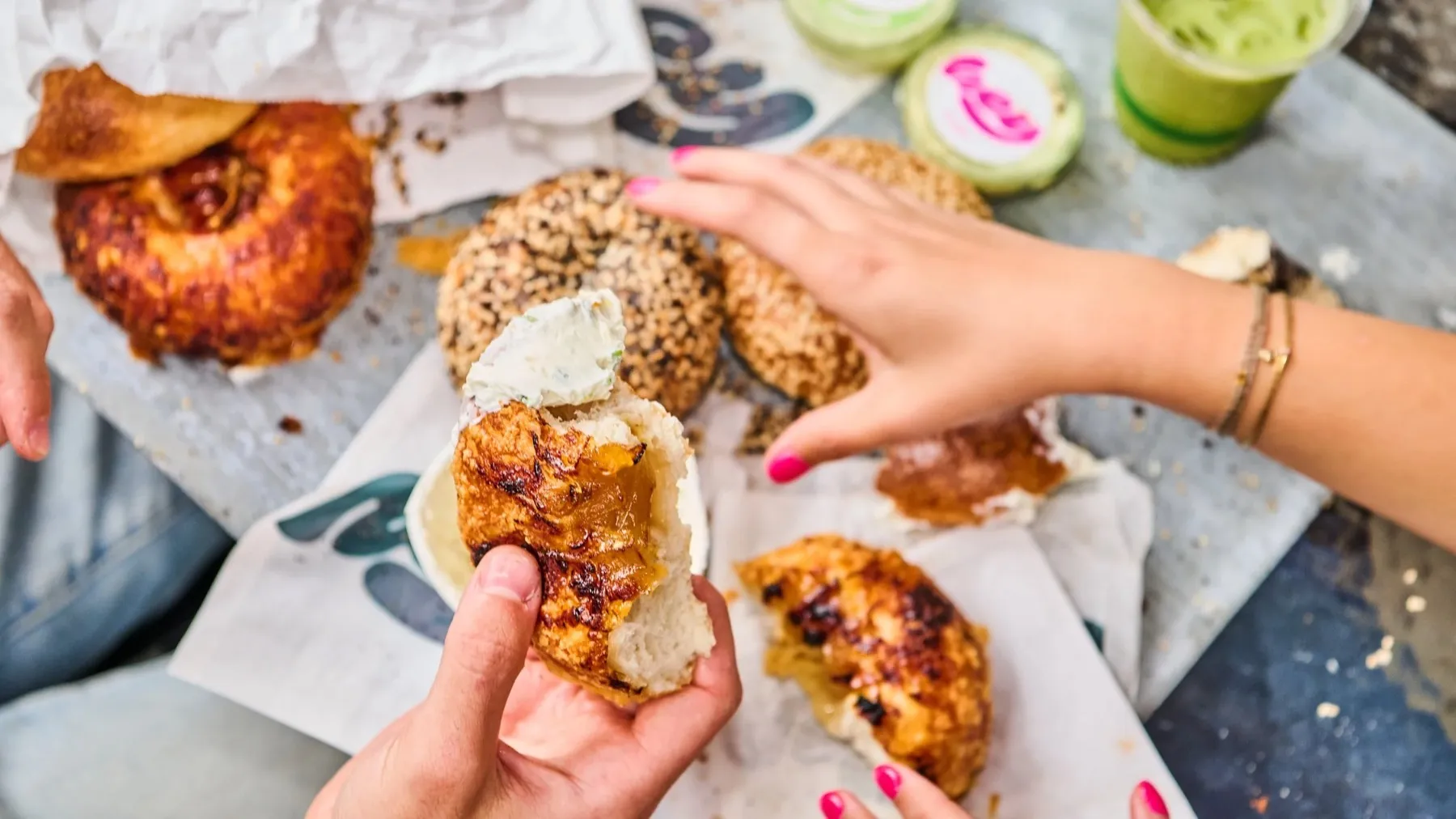
Image courtesy of Hey Bagel
As a result, in America, bagels are purchased largely in supermarkets or at shops that bake once in the morning, which means they’re likely stale by the time they’re eaten; usually, they have to be toasted. “Most people have never really had a good bagel,” says Keeley. As long as they live in spread-out cities and towns, they probably never will.
Density shapes more than bagel shops. It’s the same force behind Jane Jacobs’s argument for how cities should grow, and part of why states have spent the past year trying to loosen the zoning rules that keep so many American cities spread thin.