“Cities have the capability of providing something for everybody, only because, and only when, they are created by everybody.” - Jane Jacobs, 1961
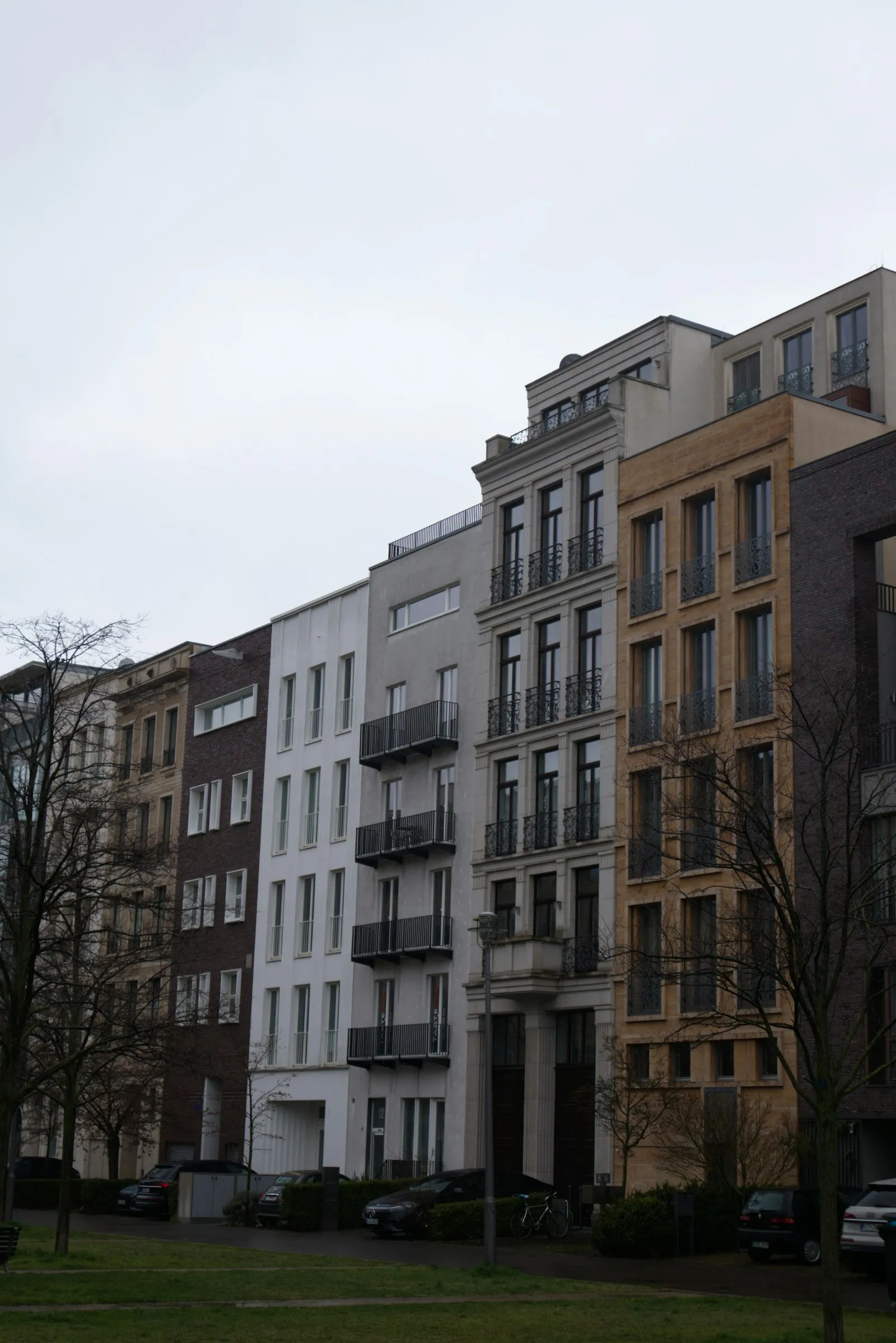
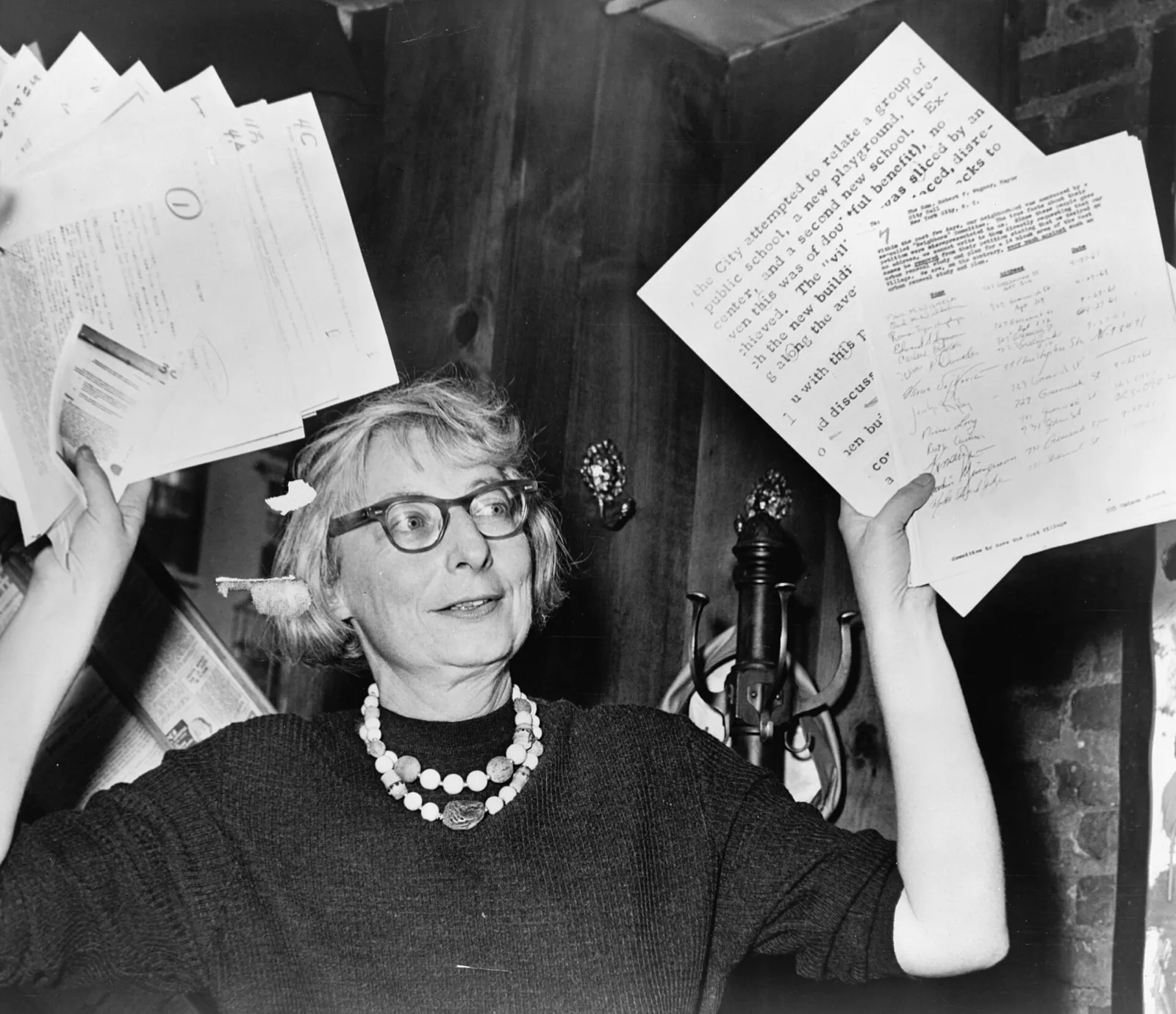
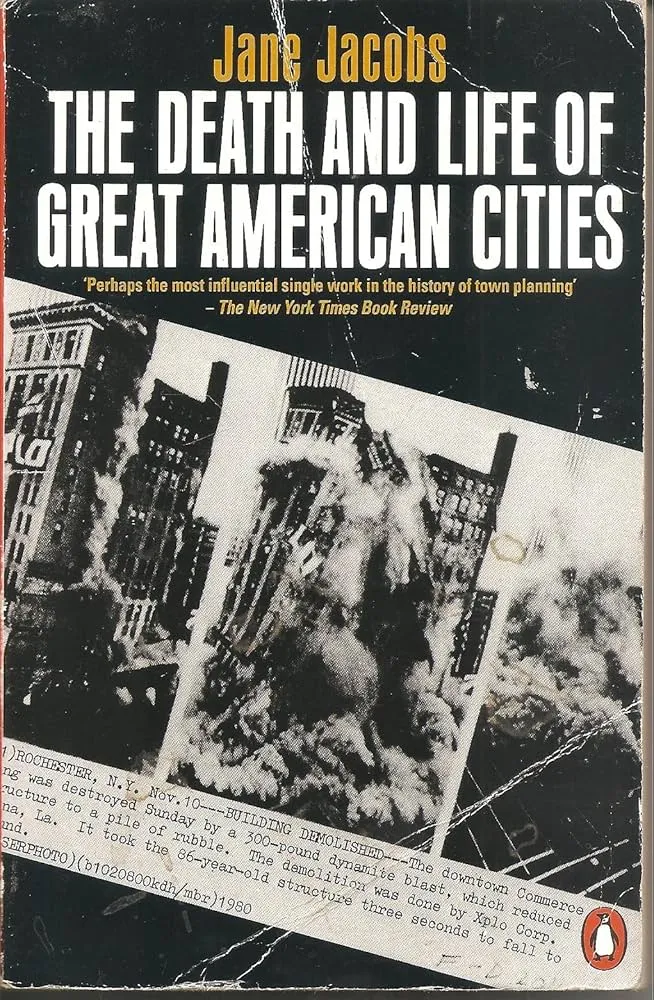
Human beings are infinitely complex. We are defined by the complex diversity that is coded into our DNA, acquired through social interaction and cultural norms, and which manifests in the countless decisions we make each day. Cities, the spaces we have designed for ourselves to live, work, and gather, should be diverse enough to accommodate the multitudes that they contain. However, the planning of cities for much of the 20th century was influenced by modernist urban planners like Le Corbusier and Robert Moses who believed absolutely that their utopian designs would better humanity. In 1961, the sociologist Jane Jacobs published The Death and Life of Great American Cities, arguing that cities should be planned from below by the many instead of autocratically by the few.1 Jacobs’ work cut against the grain of the modernist urban planning paradigm, which prioritized orderly aesthetics over chaotic functionality, single-use over multi-use zoning, and top-down organization by elite planners over bottom-up participatory development by the people. The modernist movement was in decline by the 1980s, but remnants of its universalizing planning persist to this day. As anthropologist James C. Scott describes it, “modern city planning placed a static grid over a profusion of unknowable possibilities.”2 Zoning is an element of this grid, a rigid square that dynamic, circular projects must fit into. In American cities today, zoning is a barrier limiting the creative, participatory solutions to problems such as the housing crisis and the overall dynamic vitality of our urban spaces.
Dynamic vitality (or urban vitality) is a concept defined by Jacobs as the complex synergy of three factors: the density/intensity of human presence and activity, the diversity of activities, and the consistency of activities over time.3 Scholars sometimes use the analogy of natural ecosystems such as old-growth forests to explain the positive effects these factors have on urban spaces.4 Old-growth forests host a diverse set of organisms that are active at different times of day and night. The density of these organisms and the complex interactions between them (activities) as they mature and decay creates a resilient system that is full of life.5

Photo by Brenna Buckwalter
Urban spaces also benefit from the complex interactions of diverse types of people engaging in a variety of activities as this establishes an intricate social order. One benefit Jacobs observes is that people participating in a variety of activities at different times of day act as “eyes on the street,” making the urban space safer with their presence. These people have no formal duty to maintain social order; they are not police or security guards, but the informal interactions and trust built up through their interactions creates a lively, safe neighborhood. Another benefit is that a richly differentiated neighborhood is also more resilient than a homogenous neighborhood of only homes or businesses, just as an old-growth forest is more resilient than a tree plantation that can be taken out by a single pest, disease, or storm. The diversification of activities and functions lessens the risk of economic downturn affecting the entire area and provides more opportunity for jobs.6
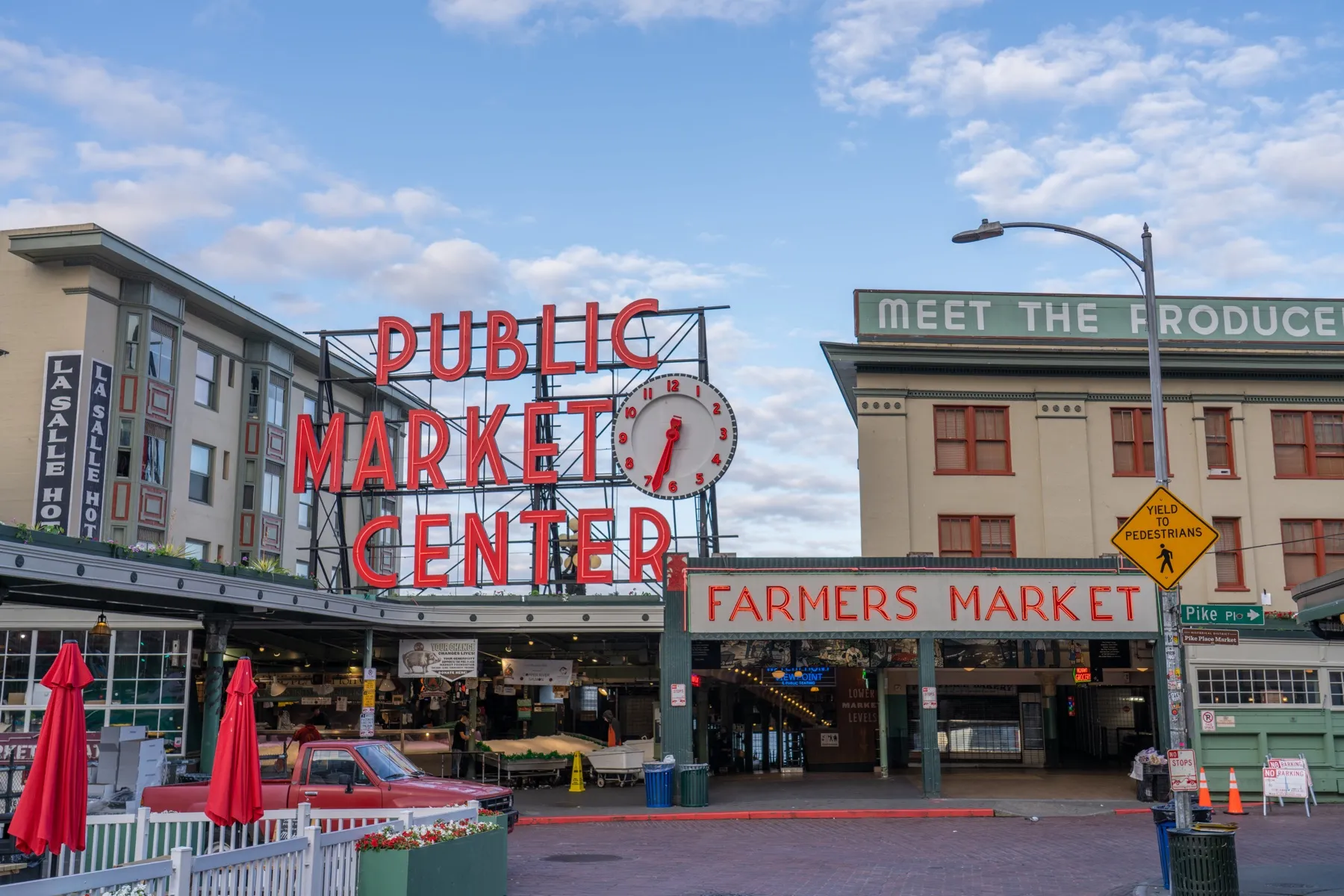
These beneficial characteristics of dynamic neighborhoods can only arise in conjunction with mixed-use zoning. Single-use areas with only housing or businesses lack the diversity of activities to lure diverse people at different times of day and create complex webs of interaction and social order. Mixed-use zoning can draw diverse groups of people to a neighborhood with diverse types of buildings, new and old, small and large, upscale and shabby, which offer something for everyone. The forest metaphor is also useful here, as some species rely on the aging or decaying of other species to survive (for example, insects that live in decaying trees) while others rely on new growth. In the city, some need cheap housing, perhaps in older, more run-down buildings, while others have the means to live in more expensive, new developments. Providing a diversity of spaces for a diversity of functions leads to a dynamic environment that draws all kinds of people. But to build such diverse spaces, people must be able to navigate the zoning and other bureaucratic hurdles that exist in contemporary cities.
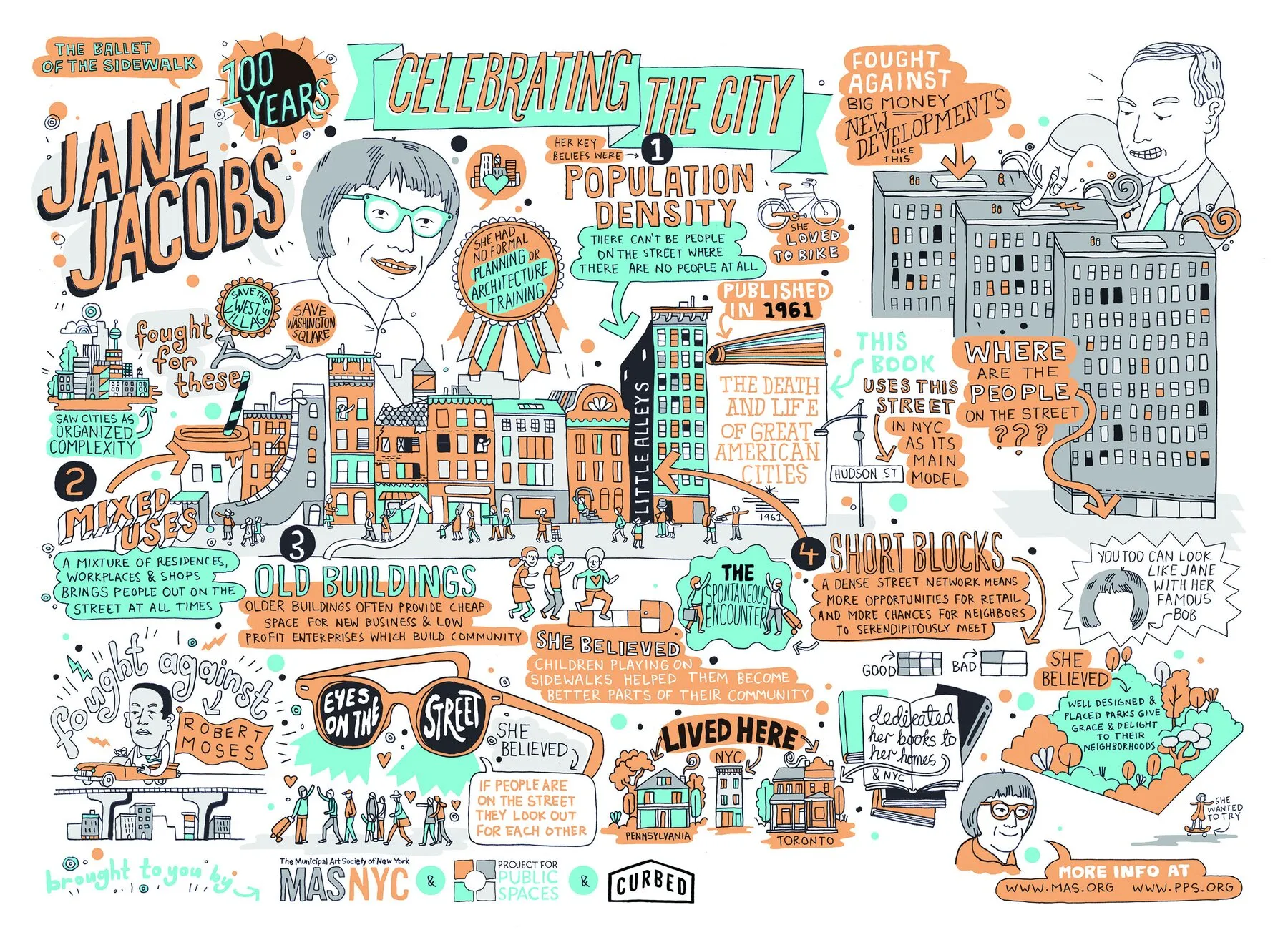
Illustration by James Gulliver Hancock, commissioned by Curbed, the Municipal Art Society, and Project for Public Spaces. Source: Project for Public Spaces.
Jacobs argues that designing dynamic urban spaces where a diverse range of people can live and thrive can only be done from below, by many people instead of few. No one person can understand the complex needs of the many. Instead, the many should be able to design and build for their diverse needs and functions. Zoning is a barrier that hampers vitality in urban spaces, functioning as a barrier to diverse construction and renovation projects. Some of that pressure is finally being addressed by state legislatures. Tools like Rhonda can help navigate these barriers and democratize the construction, renovation, and creation of complex, fascinating spaces within American cities.
Footnotes
-
Jacobs, Jane. (1961). The Death and Life of Great American Cities. New York: Random House. ↩
-
Scott, James, C. (1998). Seeing Like a State. New Haven: Yale University Press. ↩
-
Jacobs (1961); Dogan, Omer and Sugie Lee. (2024) “Jane Jacobs’s urban vitality focusing on three-facet criteria and its confluence with urban physical complexity.” Cities 155. ↩
-
Scott (1998); Dogan and Lee (2024). ↩
-
Dogan and Lee (2024). ↩
-
Scott (1998). ↩