EV Charging Permit Requirements in New York
New York requires an electrical permit for every EV charger installation, but who issues it and which code applies depends entirely on whether the project is in New York City or anywhere else in the state. NYC runs its own construction and electrical code, separate from the state Uniform Code, and right now the two systems are enforcing two different NEC editions. Here's how the process actually works.

Do you need a permit to install an EV charger in New York?
Yes. Every EV charger installation, from a single Level 2 outlet to a multi-port DC fast charging array, requires an electrical permit. For commercial projects, that usually means a licensed electrician filing with the local building or electrical department, an inspection before energization, and, depending on the project, additional review layered on top.
What makes New York unusual isn’t the permit itself, it’s who you’re filing it with. Unlike California, where the same local jurisdiction reviews both the electrical and building permit statewide, New York City is legally exempt from the state’s building code entirely and runs its own system from the ground up. Everywhere else in the state follows the New York State Uniform Fire Prevention and Building Code. Which set of rules applies to your project depends entirely on which side of the city line you’re on.
How EV Charger Permitting Works in New York
Under New York Executive Law § 381, the Uniform Fire Prevention and Building Code applies to every part of the state except the City of New York. NYC was permitted to keep its own construction and fire code, enforced by the Department of Buildings (DOB) and the Fire Department (FDNY) instead of the state. That split isn’t just administrative. Right now, it means NYC and the rest of the state are literally enforcing two different electrical codes.
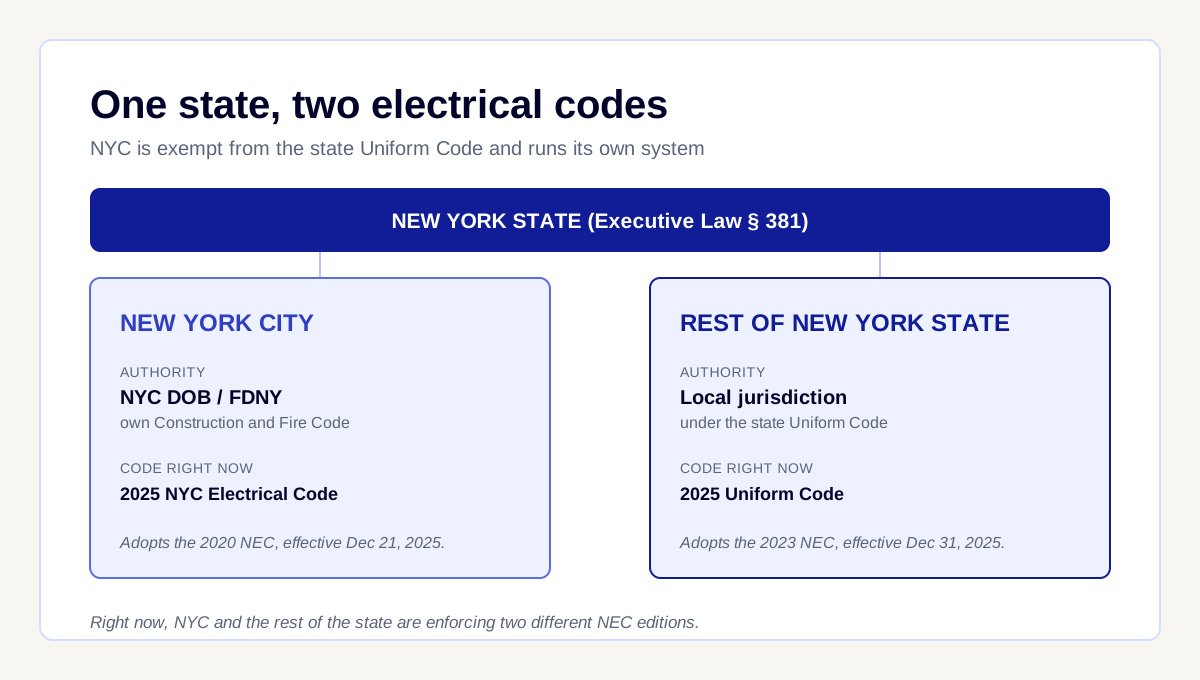
New York City was, until recently, running one of the oldest electrical codes in the country: a 2011 local law based on the 2008 NEC. Local Law 128 of 2024 finally replaced it. The 2025 NYC Electrical Code, adopting the 2020 NEC with local amendments, took effect December 21, 2025 and applies to every application filed since. NEC Article 625, the section governing EV charging system installation, is now current under this code, but it’s still an edition behind the rest of the state.
Everywhere else in New York follows the Uniform Code, which just moved the other direction. The 2025 Uniform Code, referencing the newer 2023 NEC, took effect for permit applications filed on or after December 31, 2025. So as of this writing, NYC just caught up to 2020, and the rest of the state just moved past it to 2023. Pull a NEC Article 625 citation from the wrong edition and a reviewer on either side of that line will send it back.
Licensing follows the same split. New York has no statewide electrical license. In NYC, DOB rules require a filing by a Licensed Master Electrician (LME) or a Registered General Contractor with an electrical endorsement. Every other municipality sets and issues its own electrician licensing, through its own local board. A license valid in one town doesn’t automatically authorize work in the next one over, let alone in NYC.
For commercial and multi-family projects, NYC layers on more review than a straightforward electrical permit. Installations in buildings with three or more units, commercial buildings, and parking garages require full DOB electrical permit filing through eFiling, and any project involving a new electrical service entrance needs sign-off from a Special Inspection Agency (SIA). High-voltage DC fast chargers in enclosed garages can also trigger a separate FDNY fire suppression review, on top of the DOB electrical permit.
NYSERDA publishes model guidance for jurisdictions statewide, including the “EV-Ready Codes for the Built Environment” guide and a DC Fast Charger Streamlined Permitting Guidebook, plus Department of State Technical Bulletin 2008 on EV charging stations. These are strong references for what a well-run review process should look like, but unlike California’s AB 1236, there’s no state law mandating fixed streamlined timelines that every jurisdiction has to hit.
Active Jurisdictions in New York
New York has 62 counties and hundreds of towns, cities, and villages, each running its own review outside NYC. These are the jurisdictions seeing the most commercial EV charging activity:
| Jurisdiction | Authority | Notes |
|---|---|---|
| New York City (all five boroughs) | NYC Department of Buildings (DOB) / FDNY | Exempt from the state Uniform Code. Runs its own 2025 NYC Electrical Code (2020 NEC). Commercial and multi-family projects need full eFiling, SIA sign-off for new service entrances, and possible FDNY fire review for enclosed-garage DCFC. |
| Buffalo | Buffalo Permit & Inspection Services | National Grid territory. Follows the state Uniform Code (2025 edition, 2023 NEC). |
| Rochester | Rochester Bureau of Buildings & Zoning | Served by RG&E (Avangrid), not National Grid, a distinct interconnection process from most of upstate. |
| Syracuse | Syracuse Codes Enforcement | National Grid territory. Uniform Code jurisdiction. |
| Albany | Albany Buildings & Regulatory Compliance | National Grid territory. Uniform Code jurisdiction. |
| Yonkers | Yonkers Building Department | Westchester County. Con Edison territory, but outside NYC and therefore under the state Uniform Code, not the NYC Electrical Code. |
| Westchester County (other towns) | Varies by municipality | Con Edison territory throughout. Every town sets its own licensing requirements for electricians. |
| Nassau County | Varies by town/village | PSEG Long Island territory. Level 2 installs almost always require a dedicated 240V circuit permit. |
| Suffolk County | Varies by town/village | PSEG Long Island territory. PSEG LI publishes a hosting capacity map for interconnection planning. |
Don’t see your jurisdiction? New York has hundreds of towns, cities, and villages outside NYC. Contact us at hello@rhonda.build if you need requirements for a jurisdiction not listed here.
Relevant Code References
2025 NYC Electrical Code (NYC only)
Adopted by Local Law 128 of 2024, effective December 21, 2025. Replaces a 2011 code based on the 2008 NEC with an edition based on the 2020 NEC plus local amendments. NEC Article 625 governs EV charging system installation.
2025 New York State Uniform Fire Prevention and Building Code (everywhere except NYC)
References the 2023 NEC for permit applications filed on or after December 31, 2025. Applies statewide by default; NYC is exempt under Executive Law § 381 and runs its own code instead.
New York Executive Law § 381
The statutory basis for NYC’s exemption from the state Uniform Code. NYC has operated its own construction and fire code system since before the Uniform Code existed.
NYSERDA EV-Ready Codes for the Built Environment / DC Fast Charger Streamlined Permitting Guidebook
State-level model guidance for jurisdictions on EV charging permitting practices, checklists, and sample applications. Not a binding statutory mandate the way AB 1236 is in California, but the reference reviewers statewide are pointed toward.
Department of State Technical Bulletin 2008, EV Charging Stations
Guidance from the NYS Division of Building Standards and Codes on how EV charging stations are treated under the Uniform Code, effective May 12, 2020.
Master Electrician Licensing (municipal, not statewide)
New York has no statewide electrical license. NYC requires a DOB-issued Licensed Master Electrician or a Registered General Contractor with electrical endorsement. Every other municipality issues and enforces its own licensing independently.
Common Permit Corrections and Rejections for EV Charging Projects in New York
Between the NYC/Uniform Code split, municipal-only licensing, and utility make-ready funding that just closed to new applicants, New York generates a specific set of corrections that don’t show up the same way in single-code states.
Electrical
Citing the wrong NEC edition
NYC is on the 2020 NEC through its 2025 Electrical Code. The rest of the state is on the 2023 NEC through the 2025 Uniform Code. Plan sets that cite Article 625 requirements from the wrong edition, easy to do on a multi-site portfolio spanning both, get flagged on the first review.
License not valid for the jurisdiction
An electrician’s Master Electrician license issued by one municipality doesn’t transfer to another, and NYC’s DOB-issued LME is its own separate credential. Applications filed under a license that isn’t valid in that specific jurisdiction are rejected at intake.
Missing continuous load and GFCI documentation
As in most states, branch circuits need to be sized at 125% of the EVSE nameplate amperage with GFCI protection documented per Article 625. Corrections here aren’t unique to New York, but they’re common enough to be worth checking before submittal regardless of which code edition applies.
Service & Special Inspection
Missing Special Inspection Agency sign-off (NYC)
Any NYC project involving a new electrical service entrance, common on multi-family and commercial installs, requires SIA sign-off in addition to the DOB electrical permit. Submittals that don’t include it get sent back before the electrical review even starts.
FDNY review skipped for enclosed-garage DCFC (NYC)
High-voltage DC fast chargers installed in enclosed parking garages can trigger a separate FDNY fire suppression review. Teams that treat this as a formality, rather than a parallel track with its own timeline, are the ones who get surprised by it.
Accessible route and stall documentation
Accessible EV charging stalls need a documented accessible route, clear floor space, and signage consistent with the applicable state or city accessibility code. This is checked separately from the electrical scope and is a common first-review correction outside NYC.
Utility Coordination
Assuming Make-Ready funding is still available
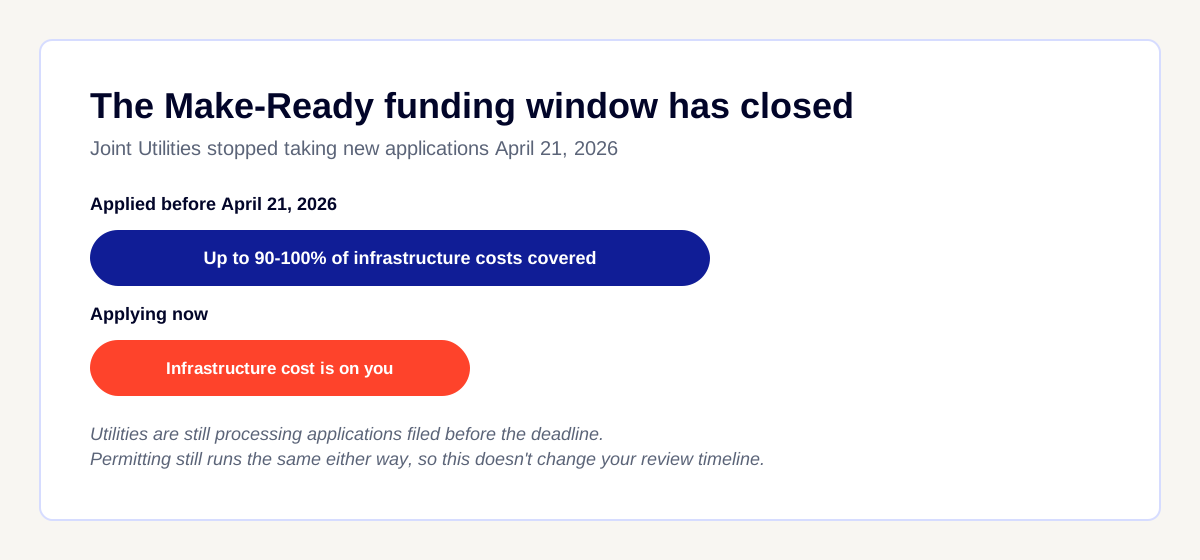
The Joint Utilities EV Make-Ready Program, which covered up to 90-100% of infrastructure costs for qualifying projects across Con Edison, National Grid, NYSEG, RG&E, and PSEG Long Island, stopped accepting new applications on April 21, 2026. Utilities are still processing applications filed before that date, but projects starting now need to budget for infrastructure costs directly. This doesn’t change the permitting timeline, only who pays for the make-ready work.
Wrong utility assumptions across a multi-site portfolio
Con Edison serves NYC and Westchester. National Grid covers Buffalo, Syracuse, Albany, and much of the Hudson Valley. RG&E, a separate Avangrid utility from NYSEG, serves greater Rochester. NYSEG covers the Southern Tier and Finger Lakes. PSEG Long Island serves Nassau and Suffolk. A portfolio spanning even two or three of these needs separate interconnection planning for each, not one assumed process.
Service upgrade not coordinated with the permit
As elsewhere, a service upgrade or interconnection agreement takes its own time on the utility’s schedule, separate from the jurisdiction’s permit review. Starting that conversation with the utility in parallel with the permit application, rather than after approval, is the biggest schedule lever available on a commercial project.
Permitting shouldn’t be the bottleneck on your next charging site.
Rhonda makes permitting for commercial solar, battery storage, and EV charging infrastructure predictable. Pre-check your plan set against the right code, NYC’s or the state Uniform Code’s, and the specific local amendments for your jurisdiction before you submit, so corrections don’t cost you weeks. See what Rhonda catches before your jurisdiction does.
← Back to the State and City Requirement Guide Library
Footnotes
- New York Executive Law § 381, New York State Uniform Fire Prevention and Building Code Act
- 2025 New York State Uniform Fire Prevention and Building Code, effective December 31, 2025, referencing the 2023 NEC
- Local Law 128 of 2024 / 2025 NYC Electrical Code, effective December 21, 2025, referencing the 2020 NEC (nyc.gov/buildings)
- NEC Article 625, Electric Vehicle Charging System equipment
- NYSERDA, EV-Ready Codes for the Built Environment (nyserda.ny.gov)
- NYSERDA, DC Fast Charger Streamlined Permitting Guidebook (nyserda.ny.gov)
- New York Department of State, Division of Building Standards and Codes, Technical Bulletin 2008, EV Charging Stations, effective May 12, 2020
- NYC Department of Buildings, Licensed Master Electrician requirements and eFiling
- FDNY Bureau of Fire Prevention, enclosed garage energy storage and charging equipment review
- Joint Utilities of New York, EV Infrastructure Make-Ready Program Participant Guide; application window closed April 21, 2026
- Con Edison PowerReady Program; National Grid, NYSEG, and RG&E (Avangrid) EV Make-Ready program filings, NY Department of Public Service
- PSEG Long Island, EV Make-Ready Program and hosting capacity map