Nevada’s permitting landscape is simpler than California or Texas in one important way: NV Energy serves the vast majority of the state, which means utility coordination runs through a single entity for most projects. That simplicity ends at the local permit window. Nevada is a home rule state, and the Las Vegas metro, where most commercial EV charging activity is concentrated, operates as four completely separate permitting jurisdictions: the City of Las Vegas, Clark County, Henderson, and North Las Vegas. Getting the wrong jurisdiction means your application lands in the wrong department and must be resubmitted from scratch.
There is also NEVI-specific context worth knowing before starting any publicly funded project in Nevada. NV Energy invested $12.4 million of a larger approved electrification program, with only 16 charging stations built through the end of 2025, per a March 2026 Nevada Independent report. Fourteen additional stations that were under design were scrapped due to budget constraints. The federal NEVI program in Nevada was paused in early 2025, then restarted under revised guidance in August 2025, with Nevada’s updated deployment plan approved by FHWA on September 9, 2025. Projects relying on NEVI or NV Energy incentive funding should verify current program status before design.
Do you need a permit to install an EV charger in Nevada?
Yes. Nevada requires an electrical permit for every Level 2 EV charger installation. A hardwired wall charger, a new 240-volt outlet, a DCFC installation: all require a permit. The permit requirement applies to licensed contractor work and, in some residential contexts, owner-pull situations as well. For commercial installations, an electrical permit is required at minimum, with a building permit required where site work, accessibility improvements, or structural modifications are in scope.
There are no exemptions for electrical work in Nevada. NRS 624.031 exempts work under $1,000 that does not require a permit, but explicitly carves out electrical work. No dollar-amount exemption applies to EV charging installations regardless of scope.
How EV Charger Permitting Works in Nevada
Nevada’s permit structure has two tracks, electrical and building, administered by the local jurisdiction. Electrical contractor licensing is statewide through the Nevada State Contractors Board (NSCB). Everything else varies by jurisdiction.
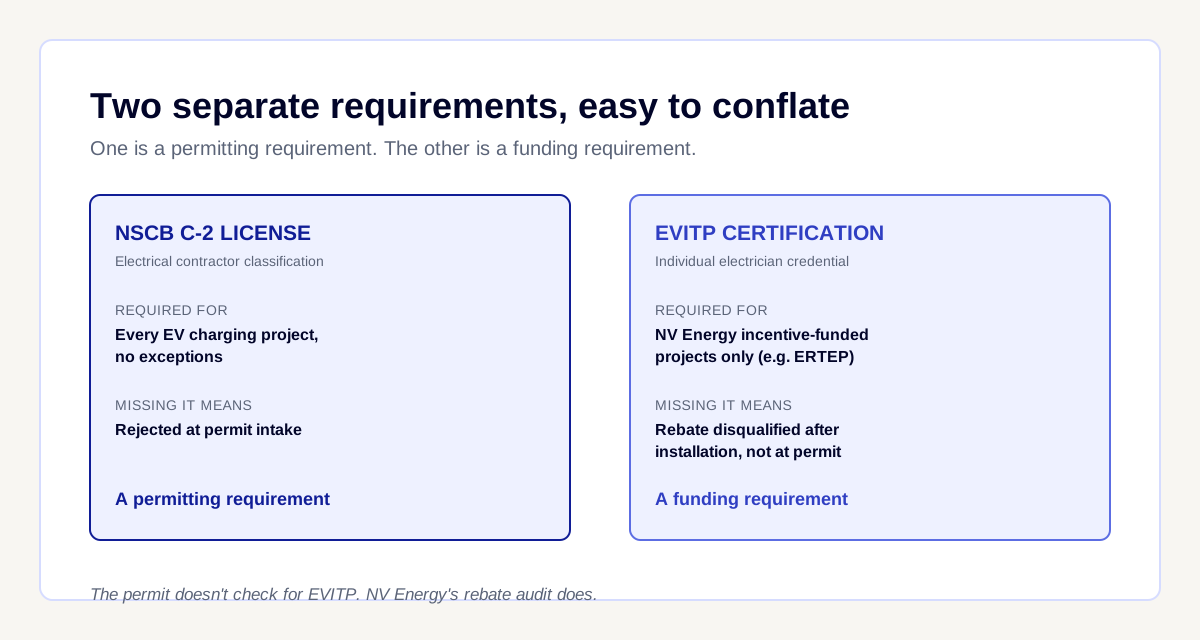
Electrical permits are required for all commercial EV charging installations. The NSCB administers electrical contractor licensing under Classification C-2. A full C-2 license authorizes the installation of any electrical wires, fixtures, appliances, apparatuses, raceways, and conduits. It covers all EV charging work at all voltage levels for residential and commercial occupancies. Applications submitted without a valid NSCB C-2 license number are rejected at intake. There are no exemptions for unlicensed electrical work in Nevada, and the NSCB has no reciprocity agreements for electrical trades with California, Arizona, or Utah. Nevada C-2 holders must be licensed in Nevada.
The NEC is Nevada’s electrical code baseline. Nevada adopted the NEC through the Nevada State Fire Marshal and the local jurisdictions. Local jurisdictions including Clark County, the City of Las Vegas, and the Reno/Washoe County area enforce the NEC with local amendments. Clark County adopted the 2024 International Building Codes effective January 2026. Reno adopted the 2024 building codes in July 2025, making it one of the first major Nevada cities to move to the latest code edition. The City of Las Vegas was operating under the 2021 IBC with Southern Nevada amendments as of early 2026. Confirm the currently enforced edition with your specific jurisdiction before finalizing design.
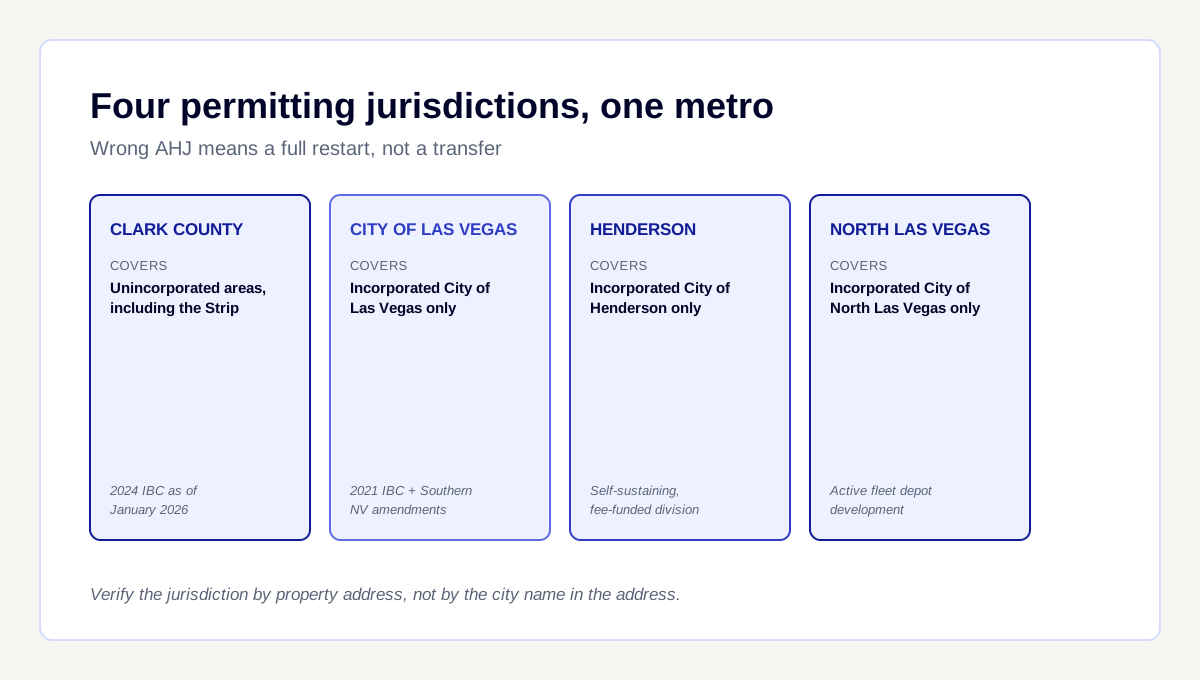
The Las Vegas metro is four separate permitting jurisdictions. This is the most operationally significant fact for commercial EV charging projects in Southern Nevada. Clark County (unincorporated areas), the City of Las Vegas, Henderson, and North Las Vegas each maintain separate building departments, separate online portals, separate fee schedules, and separate plan review processes. A project address in what most people call “Las Vegas” may fall under any of the four. Verify by property address, not by city name. It’s a similar fragmentation problem to what developers run into in Arizona’s home rule cities, just concentrated into one metro area instead of spread statewide.
NV Energy is the dominant utility across most of Nevada. NV Energy serves over 44,000 square miles and approximately 2.4 million electric customers, covering Las Vegas, Reno-Sparks, Henderson, and most of the state. Service upgrades and DCFC installations require coordination with NV Energy on transformer sizing, line extensions, and temporary disconnect/reconnect scheduling. NV Energy coordination is scheduled, not instant. It is frequently the step that determines the actual project date.
EVITP certification is required for NV Energy incentive-funded installations. NV Energy’s incentive programs, including the Economic Recovery Transportation Electrification Plan (ERTEP), require that installations be performed by a contractor holding a valid NSCB license in the required classification and employing at least one electrician with EVITP certification. Projects pursuing NV Energy rebates or incentive funding that don’t plan for this requirement risk rebate disqualification after installation.
Active Jurisdictions in Nevada
Nevada has 17 counties and 19 incorporated cities. Commercial EV charging activity is concentrated in the Las Vegas metro (Clark County) and the Reno-Sparks metro (Washoe County). These are the jurisdictions with the most active commercial EV charging permit activity:
| Jurisdiction | Authority | Notes |
|---|---|---|
| Clark County (unincorporated) | Clark County Building Department | Covers unincorporated areas including the Las Vegas Strip. Adopted 2024 International Building Codes effective January 2026. Separate from the City of Las Vegas; verify by address. NV Energy territory. |
| City of Las Vegas | Las Vegas Building and Safety | Separate permitting authority from Clark County. Enforces 2021 IBC with Southern Nevada amendments as of early 2026. Online permit portal available. EV charger service changes require a 231 inspection (Electrical Service Change). |
| Henderson | Henderson Building Division | Separate from Clark County. Henderson describes its building division as self-sustaining, with fees based on actual plan review and inspection costs. NV Energy territory. |
| North Las Vegas | North Las Vegas Building Safety | Separate from Clark County. NV Energy territory. Fastest-growing logistics and industrial market in the Las Vegas metro; active EV fleet depot development. |
| Reno | Reno Building and Safety | Washoe County seat. Adopted 2024 building codes July 2025. Separate from Washoe County unincorporated areas and the City of Sparks. NV Energy serves this area. |
| Sparks | Sparks Community Services, Building Safety | Separate from Reno and Washoe County. Transitioned to Accela Citizen Access for planning applications October 2025. NV Energy territory. |
| Washoe County (unincorporated) | Washoe County Community Services | Covers unincorporated areas around Reno and Sparks. NV Energy territory. |
Don’t see your jurisdiction? Nevada has 17 counties and 19 incorporated cities. Contact us at hello@rhonda.build if you need requirements for a specific Nevada jurisdiction.
Relevant Code References
NEC Article 625, Electric Vehicle Power Transfer System
Nevada’s electrical code baseline for EVSE installation, adopted through local jurisdictions. Article 625 governs circuit sizing, disconnecting means, continuous load calculations, GFCI requirements, and grounding. Clark County enforces the 2024 IBC and associated NEC edition as of January 2026. Reno enforces the 2024 codes as of July 2025. The City of Las Vegas was operating under the 2021 IBC with Southern Nevada amendments. Verify the currently adopted edition with your specific jurisdiction before design.
Nevada Revised Statutes Chapter 624, Contractors
The statutory basis for contractor licensing in Nevada. All commercial EV charging electrical work requires an NSCB C-2 licensed contractor. No dollar-amount exemptions apply to electrical work. Unlicensed electrical work is subject to criminal prosecution and civil penalties under NRS 624.
Nevada Administrative Code 624.200, Classification C-2
Defines the scope of the C-2 Electrical classification. A full C-2 license authorizes installation of any electrical wires, fixtures, appliances, apparatuses, raceways, and conduits. No separate subclassification is required for EV charging work; the full C-2 covers it. Applications must include the NSCB license number on the cover sheet.
NRS 111.239, Right to Charge
Nevada’s right-to-charge statute prohibits HOAs and CC&Rs from banning the installation of EV charging equipment on a homeowner’s own property. Relevant for multi-tenant commercial projects with HOA or property association governance.
NV Energy Electric Rules, Rule 15
NV Energy’s service connection rule governing new and modified electrical service, including service upgrades required for DCFC installations. PowerClerk documentation is required for interconnection and rebate applications. Confirm current Rule 15 requirements with NV Energy before finalizing service upgrade design.
ADA Standards for Accessible Design (2010)
Federal accessibility requirements apply to all public-facing commercial EV charging installations. Nevada does not have a state-level accessibility code specific to EV charging; federal ADA standards are the applicable floor.
Common Permit Corrections and Rejections for EV Charging Projects in Nevada
Nevada’s correction patterns are consistent across the four Las Vegas metro jurisdictions and the Reno-Sparks metro. The most operationally unique source of delay in Nevada is the multi-jurisdiction confusion in Clark County: submitting to the wrong jurisdiction is a complete restart, not a transfer.
Electrical
Missing or incorrect load calculations
The branch circuit must be sized at 125% of the EVSE nameplate amperage per NEC 625.41. A full load calculation under NEC Article 220 is required before sizing any EV charger circuit. Projects that calculate against panel rating rather than actual connected load, or that omit the continuous load multiplier, receive a correction before plan review advances. This is the most consistent correction across all Nevada markets.
Wrong jurisdiction submission
In the Las Vegas metro, submitting a commercial EV charging permit to Clark County for a project that sits within Henderson, North Las Vegas, or the City of Las Vegas, or vice versa, results in rejection and resubmission from scratch. This is not a correction. It is a complete restart. Verify the jurisdiction by property address, not by the city name in the address.
Missing NSCB C-2 license number
The NSCB license number must appear on the permit application and on the plans cover sheet. Applications submitted without a valid, active C-2 license number are rejected at intake. There are no exceptions for electrical work regardless of project scope or dollar amount.
NEC edition mismatch
Clark County enforces 2024 IBC codes as of January 2026. Reno enforces 2024 codes as of July 2025. The City of Las Vegas was still on 2021 IBC with Southern Nevada amendments as of early 2026. Submitting plans citing a different NEC edition than the one the jurisdiction is enforcing creates mismatches that require resubmittal. Confirm the adopted edition with the specific jurisdiction before design.
Wiring method not specified
Plans must specify conduit type, burial depth, support intervals, and routing. Plans that omit wiring method specifications are flagged at plan review. Southern Nevada’s extreme heat, Las Vegas regularly exceeds 110 degrees, affects conduit material selection for outdoor runs and should be addressed in plans.
EVITP documentation missing on incentive-funded projects
Projects receiving NV Energy ERTEP or other incentive funding must employ at least one EVITP-certified electrician. Missing certification documentation on qualifying projects triggers rejection of the rebate application after installation, not a permit correction, but a cost recovery problem that is equally damaging to project economics.
Site / ADA
No accessible route shown
Plans must show a continuous accessible route from accessible parking spaces to the charger controls. This is the most frequent ADA correction on commercial EV submittals across all Nevada markets.
Clear floor space not documented
The U.S. Access Board requires a minimum clear ground space of 30 inches by 48 inches at each accessible charger, not sloped more than 1:48, and unobstructed by curbs, wheel stops, bollards, or landscaping. Plans that don’t document this receive a correction.
ADA slope violations
The accessible space and access aisle must not exceed 1:48 slope in any direction. Nevada’s parking lot grading for drainage and the extreme thermal expansion and contraction cycles in Southern Nevada frequently create slope conditions that require re-grading at accessible EV stalls.
Signage omitted
Accessible EV stalls require specific marking and signage under federal ADA standards. Consistently missing from civil and site sheets on first submittal.
Utility Coordination
NV Energy service upgrade not initiated in parallel
NV Energy service upgrades and DCFC installations require a separate coordination process that runs on NV Energy’s schedule, not the jurisdiction’s. The temporary disconnect and reconnect required for service upgrades is scheduled by NV Energy. It is frequently the step that determines the actual project energization date. Teams that treat NV Energy coordination as a post-permit task routinely add weeks to the project schedule.
DCFC load not flagged to NV Energy before design
DCFC installations requiring transformer sizing or line extensions trigger NV Energy engineering review. Projects that don’t flag the DCFC load to NV Energy early in design may receive a service design from NV Energy that requires changes to the electrical plans already in plan review. Initiating NV Energy coordination at the same time as the jurisdiction permit application eliminates this sequencing problem.
NV Energy Rule 15 PowerClerk documentation not prepared
NV Energy interconnection and rebate applications require PowerClerk documentation under Rule 15. Projects that reach the NV Energy application stage without this documentation lose time assembling it. The PowerClerk package should be prepared as part of the design phase, not after permit issuance.
NV Energy rebate program status not confirmed before design
NV Energy has suspended certain rebate programs when demand exceeded available funding; battery storage rebates were temporarily suspended as of early 2026 due to high demand. Projects that design around an NV Energy rebate without confirming current program availability risk losing incentive funding after installation. Verify current program status with NV Energy before finalizing project economics.
Permitting shouldn’t be the bottleneck on your next charging site.
Rhonda makes permitting for commercial solar, battery storage, and EV charging infrastructure predictable. Pre-check your plan set against the specific jurisdiction requirements for your Nevada project before you submit. See what Rhonda catches before your jurisdiction does.
← Back to the State and City Requirement Guide Library
Footnotes
- Nevada State Contractors Board, C-2 Electrical Classification
- Nevada Administrative Code 624.200, Classification C-2
- Nevada Revised Statutes Chapter 624, Contractors
- NRS 111.239, Right to Charge
- NEC Article 625, Electric Vehicle Power Transfer System (NFPA 70)
- NEC Article 220, Branch Circuit, Feeder, and Service Load Calculations
- NV Energy Transportation Electrification Plan (ERTEP)
- NV Energy ERTEP Site Host Requirements
- NV Energy Public Agency Vehicle Charging Program
- Nevada Department of Transportation, NEVI Deployment Plan (approved September 2025)
- The Nevada Independent, NV Energy EV charger buildout (March 2026)
- Clark County Building Department
- City of Las Vegas Building and Safety
- Henderson Building Division
- Reno Building and Safety
- U.S. Access Board, EV Charging Station Accessibility
- AFDC, Nevada Laws and Incentives