EV Charging Permit Requirements in Arizona
Arizona is a home rule state, so a project in Scottsdale can face different permit requirements than one a few miles away in Phoenix or Tempe, even on the same utility grid. The other defining feature is the APS/SRP territory split across the Phoenix metro.

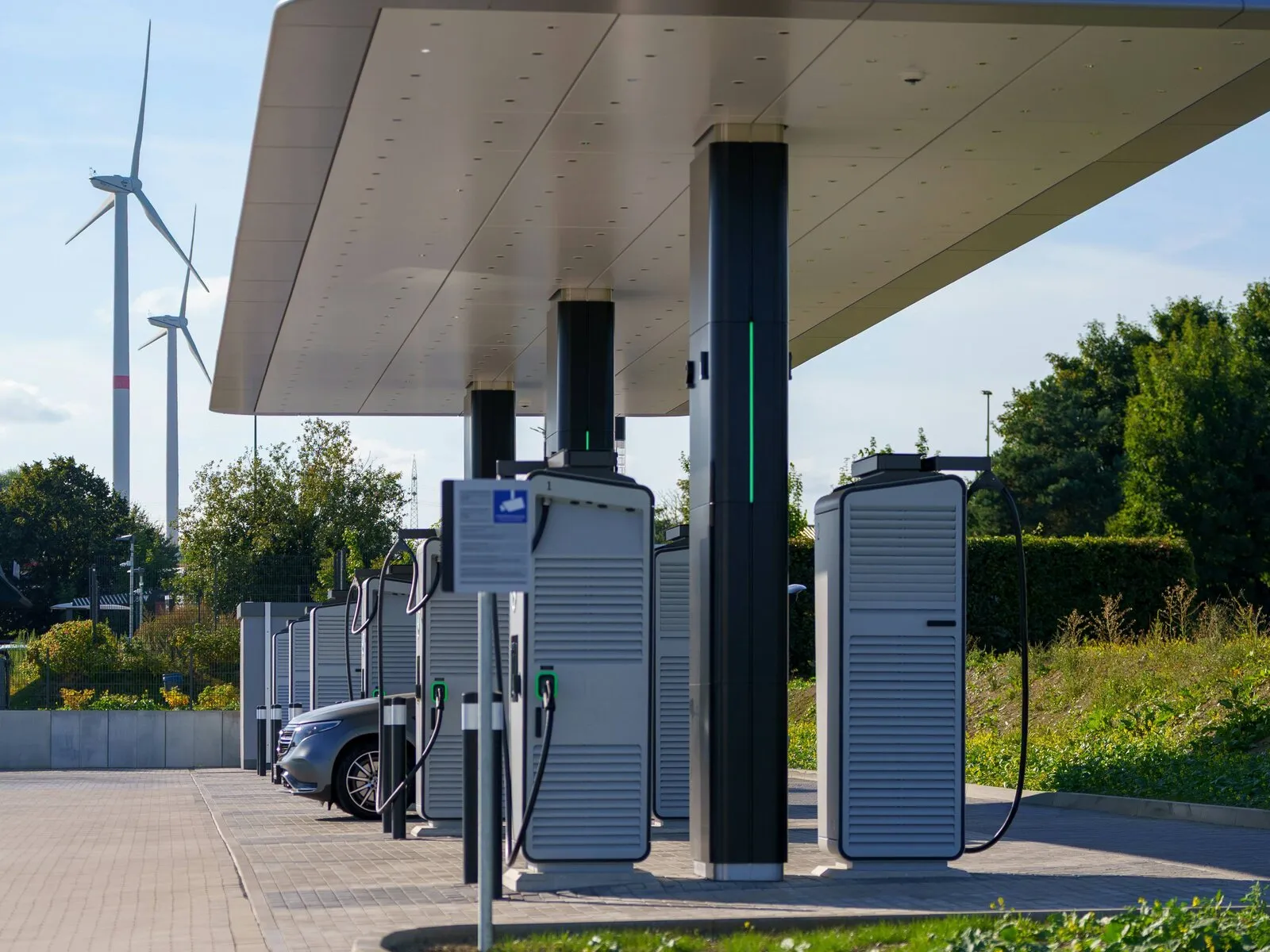
Arizona is a home rule state. Every municipality acts as its own authority having jurisdiction, which means a project in Scottsdale may have different permit requirements than one a few miles away in Phoenix or Tempe, even though they share the same utility. The electrical licensing framework is statewide through the Arizona Registrar of Contractors (ROC). Plan review, site requirements, and inspection processes vary by city.
The other defining feature of Arizona’s EV permitting landscape is the APS/SRP split. Arizona Public Service and Salt River Project serve the Phoenix metro with non-overlapping service territories, and their interconnection requirements, notification thresholds, and rebate programs differ in ways that affect almost every commercial EV charging project in Maricopa County. Knowing which utility serves your site before design is not optional.
Do you need a permit to install an EV charger in Arizona?
Yes. Commercial EV charging installations in Arizona require permits from the local jurisdiction. Every Maricopa County jurisdiction requires a permit for a 40A or higher branch circuit, including Phoenix, Scottsdale, Tempe, Mesa, Gilbert, and Chandler. Utility interconnection coordination is frequently required when service upgrades are involved.
The permit is always an electrical permit at minimum. A building permit is also required where site work, accessibility improvements, or structural modifications are part of the scope. For DCFC installations, utility notification under APS and SRP tariff schedules is triggered regardless of whether a service upgrade is needed.
How EV Charger Permitting Works in Arizona
Arizona’s permit structure has two primary tracks, electrical and building, administered by the local jurisdiction, with utility coordination running in parallel. The statewide framework is set by the Arizona Department of Fire, Building and Life Safety, which oversees the adoption of the International Building Code. Local jurisdictions adopt the IBC with their own amendments.
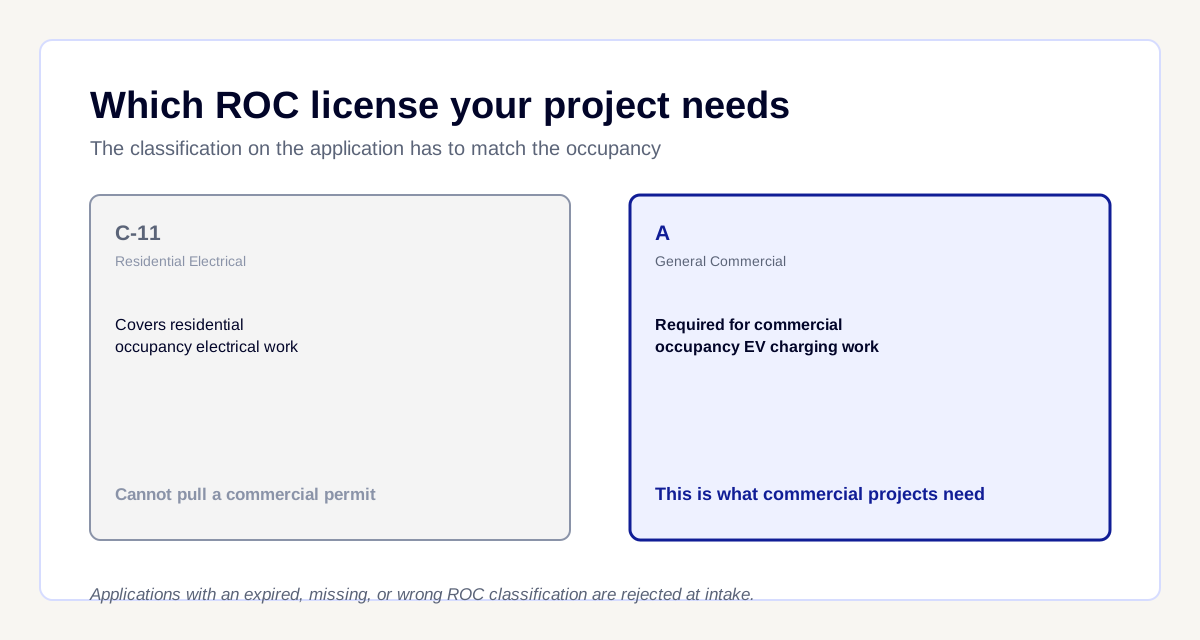
Electrical permits are required for all commercial EV charging installations. The Arizona Registrar of Contractors administers electrical contractor licensing statewide. An “A” (General Commercial) contractor classification is required for commercial occupancy EV work. A “C-11” (Residential Electrical) classification covers residential occupancy work. The license must appear on the permit application. Applications submitted with an expired, missing, or incorrect ROC classification are rejected at intake.
The NEC is Arizona’s electrical code baseline, adopted through the Arizona Department of Fire, Building and Life Safety. NEC Article 625 governs EVSE installation: circuit sizing, disconnecting means, continuous load calculations, GFCI requirements, and grounding. Local jurisdictions including Phoenix, Scottsdale, Tempe, and Chandler may enforce local amendments on top of the NEC baseline. Confirm the adopted edition and local amendments with your specific jurisdiction before finalizing electrical design.
Arizona is a home rule state, which means each city sets its own permitting rules, similar in spirit to the jurisdiction-by-jurisdiction fragmentation seen in Texas. Phoenix processes commercial permits through the SHAPE PHX portal. Scottsdale, Tempe, Mesa, Gilbert, and Chandler each maintain separate portals with separate checklists and fee schedules. What works for a Phoenix submission will not work without adjustment for Scottsdale or Tempe.
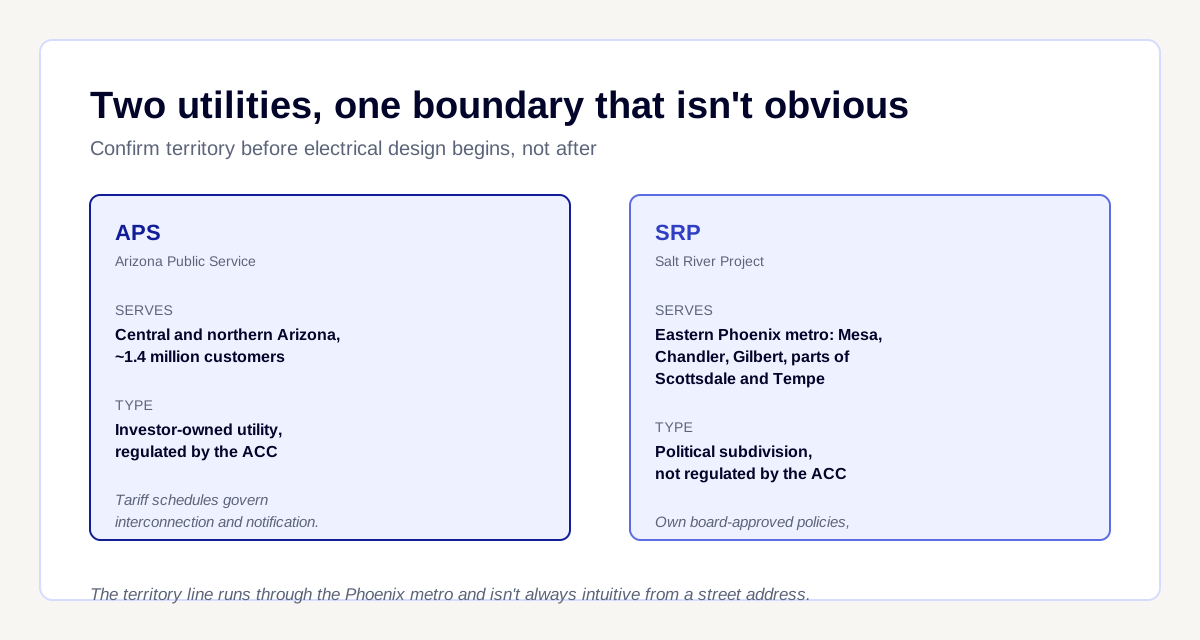
The APS/SRP territory boundary runs through the Phoenix metro and is not always intuitive from a street address. APS, regulated by the Arizona Corporation Commission, serves approximately 1.4 million customers across central and northern Arizona. SRP, a political subdivision of the state, serves the eastern Phoenix metro including Mesa, Chandler, Gilbert, and parts of Scottsdale and Tempe. Before finalizing electrical design for any Phoenix-area project, confirm which utility serves the site; the interconnection process, notification thresholds, and rebate programs differ between them.
Tucson operates under a different utility structure. Tucson Electric Power (TEP) and UniSource Energy Services serve the Tucson metro and southern Arizona. TEP administers its own commercial EV charging rebate program (Smart EV Charging Program) and has its own interconnection requirements. Pima County administers permitting for unincorporated areas outside Tucson city limits.
Active Jurisdictions in Arizona
Arizona has 15 counties and 91 incorporated cities and towns. The Phoenix metro accounts for the largest share of commercial EV charging permit activity, followed by Tucson. These are the jurisdictions with the most active commercial EV permitting:
| Jurisdiction | Authority | Notes |
|---|---|---|
| Phoenix | Phoenix Planning and Development Department | Permits submitted through the SHAPE PHX portal. APS and SRP territory boundary runs through the city. Confirm utility before design. Older buildings in downtown and central Phoenix often face panel capacity constraints requiring utility coordination before installation. |
| Scottsdale | Scottsdale Building Safety | Separate portal and checklist from Phoenix. Primarily APS territory in north Scottsdale; SRP serves some eastern areas. Older central Scottsdale commercial stock frequently requires service upgrades for DCFC. |
| Tempe | Tempe Community Development | Mixed APS/SRP territory. Commercial permit required. Tempe has been active in sustainability policy; verify current local amendments before design. |
| Mesa | Mesa Development Services | Primarily SRP territory. Commercial electrical permit and building permit required for commercial EV installations. SRP rebate preapproval required for DCFC projects with anticipated rebates over $15,000. |
| Chandler | Chandler Building Safety | SRP territory. Chandler plan reviewers check for compliance with their adopted IBC version and local amendments. Newer commercial developments in Chandler typically have more electrical headroom than older Phoenix metro stock. |
| Gilbert | Gilbert Building Safety | SRP territory. Commercial electrical permit required. Rapid commercial growth with an active EV charging development pipeline. |
| Tucson | Tucson Planning and Development Services | TEP territory. Tucson adopted a Commercial EV Ordinance with minimum EV charging requirements for new commercial construction; TEP rebates do not cover costs associated with meeting the ordinance minimum. Active reach code development as of late 2024. |
| Pima County (unincorporated) | Pima County Development Services | Covers unincorporated areas around Tucson. TEP and UniSource territory depending on location. Permit required for commercial EV charger installation. |
Don’t see your jurisdiction? Arizona has 91 incorporated cities and towns. Contact us at hello@rhonda.build if you need requirements for a specific Arizona jurisdiction.
Relevant Code References
NEC Article 625, Electric Vehicle Power Transfer System
Arizona’s electrical code baseline, adopted through the Arizona Department of Fire, Building and Life Safety. Article 625 governs EVSE installation: circuit sizing, disconnecting means, continuous load calculations, GFCI requirements, and grounding. Local jurisdictions may enforce prior NEC editions or add local amendments on top of the current adopted edition.
International Building Code (IBC), adopted with local amendments
Arizona adopted the IBC through the Arizona Department of Fire, Building and Life Safety. Local jurisdictions including Phoenix, Tucson, Chandler, and others adopt the IBC with their own amendments. The IBC defines the occupancy classification boundary that determines whether an “A” or “C-11” ROC license applies to the work.
Arizona Registrar of Contractors (ROC), A.R.S. Title 32, Chapter 10
The statutory basis for contractor licensing in Arizona. All electrical work on commercial EV charging installations requires an “A” (General Commercial) licensed contractor. Work performed by an unlicensed contractor or a contractor holding the wrong classification cannot be permitted and cannot pass inspection.
Arizona Corporation Commission (ACC) rules, APS tariff schedules
APS interconnection and service requirements for commercial EV charging installations are governed by ACC-approved tariff schedules. DCFC installations almost always trigger utility notification requirements under APS tariff schedules. APS serves approximately 1.4 million customers across central and northern Arizona and is regulated by the ACC.
SRP service requirements
SRP is a political subdivision of the state, not regulated by the ACC. Its service and interconnection requirements for commercial EV charging are set by its own board-approved policies. SRP’s EV charging rebate program requires preapproval for projects with anticipated rebates over $15,000, which covers six or more Level 2 ports or any DCFC project.
Tucson Commercial EV Ordinance
Tucson adopted minimum EV charging requirements for new commercial construction. TEP rebates through the Smart EV Charging Program do not cover costs associated with meeting the ordinance minimum; only costs above the required baseline are rebate-eligible. Verify the current ordinance requirements with Tucson PDSD before design.
Common Permit Corrections and Rejections for EV Charging Projects in Arizona
Arizona’s home rule structure means correction patterns vary by city. The corrections below are consistent across the Phoenix metro and Tucson markets.
Electrical
Missing or incorrect load calculations
The branch circuit must be sized at 125% of the EVSE nameplate amperage per NEC 625.41. A full load calculation under NEC Article 220 is required before sizing any EV charger circuit. Projects that calculate against panel rating rather than actual connected load, or that omit the continuous load multiplier, receive a correction before plan review advances.
Wrong ROC license classification on the application
Commercial occupancy EV work requires an “A” (General Commercial) ROC license. Residential electrical contractors holding a “C-11” license cannot pull commercial electrical permits. Applications submitted with the wrong ROC classification are rejected at intake.
NEC edition mismatch
Local jurisdictions may be operating under prior adopted NEC editions. Submitting plans citing 2023 NEC Article 625 requirements to a jurisdiction enforcing an earlier edition creates mismatches that require resubmittal. Confirm the adopted edition with your specific jurisdiction before design.
DCFC utility notification not documented
DCFC installations almost always trigger utility notification requirements under APS and SRP tariff schedules. Some jurisdictions require documentation of utility notification or a utility-issued service confirmation as part of the permit package. Submitting without this where required delays permit issuance.
Wiring method and conduit burial depth not specified
Plans must specify conduit type, burial depth, support intervals, and routing. Plans that omit wiring method specifications are flagged at plan review. Arizona’s extreme heat affects conduit material selection; confirm appropriate conduit type for outdoor runs in high-temperature environments.
Site / ADA
No accessible route shown
Plans must show a continuous accessible route from accessible parking spaces to the charger controls. This is the most frequent ADA correction on commercial submittals across all Arizona markets.
Clear floor space not documented
The U.S. Access Board requires a minimum clear ground space of 30 inches by 48 inches at each accessible charger, not sloped more than 1:48, and unobstructed by curbs, wheel stops, bollards, or landscaping. Plans that don’t document this receive a correction.
ADA slope violations
ADA compliance is actively enforced on commercial EV installations. The accessible space and access aisle must not exceed 1:48 slope in any direction. Arizona’s parking lot grading for drainage frequently creates slope conditions that require re-grading at accessible EV stalls.
Signage omitted
Accessible EV stalls require specific marking and signage under federal ADA standards. Consistently missing from civil and site sheets on first submittal.
Tucson ordinance minimum not addressed
For projects in Tucson subject to the Commercial EV Ordinance, plans that don’t document compliance with the minimum EV charging requirements receive a correction during plan review. This is separate from any voluntary above-minimum installation.
Utility Coordination
Not confirming APS vs. SRP territory before design
The APS/SRP territory boundary runs through the Phoenix metro and is not always intuitive from a street address. Designing to APS interconnection requirements for a site served by SRP, or vice versa, creates rework. Confirm utility territory before electrical design begins. Both utilities publish territory maps.
Starting utility coordination after permit approval
APS and SRP interconnection processes run on their own timelines, separate from jurisdiction permit review. DCFC installations requiring service upgrades or new transformer capacity trigger extended engineering review at the utility. Phoenix-area facilities in older commercial buildings in downtown Phoenix, Tempe, and central Scottsdale often face panel capacity constraints that require utility coordination before installation can begin. Treat utility coordination as a parallel process, not a sequential one.
SRP preapproval not obtained for large projects
SRP requires preapproval before installation begins for projects with anticipated rebates over $15,000, which includes six or more Level 2 ports or any DCFC project. Teams that complete installation before obtaining SRP preapproval on qualifying projects forfeit rebate eligibility and may face interconnection complications.
TEP and UniSource territory not treated separately
Tucson Electric Power and UniSource Energy Services operate independently of APS and SRP. Their interconnection processes, program requirements, and rebate structures differ from the Phoenix metro utilities. Projects in Tucson or southern Arizona that apply APS or SRP assumptions to utility coordination will encounter gaps.
Heat-related equipment and derating not addressed with utility
Arizona’s extreme heat affects DCFC performance and electrical system derating. Commercial DCFC installations in Arizona must account for temperature derating on conductors and equipment. Projects that don’t address heat derating in their load calculations or utility service applications may face late-stage revision requests from the utility.
Permitting shouldn’t be the bottleneck on your next charging site.
Rhonda makes permitting for commercial solar, battery storage, and EV charging infrastructure predictable. Pre-check your plan set against the specific jurisdiction and utility requirements for your Arizona project before you submit. See what Rhonda catches before your jurisdiction does.
← Back to the State and City Requirement Guide Library
Footnotes
- Arizona Registrar of Contractors (ROC)
- Arizona Department of Fire, Building and Life Safety
- NEC Article 625, Electric Vehicle Power Transfer System (NFPA 70, 2023 edition)
- NEC Article 220, Branch Circuit, Feeder, and Service Load Calculations
- Arizona EV Charger Electrical Requirements
- APS and SRP EV Charger Electrical Requirements
- APS Service Territory and Interconnection
- SRP Commercial EV Charging Rebate Program
- TEP Smart EV Charging Program Guidelines (effective January 1, 2025)
- Tucson EV Charging Code Amendments (November 2024)
- ADOT Arizona Electric Vehicle Infrastructure Deployment Plan 2024 Update
- Phoenix SHAPE PHX Permitting Portal
- Pima County Electric Vehicle Charger Permit
- U.S. Access Board, EV Charging Station Accessibility