Solar Permit Requirements in Washington State
Washington splits commercial solar permitting between L&I's statewide electrical authority, with a handful of large cities running their own electrical inspections instead, and local building departments that enforce structural, fire, and solar-readiness rules. There's no statewide fast track for commercial-scale systems. Here's how the process works, and where projects most often get stuck.

Do you need a permit to install solar in Washington State?
Yes. Commercial solar installations in Washington need both an electrical permit for the PV system wiring, inverters, and interconnection equipment, and a building permit for the racking, structural attachment, and any associated site work. The electrical permit is reviewed under NEC Article 690, adopted into Washington law through WAC 296-46B. Most of the state gets that permit from the Department of Labor & Industries (L&I), but Seattle, Tacoma, Bellevue, and Spokane are among a handful of cities that run their own delegated electrical inspection programs instead of L&I’s, so the authority you’re actually submitting to changes depending on where the project sits.
That’s a more fractured picture than our EV charging guide for Washington found, where L&I was the clean statewide electrical authority with no local carve-outs called out. Solar doesn’t get that same simplicity. The building permit follows the same local pattern either way: whatever city or county the project sits in, layering the state building and fire code on top of whatever local amendments that jurisdiction has adopted.
How Solar Permitting Works in Washington State
Washington splits solar permitting into two tracks, and the electrical one doesn’t always go where you’d expect.
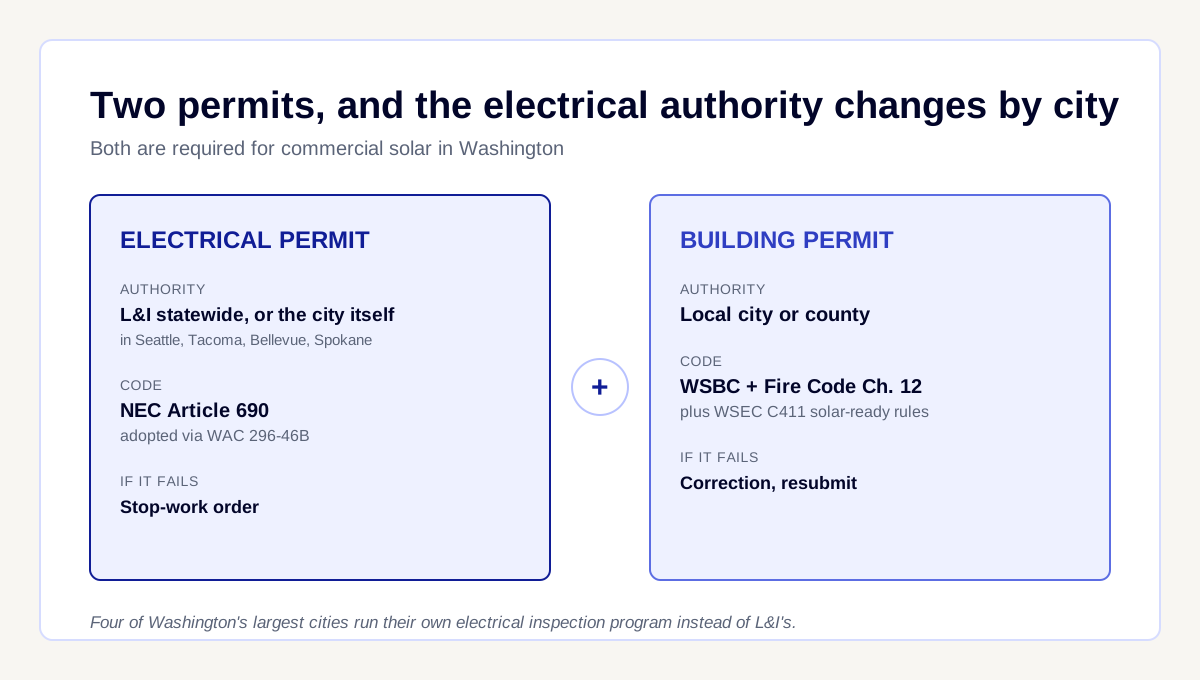
The electrical permit covers the PV system wiring, inverters, disconnects, and rapid shutdown equipment. Washington adopts the National Electrical Code by reference through WAC 296-46B, and WAC 296-46B-690 addresses PV systems specifically, requiring the system design to be kept on site for the inspector until the inspection is complete. L&I is the default statewide electrical authority, but it doesn’t inspect everywhere: Seattle (through SDCI), Tacoma (through Tacoma Power, within its service territory), Bellevue, and Spokane are among the cities that run their own delegated electrical inspection programs under RCW 19.28. File with the wrong authority and the application doesn’t move until it’s corrected. On the licensing side, the electrician doing PV-specific work needs either a General Journeyman Electrician license or the narrower Specialty Electrician – Solar PV endorsement, and the firm needs an electrical contractor license with a designated licensed administrator on file.
The building permit covers structural attachment, racking, and, for most commercial roof-mounted systems, fire code compliance. The Washington State Fire Code, Chapter 12, Section 1205, sets roof access requirements for PV arrays: at least two 36-inch-wide pathways from the lowest roof edge to the ridge on separate roof planes, plus one pathway on the street or driveway side. Arrays that cover 33% or less of the roof area and measure 1,000 square feet or less qualify for a reduced standard, an 18-inch pathway along each side of the ridge instead of the full pathway network. Get the array coverage math wrong against that threshold and the fire authority sends the layout back.
Structural review is where Washington’s geography actually shows up in the code. Roof-mounted commercial arrays need engineering sized to local wind speed and, in a lot of the state, snow load. Washington’s snow load varies enormously, from the Puget Sound lowlands to the Cascades and eastern Washington, and installations designed for roofs carrying more than 70 pounds per square foot of design snow load trigger a required engineering review most lowland projects never see. California’s solar posts spend their structural discussion on wildfire and seismic bracing. Washington’s is a snow load conversation for a meaningful share of the state.
New commercial construction has its own layer. The Washington State Energy Code’s commercial provisions, WAC 51-11C Section C411, require new commercial buildings of 20 stories or less to reserve a “solar zone,” up to 40% of the roof area, sized at 10 peak watts of PV per square foot, kept clear of vents, HVAC equipment, and other obstructions, with the roof’s dead and live load capacity documented on the record drawings to accommodate a future PV install. That’s a readiness requirement, not an installation mandate. It’s a narrower step than California’s 2025 Energy Code, which as of January 2026 requires new nonresidential buildings to actually include solar PV as part of the base design. Washington requires the roof to be ready for solar. California requires the solar.
There’s also no Washington equivalent to California’s AB 2188, the law that forces every city and county to run a checklist-based expedited process for small residential-scale systems. What exists instead operates a level up: the Energy Facility Site Evaluation Council (EFSEC) runs a one-stop-shop siting and certification process that’s mandatory for large thermal power plants and open on a voluntary opt-in basis to solar facilities of any size, but it’s built for utility-scale projects, not the commercial-rooftop and mid-size ground-mount work that drives most permit volume. Systems at or under 25 kW qualify for a simplified Level 1 interconnection review, but that only shortens the utility application, not the permit. A few jurisdictions run their own small-system fast tracks (Spokane’s SolarAPP+, Snoqualmie’s grant-funded expedited process), but there’s no statewide mandate, and commercial-scale projects don’t qualify for any of them regardless of jurisdiction.
Contractor licensing has no separate solar classification the way California’s C-46 does. The electrical scope requires a Washington electrical contractor license with a licensed administrator, plus journeyman or Specialty Electrician – Solar PV endorsed electricians. The structural and racking scope falls under general or specialty contractor registration through L&I under RCW 18.27, and reviewers check that classification against the submitted scope of work.
Active Jurisdictions in Washington State
These are the jurisdictions seeing the most commercial solar permit activity, with the same profile as our EV charging guide:
| Jurisdiction | Authority | Notes |
|---|---|---|
| Seattle | SDCI (building and electrical, not L&I) | SDCI issues both permits directly. New commercial construction must reserve a solar-ready zone under WSEC C411. Seattle City Light coordinates its interconnection review with SDCI’s permit review, so submitting both applications at once can save weeks over filing sequentially. |
| Bellevue | Bellevue Development Services (building) + Bellevue (electrical, not L&I) | PSE territory for interconnection on most commercial projects. |
| King County (unincorporated) | King County Permitting Division (building) + L&I (electrical) | Served by a mix of PSE and Seattle City Light depending on the area; confirm the interconnecting utility before design. |
| Tacoma | Tacoma Planning & Development Services (building) + Tacoma Power (electrical, within its service territory) | Municipal utility runs its own interconnection process, separate from the UTC-regulated framework that governs PSE and Avista. |
| Spokane (City) | City of Spokane Development Services (building and electrical, not L&I) | Runs SolarAPP+ for auto-issued small residential systems on payment of fees. Commercial-scale projects go through standard plan review with combined building, electrical, and fire inspection fees. |
| Spokane County (unincorporated) | Spokane County Building & Planning (building) + L&I (electrical) | Offers an over-the-counter permit process for standard small residential rooftop systems; commercial projects don’t qualify. Served by Avista for interconnection in most of the county. |
| Vancouver, WA | Vancouver Community Development (building) + L&I (electrical) | No distinct Vancouver, WA solar ordinance confirmed in public sources beyond the state baseline. |
| Pierce County | Pierce County Planning & Public Works (building) + L&I (electrical) | Large unincorporated area with significant ground-mount solar activity. Fire authority and interconnecting utility both vary by district; confirm by site. |
| Snohomish County | Snohomish County Permit Center (building) + L&I (electrical) | Served by Snohomish County PUD for interconnection, a municipal utility running its own Interconnection Application and Net Metering Agreement process outside the UTC-regulated framework. |
Don’t see your jurisdiction? Washington has 39 counties and nearly 300 incorporated cities, each with its own permitting process. Contact us at hello@rhonda.build if you need requirements for a jurisdiction not listed here.
Relevant Code References
WAC 296-46B, including WAC 296-46B-690 (Solar Photovoltaic Systems)
Adopts the National Electrical Code by reference for Washington, including Article 690, the governing article for PV system installation. WAC 296-46B-690 requires the PV system design to be available on site for the inspector until the inspection is complete. Enforced statewide by L&I, except in cities that run their own delegated electrical inspection program under RCW 19.28.
Washington State Fire Code, Chapter 12, Section 1205 (Energy Systems)
Sets roof access, pathway, and spacing requirements for rooftop PV: at least two 36-inch pathways from the lowest roof edge to the ridge on separate roof planes, plus one pathway on the street or driveway side. Arrays at or under 33% of roof area and 1,000 square feet qualify for a reduced 18-inch ridge-pathway exemption instead.
Washington State Energy Code, Commercial Provisions, WAC 51-11C, Section C411 (Renewable Energy)
Requires new commercial buildings of 20 stories or less to reserve a solar-ready zone, up to 40% of roof area sized at 10 peak watts of PV per square foot, and to document the roof’s dead and live load capacity to accommodate a future PV installation. A readiness requirement, not an installation mandate, narrower than California’s 2025 Energy Code requirement to actually install PV on new nonresidential construction.
RCW 18.27, Contractor Registration
Governs general and specialty contractor registration for the structural and racking scope of a solar installation. Reviewers check the registered contractor’s classification against the submitted scope of work; there’s no separate Washington solar contractor classification comparable to California’s C-46.
RCW 80.60 / WAC 480-108, Net Metering and Interconnection
The Washington UTC’s interconnection rules for the state’s investor-owned utilities (PSE, Avista, Pacific Power). Systems at or under 25 kW qualify for a simplified Level 1 interconnection review; larger systems go through additional technical study. Municipal and PUD utilities (Seattle City Light, Tacoma Power, Snohomish County PUD) run their own interconnection processes outside UTC jurisdiction.
EFSEC Site Certification Process
Washington’s Energy Facility Site Evaluation Council runs a one-stop-shop siting and certification process, mandatory for large thermal power plants and open on a voluntary opt-in basis to solar facilities of any size. Built for utility-scale projects; it doesn’t reach the commercial-rooftop and mid-size ground-mount projects that drive most permit volume.
Common Permit Corrections and Rejections for Commercial Solar Projects in Washington State
Commercial solar permitting in Washington touches the local jurisdiction, the electrical authority (L&I or the city itself), and the serving utility. The corrections that show up most often fall into three categories.
Structural / Fire
Missing or unstamped structural calculations
Roof-mounted commercial arrays need PE-stamped calculations showing wind uplift and, in much of the state, snow load, plus attachment details tied to the specific roof structure. Installations designed for more than 70 pounds per square foot of design snow load trigger a required engineering review that a straightforward Puget Sound lowlands roof may not. Submittals without a stamped structural package, or without snow load addressed for the project’s location, are a common reason a commercial solar plan check stalls before it starts.
Roof access pathway violations
Fire Code Section 1205 sets specific geometry: two 36-inch pathways to the ridge on separate roof planes, one pathway on the street or driveway side, or, for arrays at or under 33% roof coverage and 1,000 square feet, the reduced 18-inch ridge-pathway exemption. Layouts that don’t reflect the right standard for the array’s actual coverage, or that don’t document coverage clearly enough for the fire authority to check it, get flagged.
Solar-ready zone not reserved on new construction
On new commercial buildings, if the roof design doesn’t reserve the solar zone and document the load capacity required under WSEC C411, structural review comes back with a correction, even on projects where PV installation isn’t part of the current scope of work.
Electrical
Filed with the wrong electrical authority
Seattle, Tacoma, Bellevue, and Spokane run their own delegated electrical inspection programs instead of L&I’s. An application sent to L&I for a project inside one of these cities, or vice versa, doesn’t move until it’s corrected. Confirming the right authority before submittal is a five-minute check that avoids a real delay.
Incomplete rapid shutdown documentation
NEC 690.12 rapid shutdown compliance is frequently cited on solar electrical submittals nationwide, and Washington is no exception. Plans need the initiation device location on the site plan and clear labeling for the PV system disconnect and any back-fed breaker. Ambiguous or missing labeling is treated the same as missing compliance.
Contractor or administrator mismatch
An electrical contractor license without a licensed administrator on file, or PV-specific wiring performed by a journeyman without the Specialty Electrician – Solar PV endorsement where the scope calls for it, triggers a correction. On the structural side, a contractor registered for a scope narrower than the submitted work, similar to California’s C-46/C-10 mismatch, is a common intake-stage rejection.
Utility Coordination
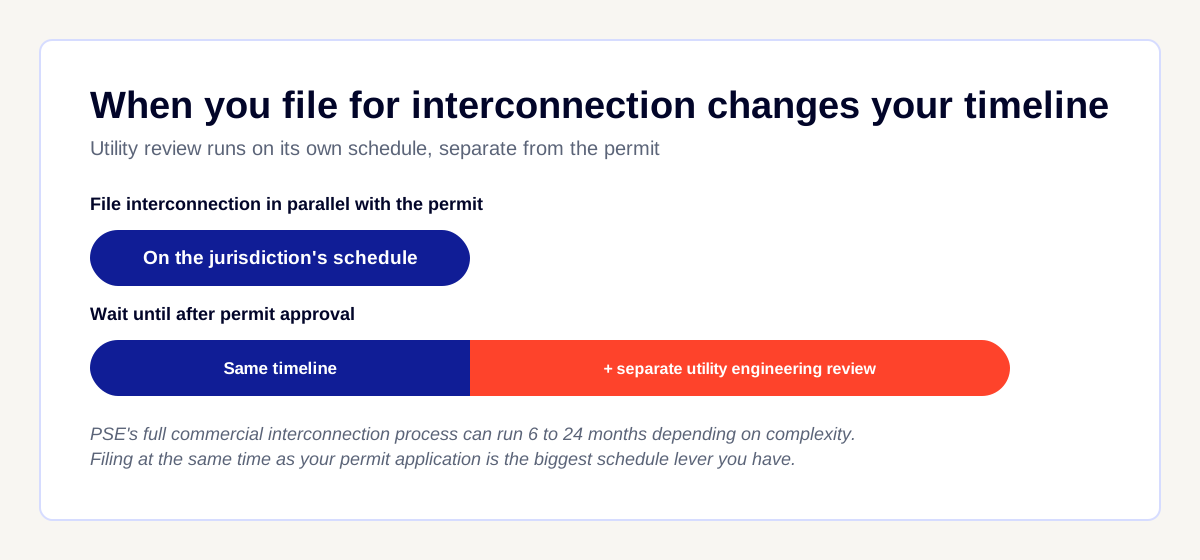
Starting interconnection after permit approval
Interconnection runs on the utility’s own schedule, separate from the jurisdiction’s permit process. Filing the interconnection application in parallel with the permit is the biggest lever available to keep a project on schedule.
Municipal utility assumptions
Projects in Tacoma Power, Seattle City Light, or Snohomish County PUD territory that assume PSE or Avista’s UTC-regulated process and timelines get surprised. Municipal and PUD utilities run their own separate interconnection agreements, outside WAC 480-108.
Net metering size threshold confusion
Net metering generally offsets usage behind the meter for systems up to roughly 100 kW before a different rate structure or large-generation program applies, and the details vary by utility. Projects sized near that boundary should confirm rate treatment with the interconnecting utility early. It doesn’t affect the permit directly, but reviewers who catch the mismatch will ask about it.
Permitting shouldn’t be the bottleneck on your next solar site.
Rhonda makes permitting for commercial solar, battery storage, and EV charging infrastructure predictable. Pre-check your plan set against Washington’s state code and the specific local amendments for your jurisdiction before you submit, so corrections don’t cost you weeks. See how Rhonda can help.
← Back to the State and City Requirement Guide Library
Footnotes
- WAC 296-46B, Electrical Safety Standards, Administration, and Installation, including WAC 296-46B-690, Solar Photovoltaic Systems (Washington State Legislature / L&I)
- L&I City Electrical Permits & Inspections (lni.wa.gov)
- Washington State Fire Code, Chapter 12, Section 1205, Energy Systems (Washington State Building Code Council, sbcc.wa.gov)
- WAC 51-11C, Washington State Energy Code, Commercial Provisions, Section C411, Renewable Energy (Washington State Legislature)
- Washington State Building Code Council, structural load provisions for solar photovoltaic power systems (sbcc.wa.gov); Kittitas County PV Solar Installations Code Interpretation Policy #26 (co.kittitas.wa.us)
- Washington Developing Streamlined Solar Project Permitting Process (Perkins Coie); EFSEC
- WAC 480-108 (Washington Utilities and Transportation Commission); RCW 80.60, Net Metering of Electricity
- Puget Sound Energy: Customer Connected Solar / Distributed Renewables (pse.com)
- Seattle City Light: Installing a Solar Array (seattle.gov)
- Avista Interconnection Application Packet, 0–500 kW (myavista.com)
- Snohomish County PUD: Connecting Generation (snopud.com)
- City of Spokane: SolarAPP+ (my.spokanecity.org)