Solar Permit Requirements in Oregon
Oregon requires a separate electrical permit and structural permit for commercial solar, unlike its single-permit EVSE process. The structural permit has a real fast path, but it's set by roof framing and load, not system size, so most commercial rooftop and ground-mount projects still land on full plan review.


Do you need a permit to install solar in Oregon?
Yes. Commercial solar projects need a structural permit for the racking and roof or ground attachment, and an electrical permit for the PV wiring, inverters, and interconnection equipment. Both are required for essentially every commercial installation, and both typically involve plan review, structural calculations for anything outside a narrow prescriptive path, and separate utility interconnection paperwork.
That two-permit structure is worth flagging because it’s a real departure from how Oregon handles EV charging. Oregon runs a single statewide EVSE permit that covers all electrical components of a charging installation, with no separate building permit required in most of the state. Solar doesn’t get that consolidation. The electrical permit and the structural permit are two separate applications, reviewed under two separate codes, and a project can clear one while still waiting on the other.
How Solar Permitting Works in Oregon
Oregon’s Building Codes Division (BCD) sets the statewide code baseline for both permits, and most jurisdictions either issue permits directly through BCD’s ePermitting system or administer their own program under BCD oversight. Portland, Eugene, Salem, and Bend run their own local portals but enforce the same statewide code and fee structure. For jurisdictions without their own building department, BCD issues the permit directly.
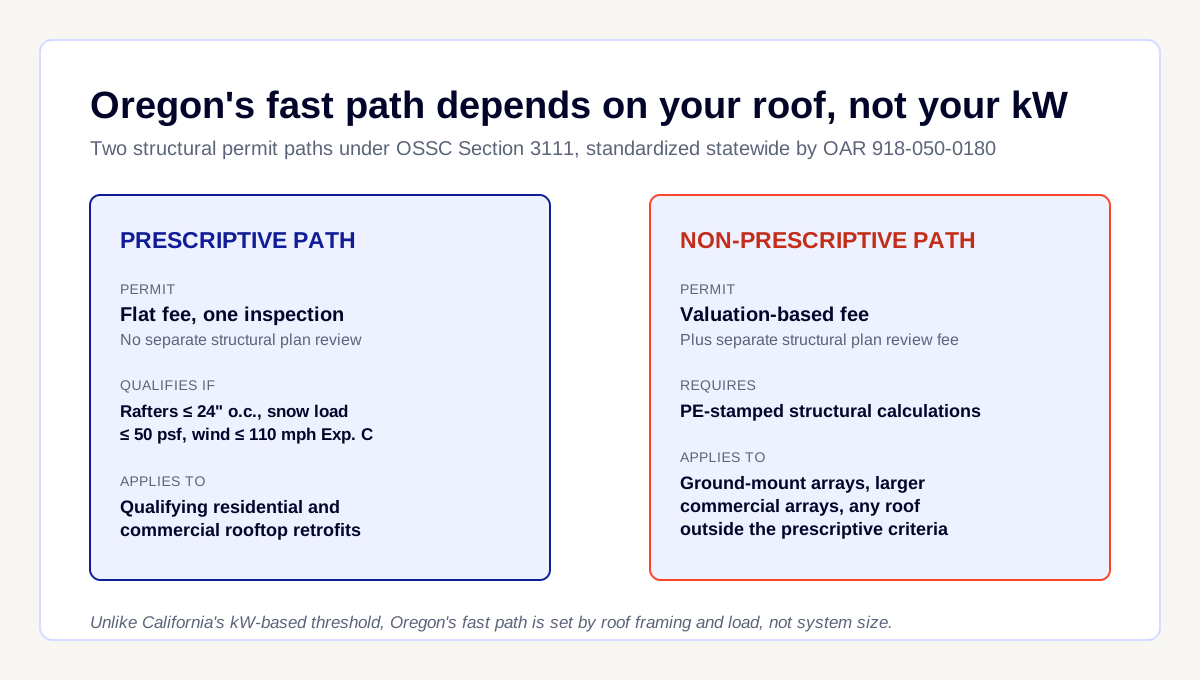
The structural permit is governed by the 2025 Oregon Structural Specialty Code (OSSC), Section 3111, Solar Energy Systems, effective October 1, 2025 and mandatory for all new commercial submittals since April 1, 2026. Oregon standardizes fee and process methodology statewide under OAR 918-050-0180, and splits structural review into two paths. The prescriptive path is a flat fee with one inspection and no separate structural plan review, available to installations meeting specific criteria in OSSC 3111.5.3, roughly: rafters spaced 24 inches on center or less, roof design ground snow loads at or under 50 psf, basic wind speeds at or under 110 mph in Exposure C, and attachments kept clear of the roof edge, hip, and ridge. Several jurisdictions, including Bend and Scappoose, publish a prescriptive checklist specifically for commercial rooftop-mounted systems, so this isn’t a residential-only carve-out. But it’s a narrow one: any ground-mount array, any roof outside those load and framing numbers, and most larger commercial arrays fall to the non-prescriptive path, which requires PE-stamped structural calculations and a separate plan review fee.
The electrical permit falls under the 2023 Oregon Electrical Specialty Code (OESC), which adopts the 2023 edition of NFPA 70, the National Electrical Code, largely as written. NEC Article 690 governs PV system installation, and NEC 690.12 rapid shutdown, same as everywhere else, is the item reviewers flag most: the initiation device location, PV system disconnect, and any back-fed breaker or arc-fault protection need to be clearly labeled and shown on the site plan. Oregon doesn’t layer heavy statewide amendments onto the NEC the way California’s CEC does, so if your team designs to national code, Oregon’s electrical review tends to track closer to a straight NEC 690 read than California’s does.
Fire and roof access requirements live inside OSSC 3111.3.4.8 rather than a separate fire code chapter. Pathways at least 36 inches wide are required along at least three sides of the roof plane, measured from the roof edge and ridge to the array. Arrays longer or wider than 150 feet need intermediate pathways at that interval, with no unseparated array section larger than 22,500 square feet, and disconnects, J-boxes, and combiner boxes can’t sit inside a required pathway or cutout. Get the array layout wrong against these numbers and it comes back regardless of which structural path you’re on.
Contractor licensing runs through two separate boards. The company needs Construction Contractors Board (CCB) registration with a commercial endorsement, plus the required commercial bond. The individual installer needs a BCD trade license: either a full Electrical Journeyman license or the Limited Renewable Energy Technician (LRT) license, a solar-specific credential scoped to systems up to 50 kW AC. Larger commercial arrays exceeding that scope need to be installed under a full electrical license, not an LRT. Reviewers check license scope against system size, so an LRT-licensed crew listed on a project that clearly exceeds 50 kW AC is a common source of intake rejection.
Active Jurisdictions in Oregon
Oregon has 36 counties and 241 incorporated cities. Most of them fall under the state BCD baseline. These are the jurisdictions with the most commercial solar permit activity:
| Jurisdiction | Authority | Notes |
|---|---|---|
| Portland | Portland Permitting & Development | Runs its own structural and electrical permitting on top of the state baseline. Commercial submittals go through Development Hub PDX. PGE territory for interconnection. |
| Eugene | Eugene Building & Permit Services | Follows state OSSC/OESC baseline. EWEB (Eugene Water & Electric Board) serves this area, a municipal utility with its own interconnection process outside the PUC’s OAR 860 rules. |
| Salem | Salem Community Development | Follows state baseline. Mixed utility territory; PGE and Pacific Power both serve parts of the area, with Salem Electric serving some residential pockets. Confirm utility before design. |
| Bend | Bend Building Safety | Follows state baseline and publishes its own prescriptive commercial rooftop solar checklist. Pacific Power territory. Active commercial solar development pipeline. |
| Gresham | Gresham Development Services | Follows state baseline. PGE territory. |
| Smaller jurisdictions (statewide) | Oregon BCD | For cities and counties without their own building department, BCD administers both the structural and electrical permit directly through ePermitting. |
Don’t see your jurisdiction? Contact us at hello@rhonda.build if you need requirements for a specific Oregon jurisdiction.
Relevant Code References
Oregon Structural Specialty Code (OSSC), 2025 Edition, Section 3111
Governs structural requirements for solar energy systems: prescriptive and non-prescriptive installation paths, roof access pathways and setbacks, and solar-ready provisions for new construction. Effective October 1, 2025, mandatory for new commercial submittals since April 1, 2026.
OAR 918-050-0180, Statewide Methodology for Solar Structural Installation Permits
Standardizes structural permit fee calculation statewide: a flat prescriptive fee including one inspection, versus a valuation-based non-prescriptive fee plus a separate structural plan review fee. Excludes the cost of PV panels and inverters from the valuation calculation.
Oregon Electrical Specialty Code (OESC), 2023 Edition
Adopts NFPA 70, the National Electrical Code, 2023 edition. NEC Article 690 governs PV system installation; NEC 690.12 rapid shutdown compliance is the most frequently cited electrical item at plan review.
OAR 918-305-0100, Adoption of Oregon Electrical Specialty Code
The administrative rule adopting the OESC statewide and setting its relationship to local jurisdiction enforcement.
Oregon CCB Commercial Contractor Endorsement and BCD Trade Licenses
Solar installation requires CCB registration with a commercial endorsement at the company level, and either a full Electrical Journeyman license or a Limited Renewable Energy Technician (LRT) license, scoped to systems up to 50 kW AC, at the individual installer level.
OAR 860-082, Small Generator Interconnection
The Oregon PUC rule governing interconnection of generating facilities up to 10 MW to PGE, Pacific Power, or Idaho Power’s system. Four review tiers, Tier 1 through Tier 4, scale with system size and grid impact.
OAR 860-039, Net Metering Rules; ORS 757.300
Governs interconnection for customer-generator net metering facilities, with its own Level 1 through Level 3 review structure. ORS 757.300 is the statutory basis requiring utilities to allow net metering interconnection.
Common Permit Corrections and Rejections for Commercial Solar Projects in Oregon
Oregon’s structural and electrical permits are reviewed separately, and the serving utility runs its own process on top of both. The corrections that show up most often fall into three categories.
Structural
Claiming the prescriptive path without meeting the criteria
The prescriptive checklist looks simple, but the rafter spacing, snow load, and wind speed thresholds in OSSC 3111.5.3 are specific. Projects submitted on a prescriptive checklist that don’t actually meet the criteria get bounced to the non-prescriptive path mid-review, costing more time than starting there.
Missing PE-stamped calculations on non-prescriptive submittals
Any project outside the prescriptive criteria, including essentially every ground-mount array, needs PE-stamped structural calculations covering dead load, wind uplift, and snow load, plus attachment details tied to the specific roof or foundation. Submittals without a stamped package stall before review even starts.
Roof access pathway violations
OSSC 3111.3.4.8 sets specific geometry: 36-inch pathways along at least three sides, intermediate pathways for arrays over 150 feet, and a 22,500 square foot cap on unseparated array area. Site plans that don’t reflect these numbers get flagged, and disconnects or combiner boxes placed inside a required pathway are a repeat offender.
Electrical
Incomplete rapid shutdown documentation
NEC 690.12 rapid shutdown is the most-cited electrical correction in Oregon, same as everywhere else. Plans need the initiation device location shown on the site plan and clear labeling for the PV disconnect, back-fed breaker, and arc-fault protection.
LRT license used outside its scope
The Limited Renewable Energy Technician license covers systems up to 50 kW AC. Listing an LRT-licensed installer on a commercial project that exceeds that scope is a common intake rejection, particularly on projects where the system size grew during design after the contractor was already engaged.
Inverter documentation mismatch
Inverter models on the one-line diagram that don’t match the manufacturer cut sheet submitted with the application trigger a correction. Reviewers check these directly against each other.
Utility Coordination
Starting interconnection after permit approval
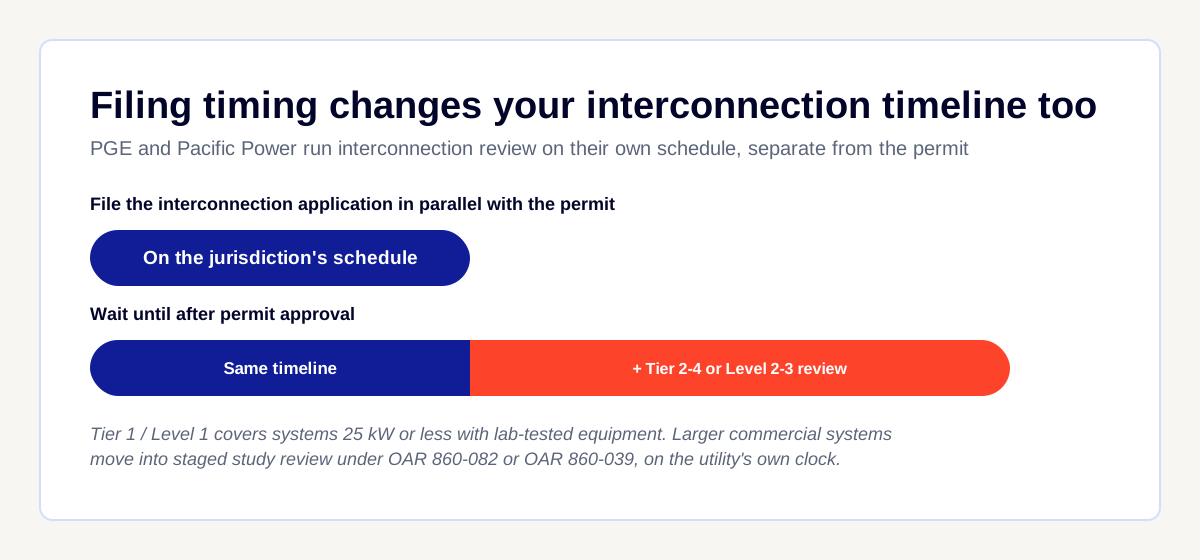
PGE and Pacific Power both run interconnection review on their own schedule, separate from the jurisdiction’s permit process. Filing early, in parallel with the permit application, is the single biggest lever available to keep a commercial project on schedule.
Project size pushing past Tier 1 or Level 1
Systems at or under 25 kW with lab-tested inverter-based equipment qualify for the simplest review, OAR 860-082 Tier 1 or OAR 860-039 Level 1. Most commercial-scale systems don’t qualify and move into staged Tier 2 through Tier 4 or Level 2 through Level 3 review, each with its own screening and, for larger or more complex interconnections, a full study. That process runs on the utility’s queue, not the jurisdiction’s calendar.
Pacific Power capacity reservation step skipped
Projects applying under Pacific Power’s incentive and interconnection process generally need an approved capacity reservation before the interconnection application itself can be submitted, and that reservation expires if the application isn’t filed within the window. Teams that treat interconnection as a single step miss this sequencing.
EWEB and municipal utility territory treated the same as PGE or Pacific Power
Eugene Water & Electric Board is a municipal utility outside the PUC’s OAR 860 framework entirely, with its own interconnection process and timeline. Projects in Eugene that apply PGE or Pacific Power assumptions to utility coordination will hit gaps. Confirm utility territory, and which interconnection framework applies, before electrical design begins.
Permitting shouldn’t be the bottleneck on your next solar site.
Rhonda makes permitting for commercial solar, battery storage, and EV charging infrastructure predictable. Pre-check your plan set against Oregon’s state code and the specific local amendments for your jurisdiction before you submit, so corrections don’t cost you weeks. See how Rhonda can help.
← Back to the State and City Requirement Guide Library
Footnotes
- Oregon Structural Specialty Code (OSSC), 2025 Edition, Section 3111, Solar Energy Systems (Oregon Building Codes Division, oregon.gov/bcd)
- OAR 918-050-0180, Statewide Methodology for Solar Structural Installation Permits (Cornell Legal Information Institute / Oregon BCD)
- Oregon Electrical Specialty Code (OESC), 2023 Edition, adopting NFPA 70 National Electrical Code (Oregon Building Codes Division)
- OAR 918-305-0100, Adoption of Oregon Electrical Specialty Code (Cornell Legal Information Institute)
- NEC Article 690, Solar Photovoltaic (PV) Systems (NFPA 70)
- Oregon Building Codes Division, “How to permit for solar photovoltaic system installs,” ePermitting help documentation (oregon.gov/bcd)
- Prescriptive Rooftop-Mounted Solar Photovoltaic Installation Checklists, City of Bend and City of Scappoose (bendoregon.gov, scappoose.gov)
- Oregon Construction Contractors Board (CCB), commercial contractor licensing and endorsements (oregon.gov/ccb)
- Limited Renewable Energy Technician (LRT) license, Oregon license directory (apps.oregon.gov/SOS/LicenseDirectory)
- OAR 860-082, Small Generator Interconnection Rules (Oregon Public Utility Commission, oregon.public.law)
- OAR 860-039, Net Metering Rules (Oregon Public Utility Commission, oregon.public.law)
- ORS 757.300, Net metering facility interconnection (Oregon Revised Statutes)
- Portland General Electric, “Interconnection Process Overview,” resources for solar installers (portlandgeneral.com)
- Pacific Power, Oregon Solar Incentive Program capacity reservation and interconnection application process (pacificpower.net)