Battery Energy Storage (BESS) Permit Requirements in Washington State
Washington requires three permits for most commercial battery energy storage (BESS) projects: building, electrical, and a fire and hazardous materials permit that most solar and EV charging projects never trigger. NFPA 855 and the Washington State Fire Code drive that third review. Here's how the process works, and where projects most often get stuck.

Do you need a permit to install battery energy storage in Washington State?
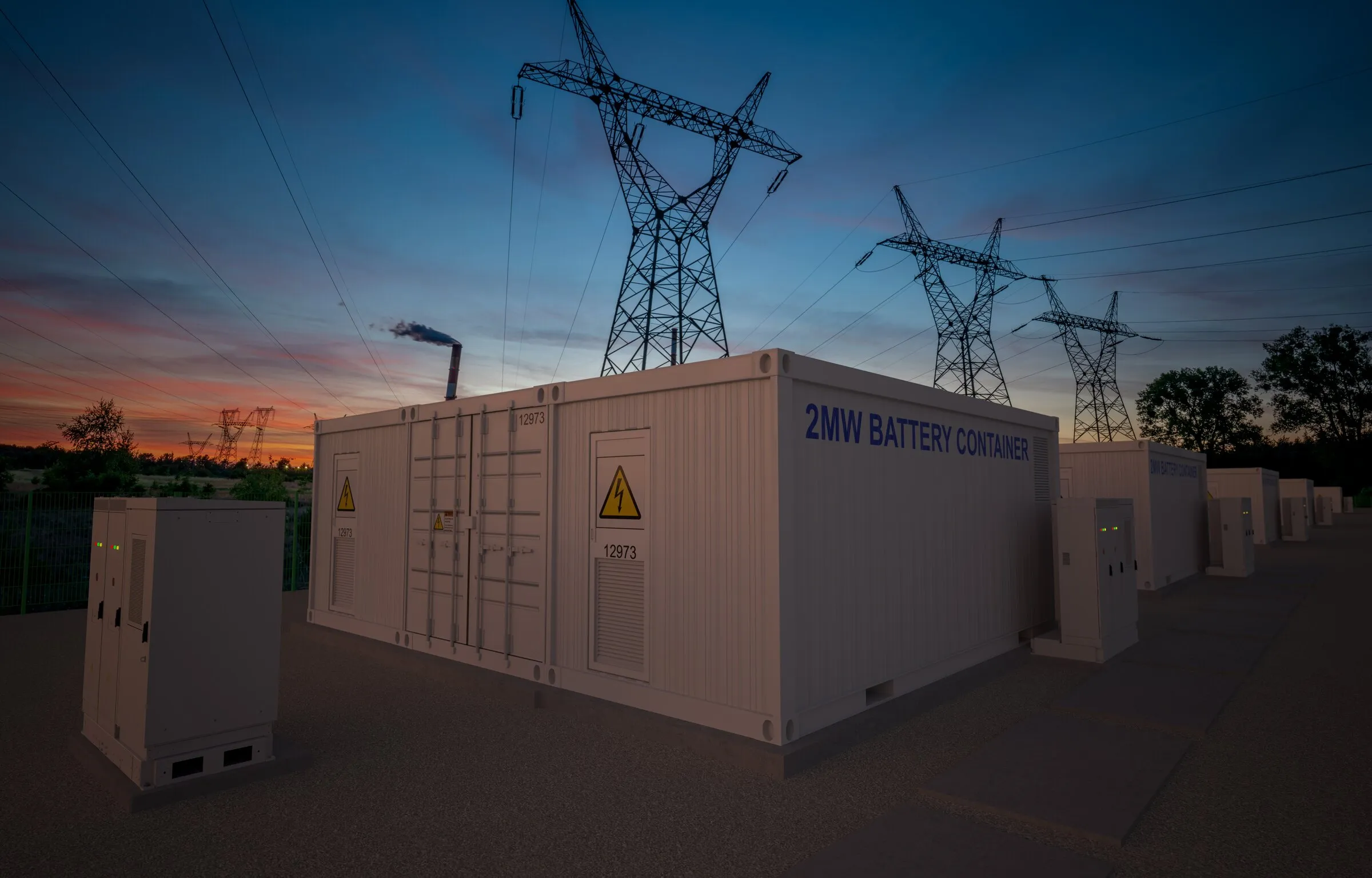
Yes. Commercial battery energy storage (BESS) projects in Washington need a building permit for the pad, enclosure, and foundation, an electrical permit for the system wiring and interconnection equipment, and, above a low threshold, a separate fire and hazardous materials permit from the local fire authority. That third permit is the part teams coming from solar or EV charging tend to underestimate. It isn’t a formality layered on top of the building permit. It’s governed by its own standard, NFPA 855, and it can hold up a project independently of whatever the building and electrical reviewers decide.
That’s a meaningfully different shape than our solar guide for Washington found, where the fire authority shows up mainly to check roof access pathways on an otherwise building-and-electrical process. For BESS, fire and hazmat review sits alongside building and electrical as a full third track, with its own capacity thresholds, its own testing requirements, and its own ability to stop a project cold.
How BESS Permitting Works in Washington State
Washington routes commercial BESS permitting through three separate reviewers, and all three have to sign off before the system gets energized.
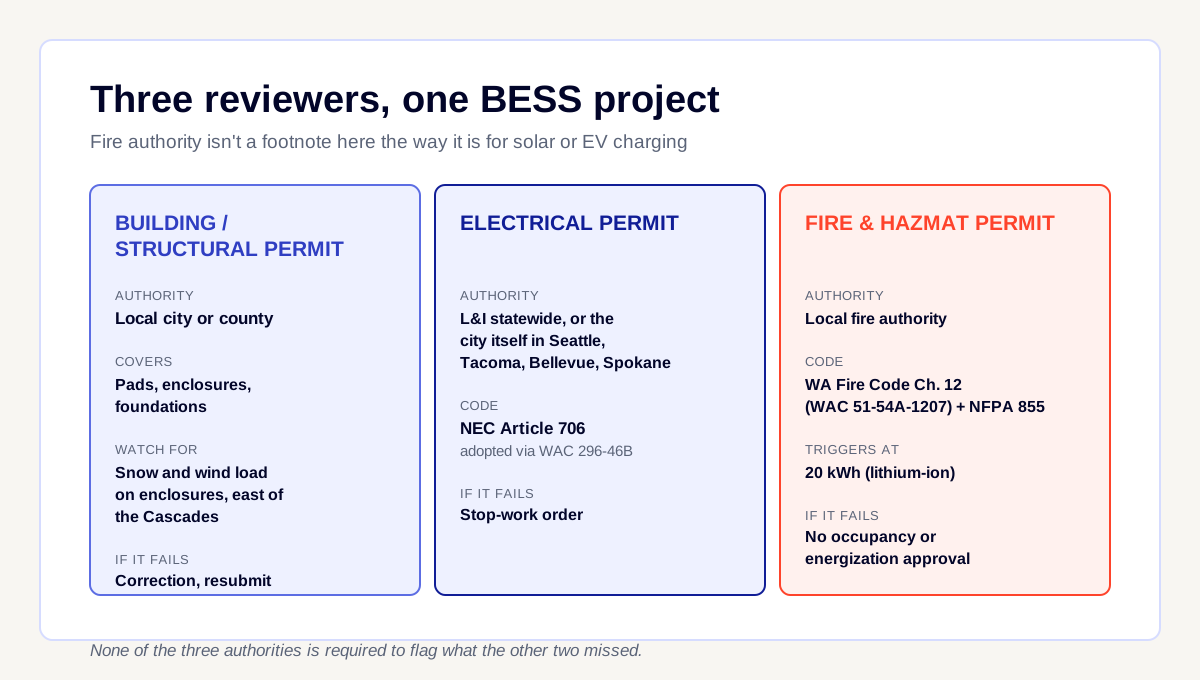
The fire and hazmat permit is the one that makes BESS different from solar or EV charging, and it kicks in fast. Washington’s fire code, adopted through WAC 51-54A-1207 and enforced locally, sets capacity thresholds that trigger the requirement: 20 kWh for lithium-ion and flow batteries, 70 kWh for lead-acid, and as low as 3 kWh for capacitor-based systems. Almost any commercial-scale lithium-ion system clears that bar before the racking is even ordered. Once you’re over the threshold, both a construction permit and a separate operational permit are required, and the code sets hard spacing rules: indoor battery groups are capped near 50 kWh with at least 3 feet of separation between groups and from walls, and outdoor installations need roughly 5 feet from lot lines, buildings, and combustibles. Cross into larger fire areas, generally above 600 kWh of lithium-ion in a single area, and the project needs either a hazard mitigation analysis or UL 9540A large-scale fire testing showing a fire in one unit won’t propagate to the next, with the test report going to the fire code official for approval before the permit issues. Washington keeps this code current: the state has run emergency rules letting fire officials apply the 2023 edition of NFPA 855 ahead of the normal adoption cycle, and folded 2024 International Fire Code language into the 2021 Washington State Fire Code off-cycle, with Seattle Fire already pushing for 2027 edition language early. Confirm which edition your local fire authority is actually enforcing before you finalize a design.
The electrical permit covers the battery system’s wiring, disconnects, and interconnection equipment, governed by NEC Article 706, the article for energy storage systems, adopted into Washington law through WAC 296-46B. Systems above 50V DC nominal trigger the full Article 706 requirements: disconnecting means, working clearances, and outdoor enclosures rated NEMA 3R or 4X at minimum. Where the system interconnects under NEC Article 710, a system design review under WAC 296-46B-100 is required and has to stay on site for the inspector until the inspection is complete, the same documentation requirement Washington’s solar rules impose. Backup-only systems that island during an outage don’t need a utility interconnection agreement, but they still need their anti-islanding function verified at inspection under IEEE 1547-2018. And just like solar, this permit doesn’t always go to L&I: Seattle, Tacoma, Bellevue, and Spokane run their own delegated electrical inspection programs under RCW 19.28, so the authority you file with depends on where the project sits.
The building permit covers the pad, enclosure, and foundation, and structural review is where Washington’s geography shows up again. BESS enclosures are usually ground-mounted rather than roof-mounted, so wind and seismic anchorage tend to matter more than for rooftop PV, but snow load isn’t irrelevant: drift loading against enclosure walls and roofs, and foundation frost depth, both come up more east of the Cascades and at higher elevations than in the Puget Sound lowlands. A structural package that doesn’t address the site’s actual load conditions is a common source of delay before the fire and electrical reviews even start.
Contractor licensing follows the same pattern as solar: no BESS-specific specialty classification exists. The electrical scope requires a general electrical contractor license with a licensed administrator on file and journeyman or master electricians doing the work. Washington’s Limited Energy (EL01) specialty covers low-voltage control and signaling circuits, not power wiring, so it doesn’t substitute for the general electrical scope here. The structural and civil scope falls under general or specialty contractor registration through L&I under RCW 18.27, and reviewers check the registered scope against the submitted work the same way they do on solar and EV projects.
Active Jurisdictions in Washington State
These are the jurisdictions seeing the most commercial BESS permit activity, with the same profile as our solar and EV charging guides:
| Jurisdiction | Authority | Notes |
|---|---|---|
| Seattle | SDCI (building and electrical, not L&I) + Seattle Fire Department (fire/hazmat) | Seattle Fire has been active in pushing early adoption of newer NFPA 855 and IFC energy storage language; confirm the current edition in force before finalizing a design. |
| Bellevue | Bellevue Development Services (building) + Bellevue (electrical, not L&I) + Bellevue Fire | PSE territory for interconnection on most commercial projects. |
| King County (unincorporated) | King County Permitting Division (building) + L&I (electrical) + King County Fire Marshal | Served by a mix of PSE and Seattle City Light depending on the area; confirm the interconnecting utility before design. |
| Tacoma | Tacoma Planning & Development Services (building) + Tacoma Power (electrical, within its service territory) + Tacoma Fire | Municipal utility runs its own interconnection process, separate from the UTC-regulated framework that governs PSE and Avista. |
| Spokane (City) | City of Spokane Development Services (building and electrical, not L&I) + Spokane Fire Department | Standard commercial plan review applies to BESS; no small-system fast track comparable to Spokane’s solar SolarAPP+ program covers battery storage. |
| Spokane County (unincorporated) | Spokane County Building & Planning (building) + L&I (electrical) + Spokane County Fire District | Higher snow-load and wind-exposure sites in the county warrant structural review earlier in design. Served by Avista for interconnection in most of the county. |
| Vancouver, WA | Vancouver Community Development (building) + L&I (electrical) + Vancouver Fire | No distinct Vancouver, WA BESS ordinance confirmed in public sources beyond the state baseline. |
| Pierce County | Pierce County Planning & Public Works (building) + L&I (electrical) + Pierce County Fire authority (varies by district) | Large unincorporated area seeing growing utility-scale storage interest, including projects near the I-5 corridor. Fire authority and interconnecting utility both vary by district; confirm by site. |
| Snohomish County | Snohomish County Permit Center (building) + L&I (electrical) + Snohomish County Fire District | Served by Snohomish County PUD for interconnection, a municipal utility running its own process outside the UTC-regulated framework. |
Don’t see your jurisdiction? Washington has 39 counties and nearly 300 incorporated cities, each with its own permitting process. Contact us at hello@rhonda.build if you need requirements for a jurisdiction not listed here.
Relevant Code References
WAC 51-54A-1207, Electrical Energy Storage Systems (Washington State Fire Code, Chapter 12)
Sets capacity thresholds that trigger fire and hazmat permit requirements: 20 kWh for lithium-ion and flow batteries, 70 kWh for lead-acid, 3 kWh for capacitor-based systems. Requires both a construction permit and a separate operational permit, sets indoor and outdoor spacing rules, and requires a hazard mitigation analysis or UL 9540A large-scale fire testing above certain quantities.
NFPA 855, Standard for the Installation of Stationary Energy Storage Systems
Referenced directly by the Washington State Fire Code as the governing installation standard for energy storage systems. Washington has run emergency rules allowing fire officials to apply newer NFPA 855 editions ahead of the normal state adoption cycle, and has folded newer International Fire Code energy storage language into the current Washington Fire Code off-cycle. Confirm the edition your local fire authority is actually enforcing.
UL 9540 and UL 9540A
UL 9540 is the product listing standard for the energy storage system and its components. UL 9540A is the large-scale fire test protocol used to demonstrate that a fire in one unit won’t propagate to an adjacent one, required above certain fire-area quantities or where the fire code official directs it. Test reports go to the fire code official for review and approval before the permit issues.
NEC Article 706, Energy Storage Systems
Adopted into Washington law through WAC 296-46B. Governs disconnecting means, working clearances, and enclosure requirements for stationary battery systems above 50V DC nominal. Outdoor enclosures need a NEMA 3R or 4X rating at minimum.
WAC 296-46B-100, System Design Review
Required where a battery system interconnects under NEC Article 710. The design documentation has to be available on site for the inspector from the first inspection through completion, the same requirement Washington imposes on solar PV systems.
RCW 18.27, Contractor Registration
Governs general and specialty contractor registration for the structural, civil, and pad-and-enclosure scope of a BESS installation. No separate Washington BESS contractor classification exists; reviewers check the registered contractor’s scope against the submitted work.
RCW 80.60 / WAC 480-108, Net Metering and Interconnection
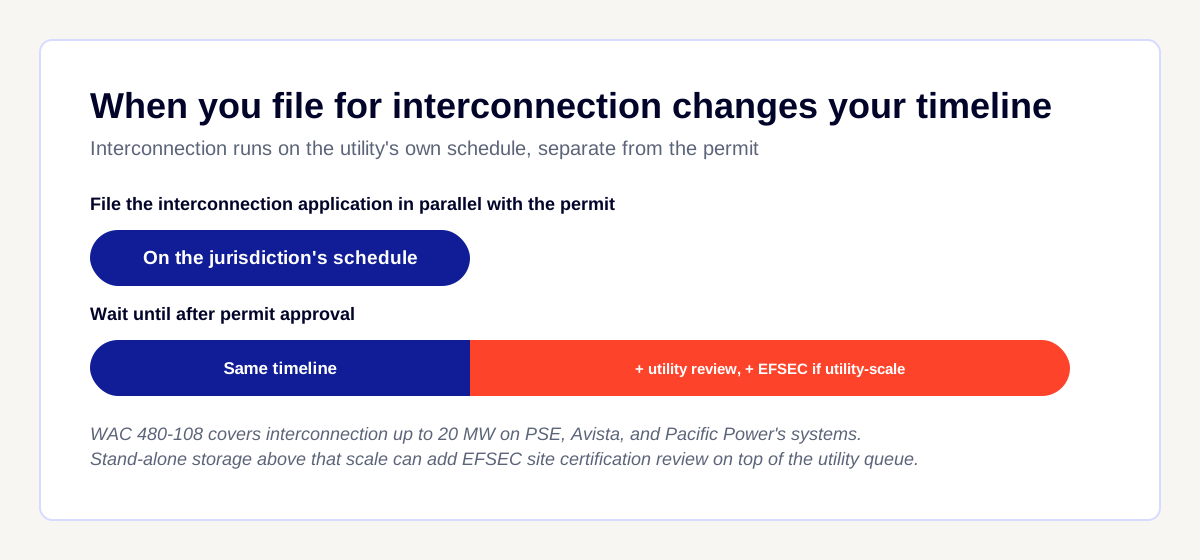
The Washington UTC’s interconnection rules apply to customer-owned generating and storage facilities up to 20 MW connecting to the state’s investor-owned utilities: PSE, Avista, and Pacific Power. Municipal and PUD utilities (Seattle City Light, Tacoma Power, Snohomish County PUD) run their own interconnection processes outside UTC jurisdiction.
EFSEC Site Certification Process (RCW 80.50)
Washington’s Energy Facility Site Evaluation Council runs a one-stop-shop siting and certification process, mandatory for large thermal power plants and open on an opt-in basis to energy facilities more broadly, including large stand-alone storage. Real utility-scale projects are already going through it: Skagit County’s proposed 200 MW / 800 MWh Goldeneye battery storage facility is currently under EFSEC review.
Common Permit Corrections and Rejections for Commercial BESS Projects in Washington State
Commercial BESS permitting in Washington touches the local jurisdiction, the electrical authority, and the fire authority, three separate reviewers that don’t automatically coordinate with each other. The corrections that show up most often fall into three categories.
Fire & Life Safety
Spacing and grouping math doesn’t match the code
The indoor rule, battery groups capped near 50 kWh with 3 feet of separation between groups and from walls, and the outdoor rule, roughly 5 feet from lot lines, buildings, and combustibles, get checked directly against the site plan. Layouts that don’t show this math explicitly, or that assume a listed prepackaged system automatically qualifies for an exception without documenting it, come back as a correction.
Missing UL 9540A data where the fire area exceeds the threshold
Projects that cross into larger fire areas, generally above 600 kWh of lithium-ion in a single area, need either a hazard mitigation analysis or UL 9540A large-scale fire test data showing non-propagation to adjacent units. Submittals that assume UL 9540 product listing alone is sufficient, without the 9540A propagation data the fire code official actually needs, are a common and expensive-to-fix gap.
No commissioning or decommissioning plan
Washington’s fire code requires a commissioning plan covering integrated safety system testing, thermal management verification, and personnel training, plus a decommissioning plan, before operational approval. Submittals that treat this as a post-permit operational detail rather than a submittal requirement get sent back.
Electrical
System design review documentation missing at inspection
WAC 296-46B-100 requires the design review documentation to be physically available on site from the first inspection through completion. Projects that have the documentation but don’t have it on site, or that assume passing initial plan review means the requirement is satisfied, fail inspection over something that was never actually missing from the design.
Filed with the wrong electrical authority
Seattle, Tacoma, Bellevue, and Spokane run their own delegated electrical inspection programs instead of L&I’s. An application sent to L&I for a project inside one of these cities, or the reverse, doesn’t move until it’s corrected, the same issue that shows up on solar submittals in Washington.
Anti-islanding not documented or verified
Backup-capable systems need their anti-islanding function verified at inspection under IEEE 1547-2018. Plans that don’t show how the system prevents energizing a de-energized utility line during an outage, or that omit the verification step from the commissioning sequence, are a frequent electrical correction.
Utility Coordination
Starting interconnection after permit approval
Interconnection runs on the utility’s own schedule, separate from the jurisdiction’s permit process, and for BESS it can carry an extra layer that solar and EV projects don’t: large stand-alone systems may also need EFSEC site certification. Filing interconnection, and confirming whether EFSEC review applies, in parallel with the permit is the biggest lever available to keep a project on schedule.
Storage-only configuration not disclosed clearly
Whether a system is backup-only (no interconnection agreement needed, but anti-islanding verification required) or grid-interactive (full WAC 480-108 or municipal interconnection process required) changes which utility process applies. Projects that don’t disclose the intended operating mode clearly at the outset run into late-stage requirements that force a redesign.
Municipal utility assumptions
Projects in Tacoma Power, Seattle City Light, or Snohomish County PUD territory that assume PSE, Avista, or Pacific Power’s UTC-regulated timelines get surprised. Municipal and PUD utilities run their own separate interconnection processes, outside WAC 480-108.
Permitting shouldn’t be the bottleneck on your next storage site.
Rhonda makes permitting for commercial solar, battery storage, and EV charging infrastructure predictable. Pre-check your plan set against Washington’s state code and the specific local amendments for your jurisdiction before you submit, so corrections don’t cost you weeks. See how Rhonda can help.
← Back to the State and City Requirement Guide Library
Footnotes
- WAC 51-54A-1207, Electrical Energy Storage Systems (Washington State Legislature / State Building Code Council)
- Washington State Fire Code, Chapter 12, Energy Systems (up.codes)
- Washington State Association of Fire Marshals: Pre-Implementation of NFPA 855 (2023) and 2024 IFC Provisions (wsafm.com)
- Washington State Association of Fire Marshals: ESS/EV Resources (wsafm.com)
- NFPA 855, Standard for the Installation of Stationary Energy Storage Systems (National Fire Protection Association, nfpa.org)
- UL 9540A Test Method for Battery Energy Storage Systems (UL Solutions)
- WAC 296-46B, Electrical Safety Standards, Administration, and Installation (Washington State Legislature / L&I)
- NEC Article 706, Energy Storage Systems (National Fire Protection Association / NFPA 70)
- L&I City Electrical Permits & Inspections (lni.wa.gov)
- WAC 480-108 (Washington Utilities and Transportation Commission); RCW 80.60, Net Metering of Electricity
- Puget Sound Energy: Battery Storage Projects (pse.com)
- EFSEC: Facilities (Washington Energy Facility Site Evaluation Council)
- RCW 18.27, Contractor Registration (Washington State Legislature)