Battery Energy Storage (BESS) Permit Requirements in Texas
Texas has no statewide building code, so battery energy storage (BESS) permitting runs through whatever code edition your jurisdiction has adopted, the same fragmentation that shapes solar and EV charging. What's different is the fire marshal: NFPA 855 and UL 9540A test data can decide a commercial BESS project as much as the building or electrical permit does.

Do you need a permit to install battery energy storage in Texas?
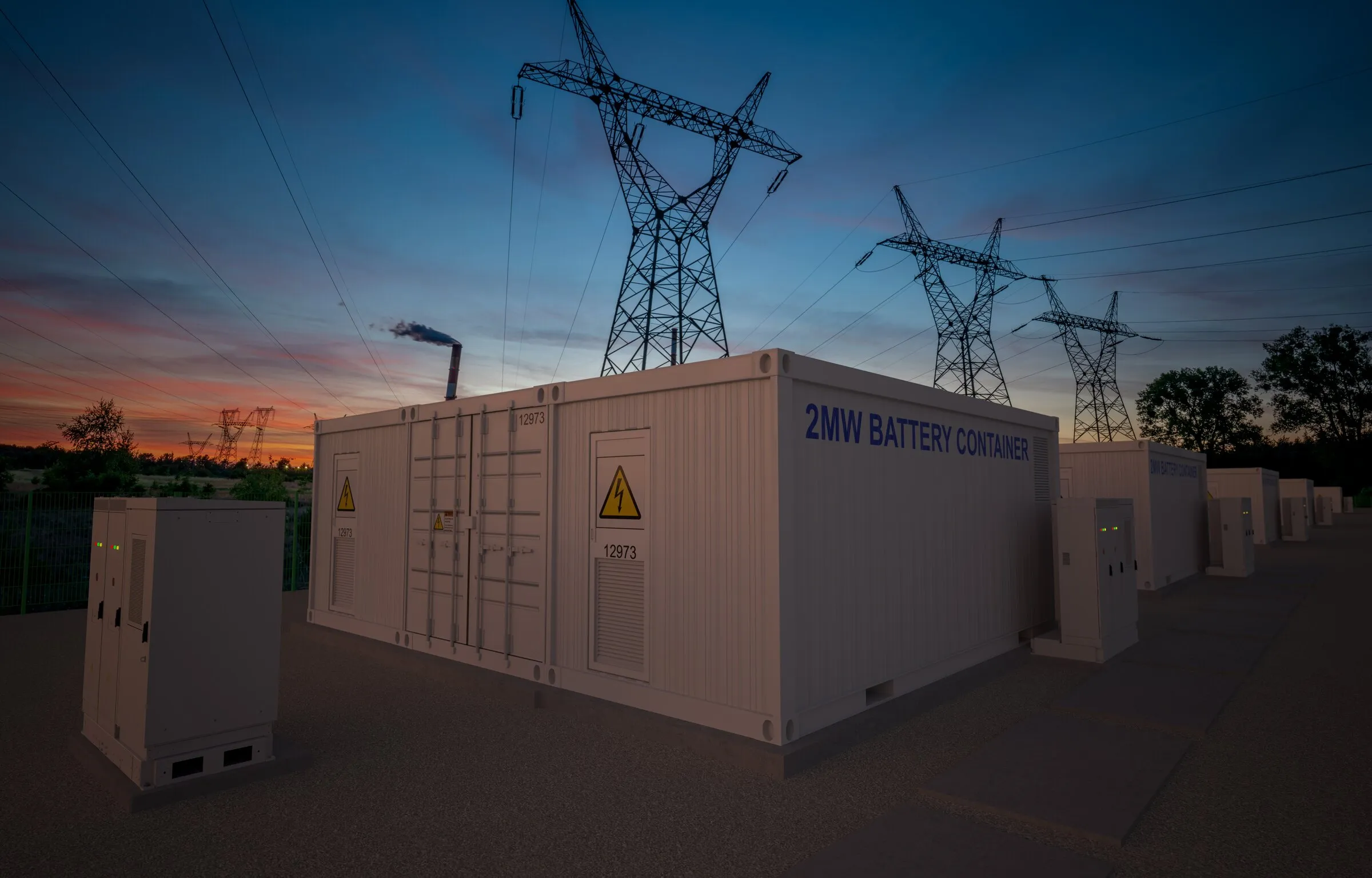
Yes. A building permit covers the pad, foundation, and enclosure. An electrical permit covers the wiring, disconnects, and interconnection equipment. And for most commercial-scale battery energy storage (BESS) installations, a fire or hazardous materials permit covers the battery chemistry itself, the fire suppression and detection design, and an emergency response plan. That third permit is the real difference from solar or EV charging in Texas.
The fragmentation is the same one that shapes Texas’s solar permitting: there’s no statewide building code that applies uniformly to commercial construction, so which code edition and local amendments apply depends entirely on your jurisdiction. BESS inherits that same fragmentation on the building and electrical side. But it adds a layer solar and EV charging don’t have to the same degree: a fire authority with real veto power, working from a fire code standard, NFPA 855, that’s specific to battery storage and still catching up jurisdiction by jurisdiction.
How BESS Permitting Works in Texas
Commercial BESS in Texas gets reviewed by three separate authorities, and only two of them look anything like what a solar or EV charging project goes through.
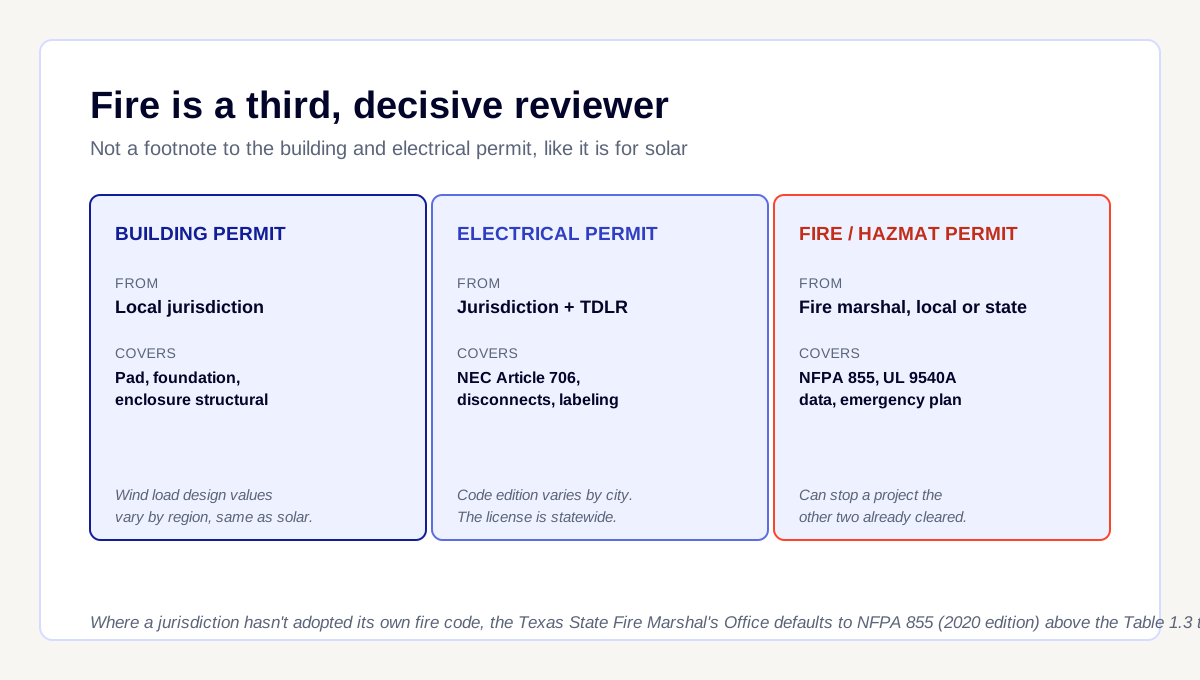
The building permit covers the same ground it does for any commercial structure: foundation and pad design, enclosure or container anchoring, and structural wind load. Gulf Coast jurisdictions, Houston included, need calculations built around hurricane-force wind uplift; inland jurisdictions still need wind and hail load calculations, just against different design values. A PE-stamped structural package is expected regardless of where in the state the project sits.
The electrical permit runs on NEC Article 706, Energy Storage Systems, the article governing disconnecting means, labeling, and circuit protection for a stationary battery installation. Like every other electrical code question in Texas, which NEC edition applies is a city-by-city decision, there’s no statewide adoption authority. Statewide, the one constant is licensing: all electrical work on a BESS installation has to be performed under a Texas Electrical Contractor License issued by TDLR, the same floor that applies to solar and EV charging work.
The fire and hazardous materials permit is where BESS genuinely diverges. NFPA 855, the Standard for the Installation of Stationary Energy Storage Systems, sets maximum aggregate battery capacity by chemistry and location in its Table 1.3 before a project needs additional fire protection, more separation distance, or large-scale fire test data. That test data comes from UL 9540A, the large-scale fire test method that evaluates how a battery system behaves in a thermal runaway event, heat and gas release, deflagration risk, and whether the enclosure and any fire suppression actually contain it. It’s the only consensus standard NFPA 855 cites for this kind of evaluation, and fire officials ask for it once a project’s design exceeds the limits set in whatever fire code they’re enforcing. A hazardous materials permit tied to lithium-ion battery quantity, and an emergency operations plan describing safe shutdown procedures, typically ride along with it.
Where this gets genuinely fragmented is adoption. The Texas State Fire Marshal’s Office has made the 2020 edition of NFPA 855 mandatory in areas under its own jurisdiction, for BESS above the Table 1.3 thresholds, and the 2023 edition expanded those requirements based on incident data specific to lithium-ion safety. But that state mandate is a backstop, not a floor. Home-rule cities, Houston, Dallas, Austin, San Antonio among them, run their own fire departments and adopt their own fire code editions and amendments, the same pattern as the building and electrical code. Confirming which NFPA 855 edition, 2020 or 2023, your specific jurisdiction is actually enforcing before you finalize a plan set is not optional. Utility-owned equipment sometimes falls under a separate exclusive control exemption from local code enforcement, but that exemption generally doesn’t extend to a commercial developer’s project, so don’t assume it applies to yours.
Active Jurisdictions in Texas
These are the jurisdictions seeing the most commercial BESS permit activity, using the same footprint as our EV charging and solar guides:
| Jurisdiction | Authority | Notes |
|---|---|---|
| Houston | Houston Permitting Center + Houston Fire Department Fire Marshal’s Office | No zoning ordinance; the building permit is the primary land-use instrument. Fire Marshal review is separate from and downstream of the building permit. Structural stamps must account for Gulf Coast hurricane wind loads. CenterPoint Energy handles interconnection. |
| Austin | Austin Development Services + Austin Fire Department | Building, electrical, and fire all required for commercial BESS. Austin Energy is a municipal utility and runs its own interconnection process for storage, separate from Development Services review and outside PUCT Rule 25.211. |
| Dallas | Dallas Building Inspection + Dallas Fire-Rescue Fire Marshal’s Office | Commercial electrical, building, and fire permits required. Oncor serves Dallas; interconnection runs through Oncor’s DG portal, separate from the city permit and fire review timelines. |
| San Antonio | San Antonio Development Services + San Antonio Fire Department | Commercial permits and fire review required. CPS Energy, a municipal utility, handles interconnection and sets its own terms rather than following PUCT Rule 25.211. |
| Fort Worth | Fort Worth Development Services + Fort Worth Fire Department | Oncor territory. Maintains its own permit checklist and adopted code editions separate from Dallas despite proximity; confirm both the building/electrical edition and the fire code edition before submitting. |
| Austin Energy territory | Austin Energy (municipal utility) | Commercial BESS, whether standalone or paired with solar, interconnects through Austin Energy’s own distributed generation process rather than PUCT Rule 25.211, mirroring how it treats commercial solar. |
| Unincorporated areas | Varies by county / Texas State Fire Marshal’s Office | Many counties have no local fire code adoption of their own, which puts BESS fire review under the State Fire Marshal’s default NFPA 855 (2020 edition) mandate. TDLR electrical licensing still applies regardless. Utility interconnection still runs through whichever TDU or co-op serves the site. |
Don’t see your jurisdiction? Texas has over 1,200 incorporated municipalities. Contact us at hello@rhonda.build if you need requirements for a specific Texas city or county.
Relevant Code References
NFPA 855, Standard for the Installation of Stationary Energy Storage Systems
Sets maximum aggregate battery capacity by chemistry and installation type, indoor, outdoor, walk-in unit, before a project needs added fire protection, more separation, or UL 9540A large-scale fire test data. The Texas State Fire Marshal’s Office mandates the 2020 edition as a default in areas under its own jurisdiction; the 2023 edition expanded requirements based on lithium-ion incident data. Which edition applies depends on your specific jurisdiction’s adoption.
UL 9540 and UL 9540A
UL 9540 is the product and system safety listing for energy storage equipment. UL 9540A is the large-scale fire test method that evaluates thermal runaway propagation, heat and gas release, and whether an enclosure and any fire suppression contain the event. It’s the standard NFPA 855 cites for large-scale fire test data, and fire officials ask for it once a design exceeds the fire code’s baseline thresholds.
NEC Article 706, Energy Storage Systems (adopted locally)
Governs disconnecting means, labeling, and circuit protection for stationary battery installations. Texas has no statewide code adoption authority, so which NEC edition applies, and therefore which section numbers govern, depends on what your jurisdiction has adopted.
International Fire Code, Chapter 12, Energy Systems (adopted locally)
The fire code chapter that incorporates NFPA 855 by reference for electrical energy storage systems. Adoption and amendments are a city-by-city decision, same as the building and electrical code.
PUC Substantive Rule 25.211, Interconnection of On-Site Distributed Generation
The statewide framework governing how behind-the-meter distributed generation, including commercial BESS, interconnects with a utility’s distribution system. Standalone systems large enough to connect directly to the ERCOT transmission grid go through ERCOT’s generation interconnection process instead, a separate and considerably longer track.
PUC Substantive Rule 25.212, Technical Requirements for Interconnection
Companion rule to 25.211, setting technical standards for parallel operation and inverter certification for distributed generation, storage included.
Texas State Fire Marshal’s Office, BESS Guidance
Establishes the 2020 edition of NFPA 855 as mandatory, above Table 1.3 thresholds, in jurisdictions under the SFMO’s own authority, with a note that utility-owned equipment may fall under a separate exclusive control exemption. Doesn’t apply where a city or county has adopted its own fire code.
TDLR Electrical Contractor Licensing
All electrical work performed under a Texas permit, BESS installation included, must be performed by a licensed electrician under a valid Texas Electrical Contractor License. The one piece of this process TDLR sets statewide.
Common Permit Corrections and Rejections for Commercial BESS Projects in Texas
BESS submittals get flagged by three different reviewers with three different priorities, and the corrections below are the ones that show up consistently across Texas jurisdictions.
Fire & Life Safety
Missing or unstamped structural calculations for the pad and enclosure
PE-stamped calculations covering foundation design, enclosure anchoring, and wind uplift, built to Gulf Coast hurricane exposure values where applicable, are close to universal. Submittals without a stamped structural package stall before fire or electrical review even starts.
Missing UL 9540A test data above the NFPA 855 threshold
Once a project’s aggregate battery capacity exceeds the limits in NFPA 855 Table 1.3 for its chemistry and installation type, fire officials expect large-scale fire test data. Submittals that assume a smaller-system exemption applies, without checking the actual aggregate capacity, get sent back.
No emergency operations plan or missing fire department coordination
NFPA 855 expects a documented emergency operations plan covering safe shutdown procedures, and Texas fire marshals treat this as a submittal requirement, not paperwork to sort out after approval. Projects that show up without one, or without evidence of coordination with the local fire department, get held.
Wrong NFPA 855 edition assumed
The 2023 edition expanded requirements based on lithium-ion incident data; the 2020 edition, still the state default, doesn’t reflect those changes. A plan set built to the wrong edition for the jurisdiction is a straightforward correction, but it costs a full review cycle.
Electrical
Incomplete NEC Article 706 documentation
Disconnecting means, labeling, and circuit protection details specific to Article 706 are the most-cited electrical correction on Texas BESS submittals. Ambiguous or missing disconnect labeling is treated the same as missing compliance.
Wrong NEC edition assumed
Which NEC edition a Texas jurisdiction has adopted varies by city, and BESS section numbering under Article 706 shifts between editions the same way PV rapid shutdown numbering does under Article 690. Confirm the adopted edition before finalizing drawings.
Missing or invalid TDLR license number
All commercial electrical work requires a TDLR-licensed electrical contractor, and the license number has to appear on the application. Applications without a valid number are rejected at intake.
Battery spec doesn’t match the UL 9540 listing on the one-line diagram
Reviewers check the battery model and UL 9540 listing shown on the one-line diagram against the manufacturer cut sheets directly. Mismatches, or an unlisted battery model, trigger a correction every time.
Utility Coordination
Starting interconnection after permit approval
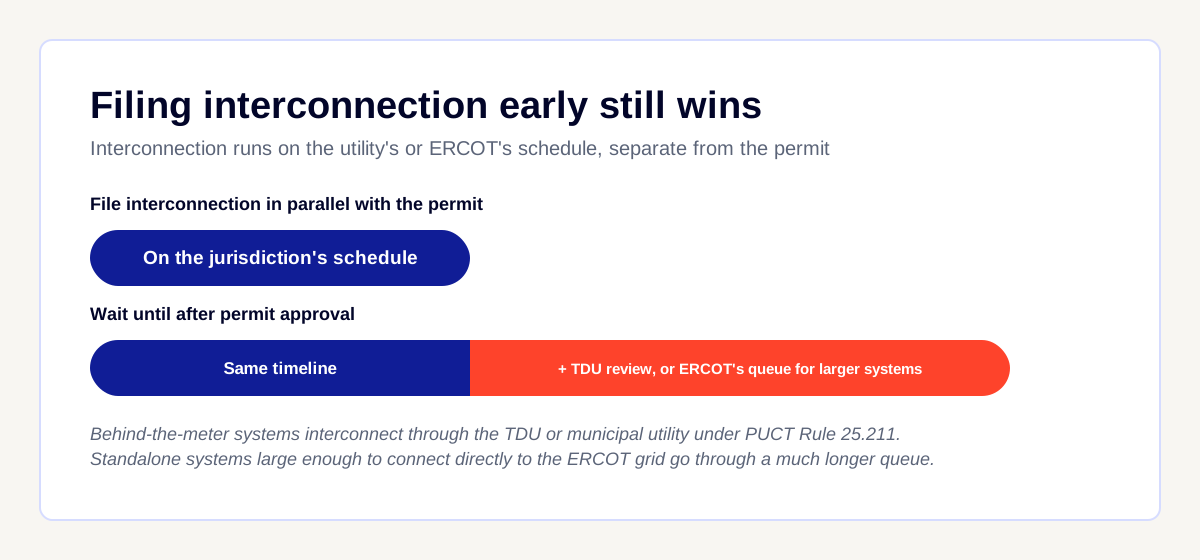
Interconnection with the TDU, municipal utility, or ERCOT runs on its own schedule, independent of the jurisdiction’s permit and fire review. Filing that application in parallel with the permit is the biggest schedule lever available on a Texas commercial BESS project.
Behind-the-meter assumptions applied to a grid-scale system, or vice versa
Smaller, behind-the-meter commercial BESS projects interconnect through the TDU or municipal utility under PUCT Rule 25.211. Standalone systems large enough to connect directly to the transmission grid go through ERCOT’s generation interconnection process instead, a materially longer queue that has grown substantially as ERCOT’s battery storage fleet has expanded. Sizing a project’s interconnection strategy against the wrong track costs real time.
Municipal utility assumptions applied to TDU territory, or vice versa
Austin Energy and CPS Energy aren’t part of ERCOT’s competitive retail market and don’t follow PUCT Rule 25.211 the way Oncor, CenterPoint, and AEP Texas do. A project team that applies Oncor’s process to an Austin Energy or CPS Energy site, or the reverse, loses time reworking the interconnection application.
Fire permit and interconnection application submitted out of sequence
Some jurisdictions and utilities expect fire marshal sign-off, or at minimum a submitted hazardous materials permit, before they’ll accept an interconnection application. Confirm the sequence your specific jurisdiction and utility expect rather than assuming it matches a solar or EV charging project.
Permitting shouldn’t be the bottleneck on your next storage site.
Rhonda makes permitting for commercial solar, battery storage, and EV charging infrastructure predictable. Pre-check your plan set against Texas’s state code and the specific local amendments for your jurisdiction before you submit, so corrections don’t cost you weeks. See how Rhonda can help.
← Back to the State and City Requirement Guide Library
Footnotes
- Texas Department of Insurance, State Fire Marshal’s Office, Battery Energy Storage Systems guidance
- UL Solutions, UL 9540A Test Method for Thermal Runaway Fire Propagation in Battery Energy Storage Systems
- NFPA 855, Standard for the Installation of Stationary Energy Storage Systems (National Fire Protection Association, adopted locally by jurisdiction)
- NEC Article 706, Energy Storage Systems (adopted locally by jurisdiction)
- International Fire Code, Chapter 12, Energy Systems (International Code Council, adopted locally by jurisdiction)
- PUC Substantive Rule 25.211, Interconnection of On-Site Distributed Generation
- PUC Substantive Rule 25.212, Technical Requirements for Interconnection and Parallel Operation of On-Site Distributed Generation
- ERCOT, Battery Energy Storage Task Force
- TDLR, Electrical Contractors and Electricians
- Oncor, Energy System Developers / DG Interconnection
- CenterPoint Energy, Distributed Generation Application Process FAQs
- Austin Energy, Distribution System Interconnection Guide for Customer-Owned Generation
- Houston Permitting Center
- Dallas Building Inspection
- San Antonio Development Services