Battery Energy Storage (BESS) Permit Requirements in Oregon
Commercial battery energy storage (BESS) in Oregon requires a structural permit, an electrical permit, and fire and hazardous materials review, and that third reviewer is the one most likely to set the pace. Here's how the state's structural, electrical, and fire code layers fit together, and where projects most often get stuck.

Do you need a permit to install battery energy storage in Oregon?
Yes. Commercial battery energy storage (BESS) projects in Oregon need a structural permit for the pad, enclosure, and foundation, and an electrical permit for the wiring, disconnects, and interconnection equipment. On top of both, fire and hazardous materials review kicks in once the installation crosses specific battery quantity thresholds, and for lithium-ion systems at commercial scale, it almost always does.
That third reviewer is what makes BESS a different animal than solar. Oregon splits commercial solar into a structural permit and an electrical permit, with fire and roof access requirements folded into the structural code chapter. BESS keeps the same two-permit structural and electrical split, but adds a standalone fire and hazardous materials review that isn’t a subsection of something else. It’s its own code chapter, it can require large-scale fire test data before a jurisdiction will sign off, and it’s frequently the reviewer that decides your timeline.
How BESS Permitting Works in Oregon
Oregon’s Building Codes Division (BCD) sets the statewide structural and electrical code baseline, the same way it does for solar. Most jurisdictions issue permits through BCD’s ePermitting system or their own portal operating under BCD oversight, and BCD issues permits directly where a jurisdiction has no building department of its own. Fire and hazmat review is a separate track entirely, run by the local fire jurisdiction under the Oregon Fire Code, with the Oregon State Fire Marshal (OSFM) setting the statewide baseline those local jurisdictions enforce.
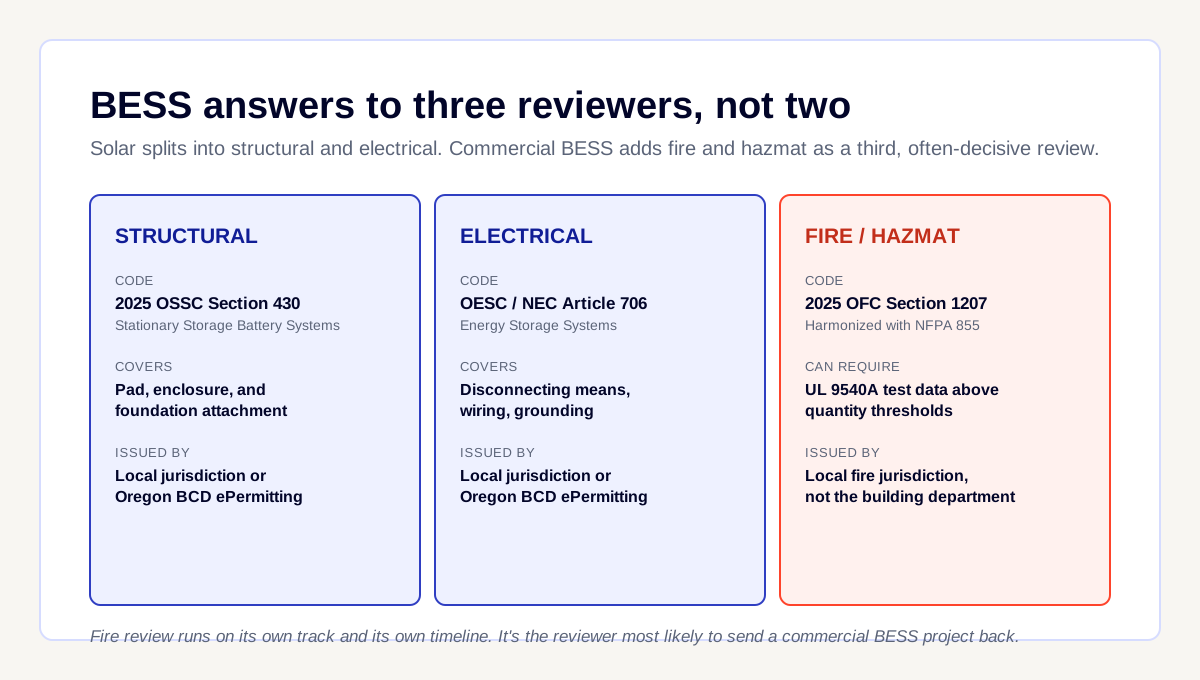
The structural permit is governed by the 2025 Oregon Structural Specialty Code (OSSC), Section 430, Stationary Storage Battery Systems, effective October 1, 2025 and mandatory for new commercial submittals since April 1, 2026, following the same phase-in pattern Oregon used for its solar structural code update. Section 430 covers the pad or foundation, enclosure attachment, and, depending on installation type, fire-extinguishing and detection system requirements tied to the specific battery chemistry and room configuration. Unlike solar’s prescriptive-versus-non-prescriptive split, there isn’t a simplified fast path here: commercial BESS structural review is a full submittal.
The electrical permit falls under the 2023 Oregon Electrical Specialty Code (OESC), which adopts the 2023 edition of NFPA 70, the National Electrical Code. NEC Article 706, Energy Storage Systems, governs installation for any system with a capacity greater than 3.6 MJ (roughly 1 kWh), essentially every commercial BESS project. Article 706 sets disconnecting means requirements so the system can be isolated from the grid, other power sources, and the building’s own circuits, along with wiring methods, overcurrent protection, and grounding and bonding. It’s a separate article from NEC 690, the one that governs PV, so a project pairing solar with storage needs both articles addressed on the plan set, not one covering the other.
Fire and hazardous materials review is where BESS diverges hardest from solar. The 2025 Oregon Fire Code, based on the 2024 International Fire Code (IFC) and adopted effective October 1, 2025, addresses electrical energy storage systems in Chapter 12, Section 1207, and the state fire code subcommittee adopted that section without changes. Installations exceeding specific quantity thresholds, roughly 20 kWh for lithium-ion battery systems, need an operational permit and full compliance with Section 1207, which is largely harmonized with NFPA 855, the national installation standard for stationary energy storage systems. Almost every commercial-scale lithium-ion BESS project clears that threshold before the container is even delivered to site.
Separation and spacing requirements follow from there. The default clearance from a BESS installation to lot lines, buildings, and other exposures is 10 feet, and spacing between separate battery groups is 3 feet, unless the manufacturer’s UL 9540A large-scale fire test data demonstrates that a fire in one unit won’t propagate to the next. That’s the mechanic worth understanding early: UL 9540A isn’t a listing requirement like UL 9540 (which certifies the system and its components), it’s a fire propagation test, and a local fire jurisdiction will often want to see the report, confirm it covers your specific installation type and configuration, and check that your design’s separation distances actually match what the test demonstrated. Projects that show up to fire review without that data, or with data that doesn’t match the installed configuration, get sent back regardless of how clean the structural and electrical submittals are.
Contractor licensing runs through the same two-board structure as solar: Construction Contractors Board (CCB) registration with a commercial endorsement at the company level, and a BCD electrical trade license at the individual level. Oregon’s Limited Renewable Energy Technician (LRT) license is scoped specifically to solar PV installations up to 50 kW AC; it isn’t a BESS credential. Standalone battery storage installation work generally needs a full Electrical Journeyman license unless it’s a strictly limited-energy scope. Confirm license scope against your project before staffing it, the same way you would on a solar submittal, since reviewers check license class against the actual work described in the application.
Active Jurisdictions in Oregon
Oregon has 36 counties and 241 incorporated cities. Most fall under the state BCD and OSFM baseline. These are the jurisdictions with the most commercial BESS permit activity:
| Jurisdiction | Authority | Notes |
|---|---|---|
| Portland | Portland Permitting & Development (structural/electrical); Portland Fire & Rescue (fire/hazmat) | Runs its own structural and electrical permitting on top of the state baseline, submitted through Development Hub PDX. Fire and hazmat review is a separate track through Portland Fire & Rescue. PGE territory for interconnection. |
| Eugene | Eugene Building & Permit Services (structural/electrical); Eugene-Springfield Fire (fire/hazmat) | Follows state OSSC/OESC and OFC baseline. EWEB (Eugene Water & Electric Board) serves this area, a municipal utility with its own interconnection process outside the PUC’s OAR 860 rules. |
| Salem | Salem Community Development (structural/electrical); Salem Fire Department (fire/hazmat) | Follows state baseline. Mixed utility territory; PGE and Pacific Power both serve parts of the area. Confirm utility before design. |
| Bend | Bend Building Safety (structural/electrical); Bend Fire & Rescue (fire/hazmat) | Follows state baseline. Pacific Power territory. Active commercial and utility-scale storage development pipeline in Central Oregon. |
| Gresham | Gresham Development Services (structural/electrical); Gresham Fire (fire/hazmat) | Follows state baseline. PGE territory. |
| Smaller jurisdictions (statewide) | Oregon BCD (structural/electrical); local fire jurisdiction or OSFM (fire/hazmat) | For cities and counties without their own building department, BCD administers structural and electrical permits directly through ePermitting. Fire and hazmat review still runs through the local fire jurisdiction. |
Don’t see your jurisdiction? Contact us at hello@rhonda.build if you need requirements for a specific Oregon jurisdiction.
Relevant Code References
Oregon Structural Specialty Code (OSSC), 2025 Edition, Section 430
Governs structural and installation requirements for stationary storage battery systems: pad and foundation attachment, enclosure requirements, and, depending on configuration, fire-extinguishing and detection system provisions. Effective October 1, 2025, mandatory for new commercial submittals since April 1, 2026.
Oregon Fire Code (OFC), 2025 Edition, based on the 2024 IFC, Chapter 12, Section 1207
Governs electrical energy storage systems from a fire and life-safety standpoint: operational permit thresholds by battery chemistry, separation and spacing requirements, and fire detection and suppression provisions. Largely harmonized with NFPA 855. Effective October 1, 2025.
NFPA 855, Standard for the Installation of Stationary Energy Storage Systems
The national installation standard that the 2024 IFC, and by extension the 2025 Oregon Fire Code, is harmonized with. Sets minimum separation distances, fire protection, and operational requirements for BESS installations by chemistry and application.
Oregon Electrical Specialty Code (OESC), 2023 Edition, adopting NFPA 70
Adopts the 2023 National Electrical Code. NEC Article 706, Energy Storage Systems, governs installation for any system over roughly 1 kWh: disconnecting means, wiring methods, overcurrent protection, and grounding and bonding.
UL 9540, Standard for Energy Storage Systems and Equipment
The listing standard for the BESS unit itself. A fire jurisdiction will check that the specific equipment on the plan set carries current UL 9540 listing.
UL 9540A, Test Method for Evaluating Thermal Runaway Fire Propagation in Battery Energy Storage Systems
A large-scale fire test, not a certification, used to demonstrate whether a thermal runaway event in one battery unit will propagate to adjacent units. Fire jurisdictions use UL 9540A data to evaluate reduced separation distances and to confirm a design’s spacing assumptions are actually supported by test evidence.
OAR 860-082, Small Generator Interconnection Rules
The Oregon PUC rule governing interconnection of generating facilities up to 10 MW to PGE, Pacific Power, or Idaho Power’s system. Defines a small generator facility by nameplate generating capacity, which doesn’t map cleanly onto standalone storage. Amended by Order No. 24-068 (Docket AR 659, effective April 2024) to explicitly authorize energy storage and export-limiting distributed energy resource configurations.
Oregon Construction Contractors Board (CCB) and BCD Trade Licenses
BESS installation requires CCB registration with a commercial endorsement at the company level and a BCD electrical trade license at the individual level. The solar-specific LRT license doesn’t extend to standalone battery storage scope.
Common Permit Corrections and Rejections for Commercial BESS Projects in Oregon
Commercial BESS permitting in Oregon touches the local jurisdiction’s building department, the local fire jurisdiction, and the serving utility, each running its own review on its own timeline. The corrections that show up most often fall into three categories.
Fire & Life Safety
Missing or mismatched UL 9540A test data
Reduced separation distances between battery groups depend on UL 9540A large-scale fire test data that actually matches the installed configuration, chemistry, enclosure type, and suppression system. Submittals that reference generic or outdated test reports, or that show separation distances tighter than the default 10-foot clearance without matching test evidence, get sent back by fire review even after the structural and electrical permits are clean.
Missing operational permit application
Lithium-ion BESS installations above roughly 20 kWh need an operational permit under OFC Section 1207, separate from the construction permits. Projects that treat fire review as an inspection step tacked onto the building permit, rather than its own application, lose time they didn’t budget for.
Separation and spacing violations
Section 1207’s default clearances, 10 feet to lot lines, buildings, and other exposures, 3 feet between battery groups absent qualifying test data, aren’t negotiable at the plan review stage. Site plans that don’t show these dimensions explicitly, or that place the BESS enclosure too close to a property line or another structure, are a repeat correction.
Electrical
Disconnecting means not clearly documented
NEC Article 706 requires the system to be isolable from the grid, other power sources, and the building’s own circuits. Plans that don’t clearly label and locate the system disconnect, or that leave ambiguity about isolation from a paired solar array, get flagged. This is the BESS equivalent of the rapid shutdown documentation problem that dominates solar plan review, just under a different NEC article.
Article 706 addressed as an afterthought on solar-plus-storage projects
Projects pairing PV with storage sometimes submit plans that address NEC 690 thoroughly and treat Article 706 as incidental. The two articles are reviewed separately and both need complete documentation, disconnects, wiring methods, and grounding specific to the storage system, not just the PV array.
Wrong license scope on the application
An LRT-licensed crew, valid for solar PV up to 50 kW AC, listed on a project that includes standalone battery storage installation is a common intake-stage rejection. The license scope has to match the actual work on the application.
Utility Coordination
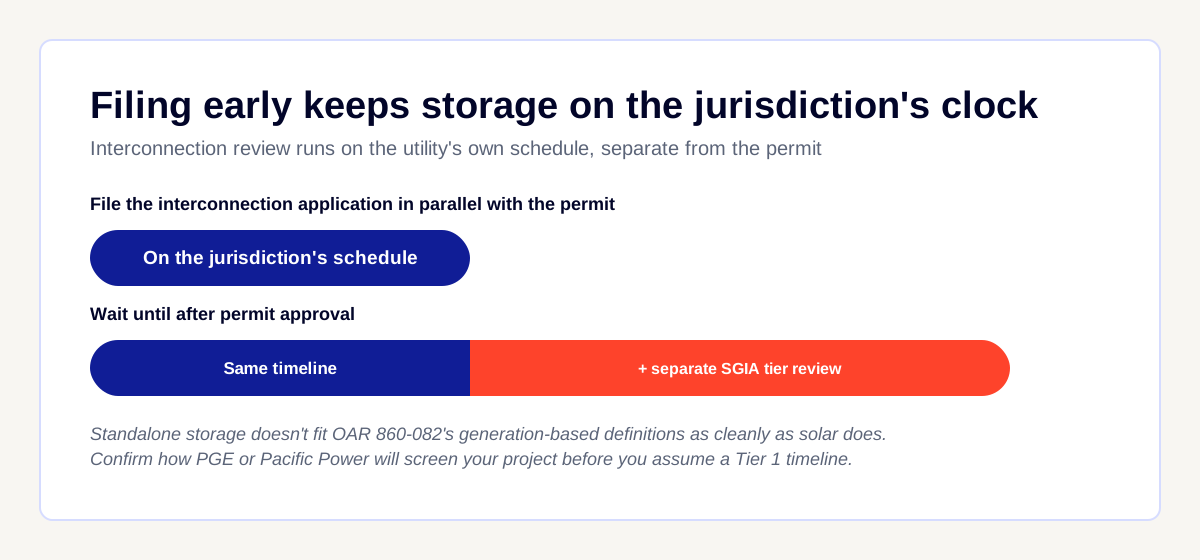
Starting interconnection after permit approval
PGE and Pacific Power run interconnection review on their own schedule, separate from the jurisdiction’s permit process. Filing in parallel with the permit is the biggest schedule lever available, same as it is for solar.
Assuming storage fits the same interconnection tier as solar
OAR 860-082 defines a small generator facility by nameplate generating capacity, language written for generation, not storage. Oregon’s PUC amended the rule in 2024 to explicitly authorize energy storage and export-limiting configurations, but standalone storage still doesn’t map onto the rule’s Tier 1 through Tier 4 structure as cleanly as a straightforward solar array does. Confirm with PGE or Pacific Power how they’ll screen your specific configuration before assuming a Tier 1 timeline.
Pairing with solar without separating the two interconnection questions
Solar-plus-storage projects sometimes assume one interconnection application covers both. The generating and storage components can trigger different review paths depending on how the system is configured to charge and discharge relative to the grid. Confirm the interconnection structure for the combined system before finalizing electrical design.
EWEB and municipal utility territory treated the same as PGE or Pacific Power
Eugene Water & Electric Board is a municipal utility outside the PUC’s OAR 860 framework entirely, with its own interconnection process. Projects in Eugene that apply PGE or Pacific Power assumptions to utility coordination will hit gaps.
Permitting shouldn’t be the bottleneck on your next storage site.
Rhonda makes permitting for commercial solar, battery storage, and EV charging infrastructure predictable. Pre-check your plan set against Oregon’s state code and the specific local amendments for your jurisdiction before you submit, so corrections don’t cost you weeks. See how Rhonda can help.
← Back to the State and City Requirement Guide Library
Footnotes
- 2025 Oregon Structural Specialty Code (OSSC), Section 430, Stationary Storage Battery Systems (Oregon Building Codes Division, oregon.gov/bcd)
- 2025 Oregon Fire Code (OFC), based on the 2024 International Fire Code, Chapter 12, Section 1207, Electrical Energy Storage Systems (Oregon State Fire Marshal, oregon.gov/osfm)
- 2025 Oregon Fire Code Executive Summary of Amendments (Oregon State Fire Marshal, oregon.gov/osfm)
- 2024 International Fire Code, Table 1207.1.3, Maximum Allowable Quantities of Electrical Energy Storage Systems (International Code Council)
- NFPA 855, Standard for the Installation of Stationary Energy Storage Systems, 2023 edition (National Fire Protection Association)
- Oregon Electrical Specialty Code (OESC), 2023 Edition, adopting NFPA 70 National Electrical Code (Oregon Building Codes Division)
- NEC Article 706, Energy Storage Systems (NFPA 70)
- UL 9540, Standard for Energy Storage Systems and Equipment (UL Solutions)
- UL 9540A, Test Method for Evaluating Thermal Runaway Fire Propagation in Battery Energy Storage Systems (UL Solutions)
- OAR 860-082, Small Generator Interconnection Rules (Oregon Public Utility Commission, oregon.public.law)
- Oregon PUC Order No. 24-068, Docket AR 659, amendments to Division 82 Small Generator Interconnection Rules authorizing energy storage and export-limiting DER configurations (Oregon Public Utility Commission, effective April 2024)
- Oregon Construction Contractors Board (CCB), commercial contractor licensing and endorsements (oregon.gov/ccb)
- Limited Renewable Energy Technician (LRT) license scope, Oregon license directory (apps.oregon.gov/SOS/LicenseDirectory)
- Portland General Electric, battery storage procurement and interconnection resources (portlandgeneral.com)