Battery Energy Storage (BESS) Permit Requirements in Nevada
Nevada layers a reviewer onto commercial battery storage that solar and EV charging never see: the fire department. Clark County's fire code incorporates NFPA 855 and can require a standalone hazmat permit and UL 9540A test data well before a project reaches NV Energy's interconnection queue. Here's how the building, electrical, and fire tracks actually work.

Do you need a permit to install battery energy storage in Nevada?
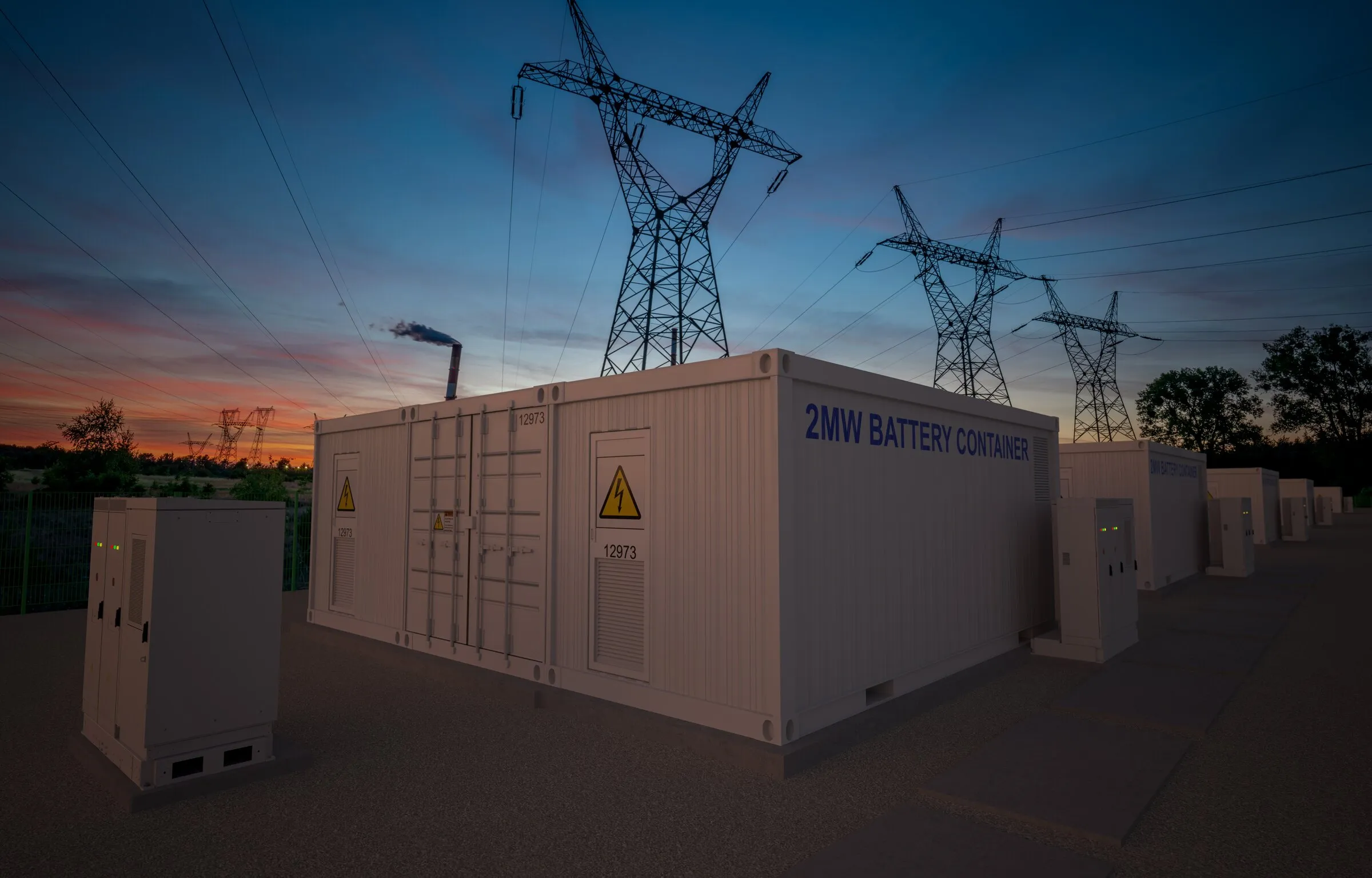
Yes. Nevada requires a building permit for the pad, foundation, and enclosure; an electrical permit for the battery management system, inverters, and interconnection equipment; and, once a project crosses a specific lithium-ion threshold, a separate fire department or hazmat permit that neither solar nor EV charging projects have to deal with. There’s no commercial-scale exemption for any of the three.
Nevada’s solar permitting guide found a state where the fire authority mostly shows up as roof-access geometry and ground-mount brush clearance, one input the building department weighs alongside everything else. Commercial battery energy storage (BESS) flips that ordering. The fire code, not the building code, is often what determines whether a project needs a standalone hazmat permit, a specific enclosure spacing plan, or full-scale UL 9540A test data before anything else on the submittal can move forward.
How BESS Permitting Works in Nevada
The jurisdictional skeleton is the same one our solar and EV charging guides found: local jurisdictions, not a single state agency, issue the permits and run plan review, while electrical contractor licensing runs statewide through the Nevada State Contractors Board (NSCB). Clark County has adopted the 2024 International Building Code, effective January 11, 2026, alongside the 2023 National Electrical Code (NFPA 70), the same code stack the county uses for solar. What’s different for BESS is the fire code layer sitting on top.
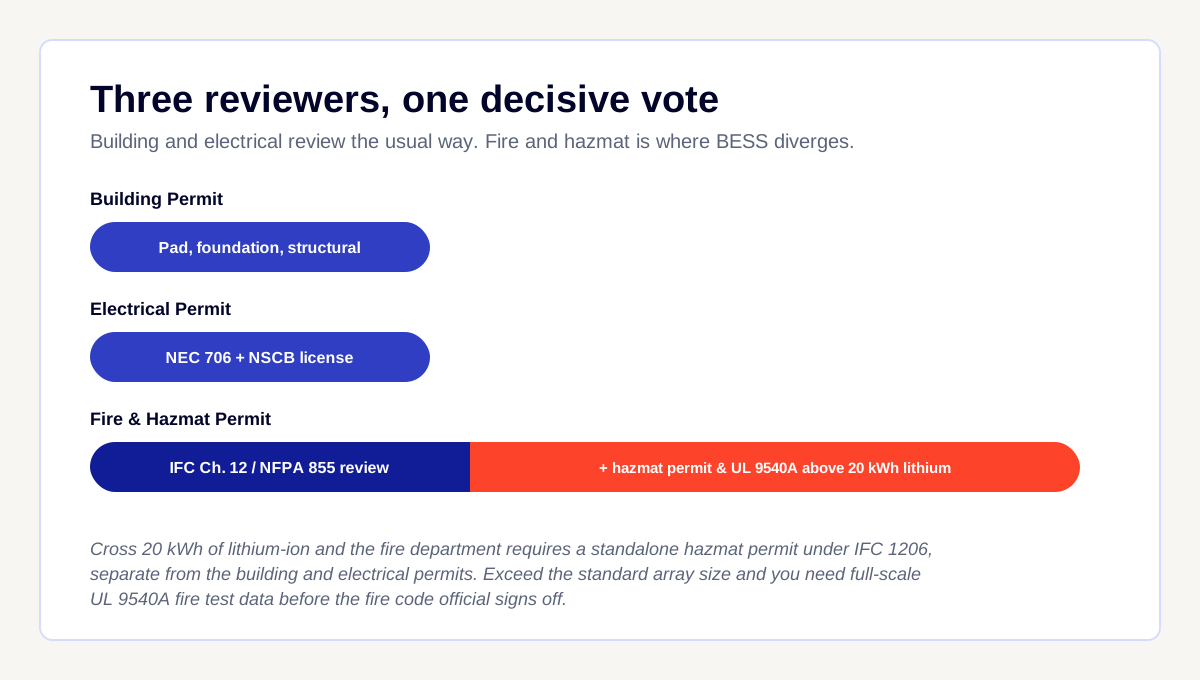
The fire and hazmat permit is the piece that doesn’t have a real analog in solar or EV charging review. Nevada’s fire code, built on the International Fire Code (IFC) Chapter 12, incorporates NFPA 855, the national standard for stationary energy storage system installation, by reference. Under the fire code’s permit requirements, a stationary storage battery system needs its own permit application once it crosses a chemistry-specific quantity threshold, roughly 20 kWh for lithium-ion, flow, and sodium batteries, and higher for lead-acid and nickel-cadmium. That application is separate from the building and electrical permits: it needs a location and layout diagram, fire-resistance-rated assembly details, the quantities and types of batteries installed, manufacturer specifications, energy management system documentation, signage, and the fire-extinguishing, smoke detection, and ventilation systems tied to the specific chemistry. Almost every commercial BESS project clears the threshold that triggers this permit.
Sizing and spacing matter as much as chemistry. Prepackaged and preengineered stationary storage battery systems have to carry a UL 9540 listing (lead-acid systems are exempt). Indoor arrays cap at 50 kWh each, with 3 feet of spacing between arrays and from walls. Outdoor installations, the more common configuration for utility-scale and commercial ground-mount storage, need a minimum 5-foot separation from lot lines, public ways, buildings, and combustible or hazardous materials, plus 10 feet from any means of egress. Most containerized, utility-scale systems exceed those prescriptive limits, and that doesn’t automatically fail the project: the fire code official can approve a larger configuration or an alternative suppression approach based on full-scale UL 9540A large-scale fire test data and, often, a failure mode and effects analysis. That test data has to be lined up before the fire permit clears, not requested after a rejection.
The electrical permit runs under NEC Article 706, Energy Storage Systems, adopted in Nevada through the same 2023 NFPA 70 edition used for solar. Article 706 applies to any permanently installed system storing more than 1 kWh at more than 50V AC or 60V DC, and sets the requirements for disconnecting means, overcurrent protection, circuit sizing, product listing, commissioning, ventilation, and emergency shutdown. Reviewers check these against the equipment listing and the site plan, the same way they check NEC 690 rapid shutdown compliance on a solar submittal.
The building permit covers the pad, foundation, and enclosure anchorage. Freestanding and containerized systems sit under the same IBC and ASCE 7-22 structural review Nevada uses for ground-mount solar racking: engineer-stamped calculations addressing wind and seismic loads for the specific site and foundation type.
Contractor licensing carries the same wrinkle solar has, with an extra edge case. NAC 624.200’s C-2g subclassification covers installation, alteration, and repair of PV cells, batteries, and inverters, but it’s built around photovoltaics and excludes any system scaled or intended solely for commercial production and sale of electricity. A battery system paired with an on-site solar array, sized to serve the host building’s own load, fits under C-2g. Standalone storage, or storage sized for grid services rather than host load, a common configuration at utility scale, typically doesn’t fit that subclassification and needs the broader C-2 electrical classification instead.
Active Jurisdictions in Nevada
These are the jurisdictions seeing the most commercial BESS permit activity, the same Las Vegas and Reno-area profile our solar and EV charging guides found, now with a fire authority that reviews independently of the building department on every one of them.
| Jurisdiction | Authority | Notes |
|---|---|---|
| Clark County (unincorporated) | Clark County Building Department + Clark County Fire Department | Fire code (2024 IFC, incorporating NFPA 855) reviewed separately from the building and electrical permits; hazmat permit required above the chemistry-specific quantity threshold. Covers unincorporated areas including the Strip and significant desert utility-scale storage activity in Eldorado Valley. |
| City of Las Vegas | Las Vegas Building and Safety + Las Vegas Fire & Rescue | Separate permitting authority from Clark County. Commercial BESS requires full plan review with the fire marshal signing off independently on the hazmat and life-safety package. |
| Henderson | Henderson Building Division + Henderson Fire Department | Separate from Clark County. Fees based on actual plan review and inspection cost recovery. Fire prevention reviews BESS submittals independently of the building permit. NV Energy territory. |
| North Las Vegas | North Las Vegas Building Safety + North Las Vegas Fire Department | Fast-growing logistics and industrial market driving demand for behind-the-meter storage paired with rooftop and carport solar. NV Energy territory. |
| Reno | Reno Building and Safety + Reno Fire Department | Washoe County seat. Adopted 2024 building codes July 2025. Fire Prevention reviews energy storage installations against fire code Chapter 12 separately from the building permit. |
| Sparks | Sparks Community Services, Building Safety + Sparks Fire Department | Separate from Reno and Washoe County. NV Energy territory. |
| Washoe County (unincorporated) | Washoe County Community Services + Washoe County Fire Protection District | Commercial and non-residential BESS routes to Building, Fire Prevention, and Planning together, the same three-reviewer path the county already runs for solar. Permits expire 18 months after issuance. |
Don’t see your jurisdiction? Nevada has 17 counties and 19 incorporated cities. Contact us at hello@rhonda.build if you need requirements for a specific Nevada jurisdiction.
Relevant Code References
International Fire Code, 2024 Edition, Chapter 12, Energy Storage Systems
References NFPA 855 directly and sets the hazmat permit threshold, indoor and outdoor spacing, and array-size limits for stationary battery systems: a separate fire/hazmat permit above roughly 20 kWh of lithium-ion (or the comparable threshold for other chemistries), a 50 kWh cap per indoor array with 3-foot spacing, and 5-foot outdoor separation from lot lines, buildings, and combustibles.
NFPA 855, Standard for the Installation of Stationary Energy Storage Systems
The national standard Nevada’s fire code incorporates by reference. Sets the technical basis for spacing, suppression, detection, and the conditions under which a fire code official can require full-scale UL 9540A test data instead of relying on the standard prescriptive limits.
UL 9540, Standard for Energy Storage Systems and Equipment
Product-level listing required for prepackaged and preengineered stationary storage battery systems, with lead-acid systems exempted. Reviewers check the listing before anything else on a battery storage submittal.
UL 9540A, Test Method for Evaluating Thermal Runaway Fire Propagation in Battery Energy Storage Systems
Large-scale fire test data a jurisdiction can require when a project exceeds standard array-size or spacing limits, or wants an alternative fire-extinguishing approach approved. Utility-scale, containerized systems routinely need this rather than staying under the prescriptive limits.
NEC Article 706, Energy Storage Systems (2023 NFPA 70)
Governs stationary ESS installation for systems storing more than 1 kWh at more than 50V AC or 60V DC: disconnecting means, overcurrent protection, circuit sizing, product listing, commissioning, ventilation, and emergency shutdown. Adopted in Nevada through the same NFPA 70 edition used for solar PV.
2024 International Building Code and ASCE 7-22
Sets the structural basis, wind, seismic, and foundation load, for battery enclosure pads and containerized system anchorage, the same structural stack Nevada uses for ground-mount solar racking.
Nevada Administrative Code 624.200, Classification C-2, Subclassification (g)
Covers installation, alteration, and repair of PV cells, batteries, and inverters, but the subclassification is built around photovoltaics and excludes systems scaled or intended solely for commercial production and sale of electricity. Standalone battery storage, or storage sized for grid services rather than host load, typically needs the broader C-2 electrical classification.
NV Energy Electric Rule No. 15, Generating Facility Interconnections
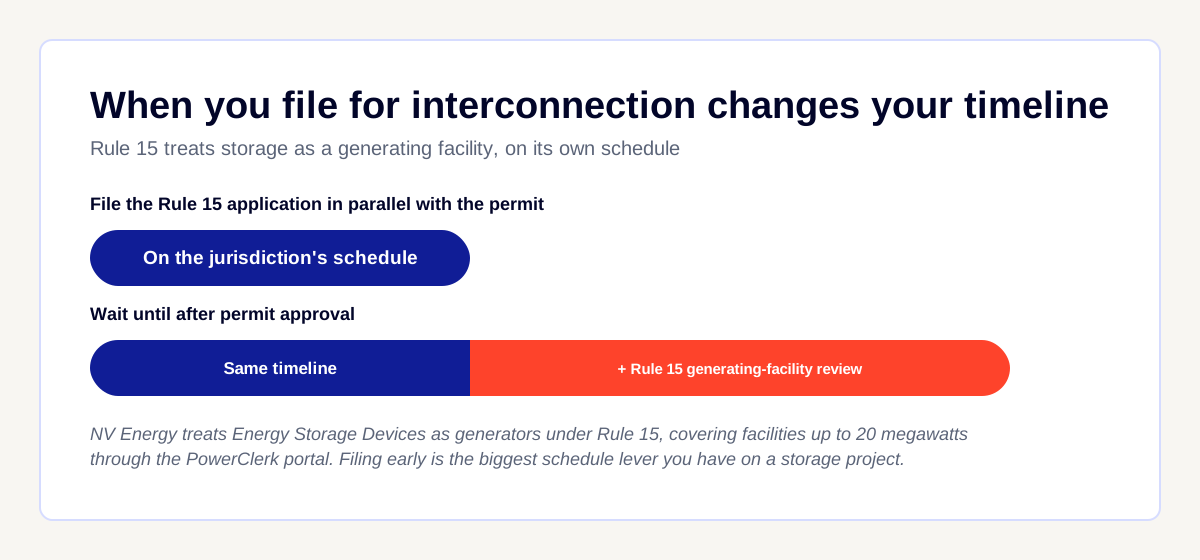
Treats Energy Storage Devices as generators for interconnection purposes. A 2018 Public Utilities Commission of Nevada-approved settlement added storage-specific provisions: sizing based on net generating capacity rather than worst-case output, no separate load interconnection application, and a defined notice window for required distribution upgrades. Covers on-site generation, including storage, up to 20 megawatts through NV Energy’s PowerClerk portal.
Common Permit Corrections and Rejections for Commercial BESS Projects in Nevada
Commercial battery storage in Nevada touches the local jurisdiction’s building department, its fire authority, and NV Energy, and the fire authority carries more weight here than it does for solar or EV charging. The corrections that show up most often fall into three categories.
Fire & Life Safety
Missing or incomplete hazmat permit application
Crossing the chemistry-specific quantity threshold, roughly 20 kWh for lithium-ion, requires a standalone fire department permit under the fire code’s energy storage provisions, separate from the building and electrical permits, with its own layout diagram, battery quantity and type schedule, energy management system documentation, and signage plan. Submittals that treat this as a line item on the building permit instead of a separate filing get sent back before review even starts.
No UL 9540A data for oversized arrays
Projects that exceed the prescriptive array-size or spacing limits, the norm at utility scale, need full-scale UL 9540A large-scale fire test data, and often a failure mode and effects analysis, before the fire code official will approve an alternative configuration. Submittals that cite only the base UL 9540 product listing without lining up 9540A test data once they exceed the standard limits stall in fire review.
Indoor or outdoor spacing math not shown on the site plan
The 50 kWh indoor array cap with 3-foot spacing, and the 5-foot outdoor separation from lot lines, buildings, and combustibles, needs to be shown explicitly, dimensioned against the actual container or enclosure layout, not assumed from the manufacturer’s generic spec sheet.
Suppression, detection, and ventilation package doesn’t match the chemistry
Fire review checks for a matched set: automatic suppression, smoke detection, and ventilation sized to the specific battery chemistry and enclosure type. A submittal that adapts a suppression narrative written for a different chemistry is a common correction.
Electrical
NEC 706 disconnect and emergency shutdown documentation incomplete
Similar to solar’s rapid shutdown correction, but for storage: the disconnecting means, overcurrent protection, and emergency shutdown functions required under NEC 706 need to be shown on the site plan and matched to the actual equipment listing, not just referenced generically.
Wrong NSCB classification for the project’s configuration
A C-2g license covers PV-paired battery installation sized to a host building’s load. A standalone storage project, or one sized for grid services rather than host load, typically needs the broader C-2 classification instead. Reviewers check the license against the project’s actual configuration, not just its size.
BMS and EMS specs shown once instead of twice
Battery management system and energy management system details, monitoring and balancing cell voltage, current, and temperature, are required in the fire permit application, but they need to appear on the electrical drawings too. Submittals that document them only in the fire package come back as incomplete on the electrical side.
Utility Coordination
Starting Rule 15 interconnection after permit approval
NV Energy’s interconnection review runs on its own schedule, separate from the jurisdiction’s building, electrical, and fire process, and it treats a battery storage system as a generating facility the same way it treats solar. Filing the Rule 15 application through PowerClerk in parallel with the permit is the biggest lever available to keep a storage project on schedule.
Confirming the wrong framework for how storage interconnects
NRS 704.771’s 1 megawatt net metering cap governs solar differently than it governs storage. Energy Storage Devices interconnect under Rule 15 as generating facilities, and how a paired solar-plus-storage system nets out, export-capable or non-export configuration, is a separate question the 2018 interconnection settlement’s interval-metering and control-mode provisions were built to sort out. Confirm the configuration and metering approach with NV Energy before finalizing project economics, not after.
Interconnection review corrections restarting the clock
NV Energy’s initial application review runs on a set business-day cycle, and if the application comes back with deficiencies, that cycle restarts from zero on resubmission. Incomplete PowerClerk submittals, missing the battery’s net generating capacity documentation or configuration details, are a common and avoidable source of added weeks on a storage project.
Permitting shouldn’t be the bottleneck on your next storage site.
Rhonda makes permitting for commercial solar, battery storage, and EV charging infrastructure predictable. Pre-check your plan set against Nevada’s state code and the specific local amendments for your jurisdiction before you submit, so corrections don’t cost you weeks. See how Rhonda can help.
← Back to the State and City Requirement Guide Library
Footnotes
- International Fire Code, 2024 Edition, Chapter 12, Energy Storage Systems, referencing NFPA 855-2023 (International Code Council)
- NFPA 855, Standard for the Installation of Stationary Energy Storage Systems (National Fire Protection Association)
- Clark County Fire Code, Chapter 12, Energy Systems, hazmat permit thresholds, spacing, and UL 9540/9540A requirements (UpCodes)
- UL 9540A Test Method for Battery Energy Storage Systems (BESS) (UL Solutions)
- Installation Codes and Requirements for Energy Storage Systems (ESS) (UL Solutions)
- NEC Article 706, Energy Storage Systems (NFPA 70, 2023 edition)
- Nevada Administrative Code 624.200, Classification C-2, Subclassification (g) Photovoltaics
- NRS 704.771, “Net metering system” defined
- NV Energy Electric Rule No. 15, Generating Facility Interconnections (South)
- Interstate Renewable Energy Council, “Gold Star to the Silver State for Landmark Energy Storage Regulatory Settlement” (April 19, 2018)
- Clark County Building Department
- Clark County Building & Fire Prevention, Adopted Codes
- City of Las Vegas Building and Safety
- Henderson Building Division
- Reno Building and Safety
- Washoe County, Building Safety Division