Battery Energy Storage (BESS) Permit Requirements in Colorado
Colorado layers a fire and hazardous-materials review on top of the building and electrical permits every commercial battery energy storage (BESS) project needs, and NFPA 855 and UL 9540A large-scale fire test data become the pacing item past a 20 kWh lithium-ion threshold. Here's how the process works, and where projects most often get stuck.

Do you need a permit to install battery energy storage in Colorado?
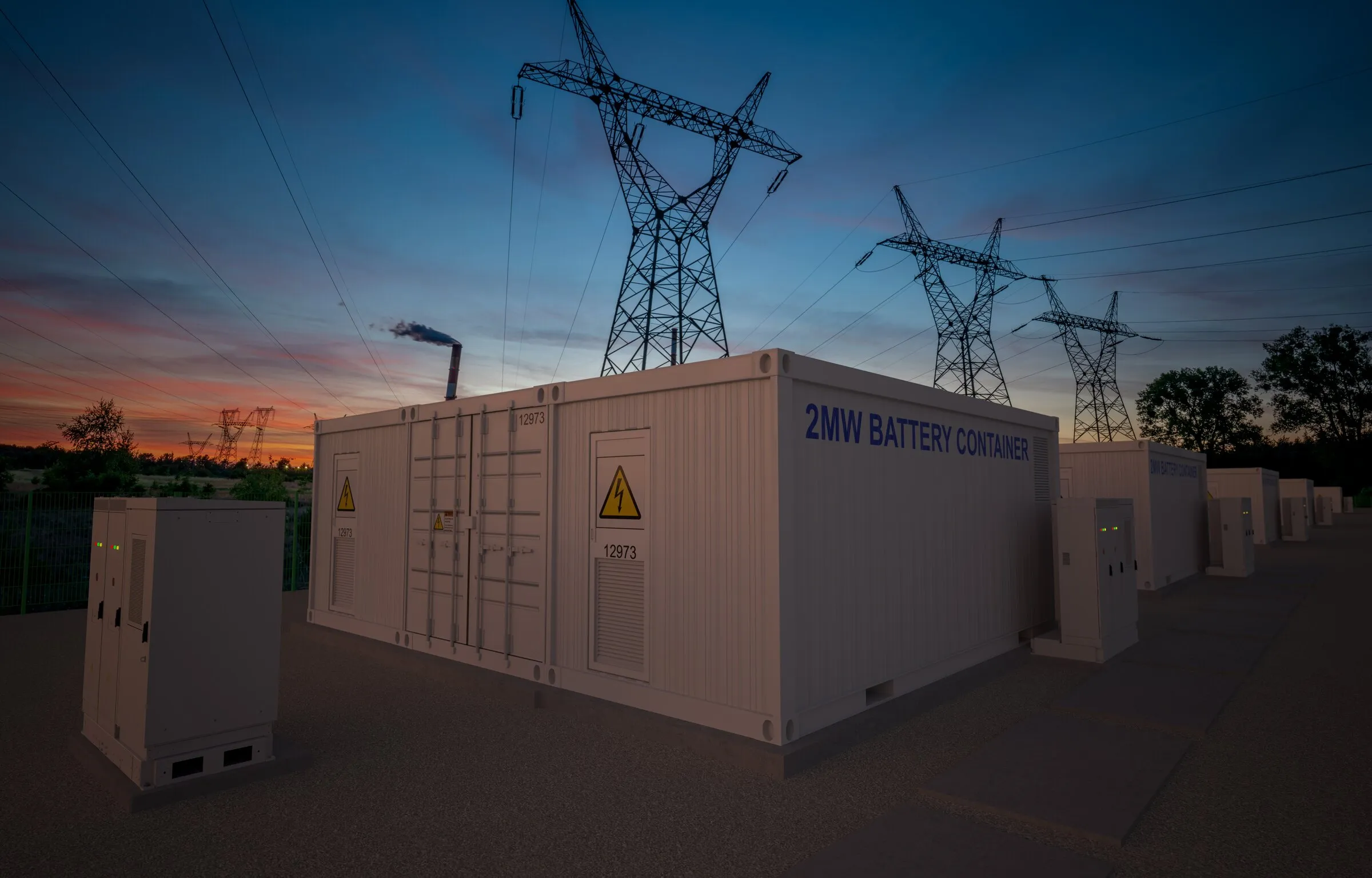
Yes, and it takes more than the two permits a solar project needs. A building permit covers the pad, foundation, and enclosure, issued by your county or municipality. An electrical permit covers the wiring, disconnects, and interconnection equipment under NEC Article 706, issued by either DORA (the Department of Regulatory Agencies) or an authorized local jurisdiction depending on your project address. Commercial battery energy storage (BESS) projects add a third reviewer that most solar and EV charging projects never trigger at scale: the fire authority, working from a fire code chapter built specifically for stationary battery installations. Cross a fairly low kWh threshold and that fire review can carry more weight, and more schedule risk, than the other two combined.
Colorado’s solar permitting already splits electrical permit authority between DORA and local jurisdictions, the same fragmentation BESS projects inherit. But solar’s fire code review is a roof access and setback check. BESS fire review is a different kind of problem: it’s about thermal runaway, off-gas venting, and whether a fire crew can safely approach a burning lithium-ion enclosure, and it can require third-party test data before the fire marshal will sign off at all.
How BESS Permitting Works in Colorado
BESS permitting in Colorado runs on three tracks that don’t automatically coordinate: the building permit, the electrical permit, and fire/hazmat review. Utility interconnection runs in parallel with all three, on the utility’s own schedule.
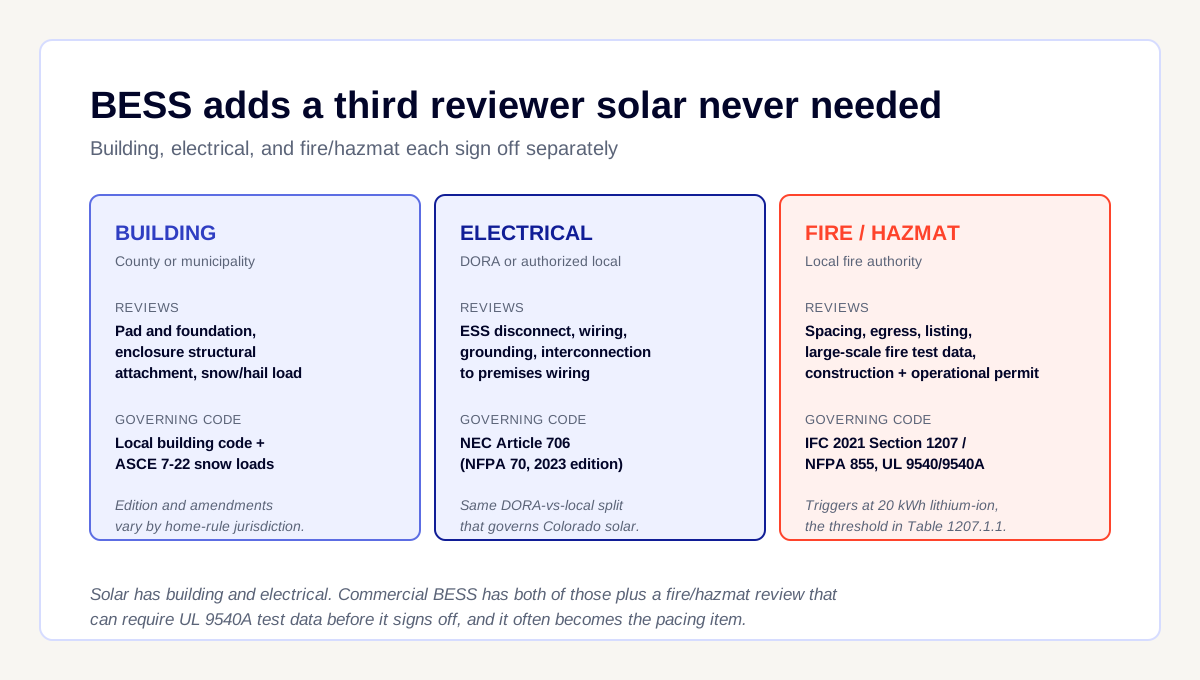
The building permit covers the concrete pad or foundation, structural attachment of the enclosure or container, and any site civil work, issued by the county or municipality. Colorado’s home-rule landscape means the adopted building code edition and local amendments vary by jurisdiction, the same fragmentation that shapes EV charger and solar permitting in the state. Snow and hail matter here in a way flatland states don’t deal with: enclosure roofs and pads need to handle the local ground snow load under ASCE 7-22, and Front Range jurisdictions, sitting in what’s sometimes called hail alley, increasingly ask for enclosure impact ratings on top of that, since a dented, compromised enclosure is a fire code problem as much as a structural one.
The electrical permit follows the same DORA-vs-local split that governs Colorado’s solar and EV charging installations. DORA issues and inspects electrical permits, including for BESS wiring, in state-inspected areas. Denver, Boulder, Aurora, Colorado Springs, and other jurisdictions granted local electrical inspection authority issue and inspect their own. The Colorado State Electrical Board confirmed NFPA 70: National Electrical Code 2023 as the enforced statewide standard in its January 2026 rule revision, which brings in NEC Article 706, the article governing energy storage system installation: disconnecting means, marking, and a requirement that the ESS disconnect sit within sight of, and no more than 10 feet from, the battery. Send the application to the wrong authority and, same as solar, you’re resubmitting from scratch rather than transferring the filing.
Fire and hazmat review is where BESS diverges most sharply from solar. Colorado’s DFPC Fire Code 2021, based on the 2021 IFC, sets its energy storage provisions at Chapter 12, Section 1207, and Table 1207.1.1 sets the trigger: a stationary lithium-ion battery system over 20 kWh (70 kWh for lead-acid, 3 kWh for capacitor-based systems) needs a construction permit and a separate annual operational permit from the fire authority. Almost every commercial-scale project blows past that number on day one. Section 1207.3.1 requires the system be listed to UL 9540, and where aggregate battery quantities exceed the code’s maximum allowable amounts per fire area, Section 1207.1.5 calls for large-scale fire test data under UL 9540A showing the system won’t propagate thermal runaway between units or through room separations. That data package, not the building or electrical drawings, is often what actually holds up a commercial BESS plan check. In wildland-urban interface jurisdictions, mountain resort communities especially, fire authorities also weigh defensible space and apparatus access into where enclosures can sit, a siting conversation that Front Range flatland projects skip entirely.
Contractor licensing doesn’t have a dedicated BESS class any more than it has one for solar. Installation work falls under electrical contractor licensing through the State Electrical Board, with a licensed master electrician overseeing the work. Colorado’s new photovoltaic installer registration under CRS 12-115-110 is specific to solar work; a stand-alone battery storage project with no PV component doesn’t fall under it, so don’t assume a NABCEP-registered solar installer on your team automatically covers a BESS-only scope.
Active Jurisdictions in Colorado
These are the jurisdictions seeing the most commercial BESS permit activity, with the same profile as our EV charging and solar guides, plus the fire authority each one routes hazmat review through:
| Jurisdiction | Authority | Notes |
|---|---|---|
| Denver | Denver Community Planning and Development, plus Denver Fire Department | Authorized local electrical inspection jurisdiction. Denver Fire Department handles the Section 1207 construction and operational permits separately from the building and electrical review. Xcel Energy territory for most of the city. |
| Boulder | Boulder Community Planning and Sustainability, plus Boulder Fire-Rescue | Authorized local electrical inspection jurisdiction. Local fire marshal review is thorough on enclosure spacing and UL 9540A documentation. Xcel Energy territory. |
| Aurora | Aurora Building Inspection, plus Aurora Fire Rescue | Authorized local electrical inspection jurisdiction. Xcel Energy territory. Part of the Denver metro commercial BESS market, including solar-plus-storage projects. |
| Colorado Springs | Colorado Springs Building and Development Review, plus Colorado Springs Fire Department | Authorized local electrical inspection jurisdiction. Colorado Springs Utilities (CSU) is the serving utility and runs its own interconnection process, separate from Xcel and PUC rules. |
| Fort Collins | Fort Collins Building Services, plus Poudre Fire Authority | Fort Collins Utilities serves the city with its own interconnection process. Poudre Fire Authority reviews BESS fire and hazmat permits independently of the building department. |
| Jefferson County (unincorporated) | Jefferson County Planning and Zoning, plus the local fire protection district | State-inspected area; DORA issues the electrical permit. Building permit through the county. Foothills terrain raises both snow load and wildfire-interface review for BESS siting. |
| Adams County (unincorporated) | Adams County Building, plus the local fire protection district | State-inspected area in most of the county. Heavy logistics and industrial corridor north of Denver, an active site for stand-alone commercial BESS. Xcel Energy territory. |
| El Paso County (unincorporated) | El Paso County Development Services, plus the local fire protection district | State-inspected area. CSU or Black Hills Energy depending on location; verify utility before design. Mountain portions of the county carry high ground snow loads and wildfire-interface fire review. |
Don’t see your jurisdiction? Colorado has 271 incorporated cities and towns, each with its own fire protection district or department layered on top of the building and electrical review. Contact us at hello@rhonda.build if you need requirements for a specific Colorado jurisdiction.
Relevant Code References
NEC Article 706, Energy Storage Systems (NEC 2023)
Colorado’s statewide electrical code baseline for BESS installation, confirmed as the enforced standard by the Colorado State Electrical Board in its January 2026 rule revision. Governs disconnecting means, marking, and location: the ESS disconnect must sit within sight of, and no more than 10 feet from, the battery, and be labeled “ENERGY STORAGE SYSTEM DISCONNECT.”
Colorado DFPC Fire Code 2021, based on IFC 2021, Chapter 12, Section 1207
Colorado’s statewide fire code baseline for stationary battery energy storage. Table 1207.1.1 sets construction and operational permit thresholds: 20 kWh for lithium-ion, 70 kWh for lead-acid, 3 kWh for capacitor-based systems. Section 1207.1.5 requires UL 9540A large-scale fire test data once aggregate battery quantities exceed the code’s maximum allowable amounts per fire area.
NFPA 855, Standard for the Installation of Stationary Energy Storage Systems
The source standard behind IFC Chapter 12’s energy storage provisions. Sets spacing, ventilation, detection, and suppression requirements that vary by battery chemistry and installation location, indoors, outdoors, or in a walk-in enclosure.
UL 9540, Energy Storage Systems and Equipment, and UL 9540A, Test Method for Evaluating Thermal Runaway Fire Propagation
UL 9540 covers system and unit listing, required under IFC Section 1207.3.1. UL 9540A is the large-scale fire test method NFPA 855 and the fire code point to when a fire marshal needs propagation data for a system above the code’s per-area quantity limits.
Colorado Revised Statutes Title 12, Article 115, Electrical Practice Act
The statutory basis for electrical contractor licensing in Colorado, administered by the State Electrical Board through DORA. Covers BESS electrical installation the same way it covers solar; the separate photovoltaic installer registration under § 12-115-110 is specific to solar work and doesn’t extend to stand-alone battery storage.
ASCE 7-22, Chapter 7, Snow Loads
Governs ground snow load calculations for BESS pads and enclosure roofs, incorporated by reference through the adopted building code. Mountain community jurisdictions frequently require PE-stamped, site-specific calculations rather than generic manufacturer specs.
Colorado PUC Interconnection Procedures and Standards, 4 CCR 723-3, Rules 3850-3859
Governs interconnection for Xcel Energy and other investor-owned utility territory. The Level 1 Simplified Interconnection Process (Rule 3854) covers a non-exporting energy storage system paired with a certified inverter-based resource up to 25 kW AC; most commercial BESS projects exceed that and move to Standard review. Rural electric cooperatives and municipal utilities aren’t directly bound by PUC jurisdiction but generally mirror the framework.
Common Permit Corrections and Rejections for Commercial BESS Projects in Colorado
Commercial BESS permitting in Colorado touches the local jurisdiction, the fire authority, and the serving utility, each with its own review and its own way to send a project back. The corrections that show up most often fall into three categories.
Fire & Life Safety
Missing UL 9540A large-scale fire test data
Once aggregate battery capacity in a fire area exceeds the maximum quantities in Table 1207.1.1, Section 1207.1.5 requires large-scale fire test data showing the system won’t propagate thermal runaway between units. Submittals that show only UL 9540 unit-level listing, without the propagation data the fire marshal needs to evaluate a system at commercial scale, are one of the most common reasons a BESS plan check stalls.
Enclosure spacing and egress violations
NFPA 855 sets separation distances between enclosures, and from exposures, property lines, and means of egress, that scale with battery chemistry and total capacity. Site plans that treat BESS units like generic mechanical equipment, spaced by convenience rather than by the code’s separation requirements, come back as a correction.
Missing construction or operational permit
IFC Section 1207.1.2 requires both a construction permit and a separate operational permit for a stationary battery installation above the code’s thresholds. Projects that treat the fire permit as a single filing, the assumption that works for a building or electrical permit, often miss the second one.
Electrical
ESS disconnect location or marking errors
NEC Article 706 requires the energy storage system disconnect to sit within sight of, and no more than 10 feet from, the battery, clearly marked to show open or closed position and labeled “ENERGY STORAGE SYSTEM DISCONNECT.” Site plans that don’t show the disconnect location, or that mislabel it, are a frequent correction.
Wrong electrical permit authority
Same split as solar: DORA in state-inspected areas, the local jurisdiction in Denver, Boulder, Aurora, Colorado Springs, and other authorized cities. Submitting to the wrong authority means starting over rather than transferring the application.
Assuming solar contractor credentials cover BESS
Colorado’s photovoltaic installer registration under CRS 12-115-110 is specific to solar work. A contractor listed on a stand-alone BESS application under that registration, without the underlying electrical contractor license and master electrician oversight the work actually requires, is a common intake-stage rejection.
Utility Coordination
Starting interconnection after permit approval
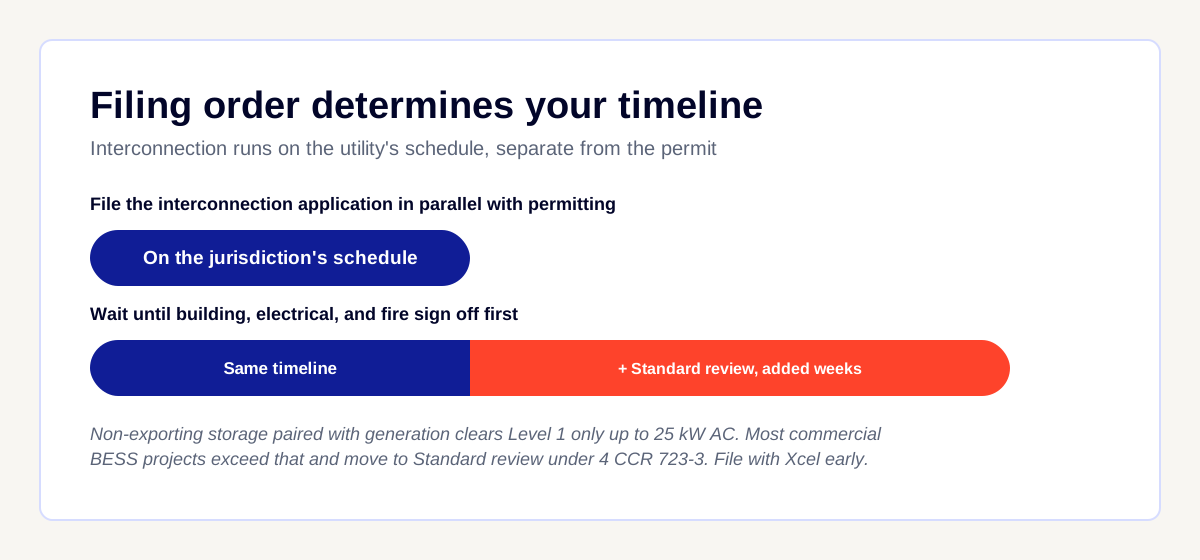
Interconnection runs on the utility’s own schedule under 4 CCR 723-3, separate from the jurisdiction’s building, electrical, and fire review. Filing with Xcel Energy or the serving utility in parallel with the permit is the biggest lever available to keep a commercial BESS project on schedule.
Project size pushing past Level 1 into Standard review
Non-exporting storage paired with a certified inverter-based resource clears Level 1 only up to 25 kW AC. Almost every commercial BESS project exceeds that and lands in Standard review instead, which brings a full engineering study and, if the initial screen finds grid impact, a supplemental distribution system impact study at the developer’s expense.
Applying Xcel assumptions to co-op or municipal utility territory
Xcel Energy serves the Front Range, but Colorado Springs Utilities, Fort Collins Utilities, Black Hills Energy, and Colorado’s rural electric cooperatives serve other parts of the state under their own interconnection rules, outside direct PUC jurisdiction. Projects that apply Xcel’s process and timeline assumptions to a Colorado Springs or Fort Collins project run into gaps at the utility coordination stage.
Permitting shouldn’t be the bottleneck on your next storage site.
Rhonda makes permitting for commercial solar, battery storage, and EV charging infrastructure predictable. Pre-check your plan set against Colorado’s state code and the specific local amendments for your jurisdiction before you submit, so corrections don’t cost you weeks. See how Rhonda can help.
← Back to the State and City Requirement Guide Library
Footnotes
- Colorado State Electrical Board / DORA, Electrical Licensing
- Colorado State Electrical Board January 2026 Rule Revisions, confirming NEC 2023 as enforced standard
- NEC Article 706, Energy Storage Systems (NFPA 70, 2023 edition)
- Colorado Revised Statutes Title 12, Article 115, Electrical Practice Act
- CRS § 12-115-110, License Requirements, Photovoltaic Installer Registration
- Division of Fire Prevention and Control, FLS Adopted Codes
- Colorado DFPC Fire Code 2021, based on IFC 2021, Chapter 12, Section 1207, Electrical Energy Storage Systems
- NFPA 855, Standard for the Installation of Stationary Energy Storage Systems (National Fire Protection Association)
- UL 9540A Test Method for Battery Energy Storage Systems (BESS)
- Understanding UL 9540A, NFPA 855 and Large-Scale Fire Testing for Battery Energy Storage Systems
- ASCE 7-22, Chapter 7, Snow Loads
- Colorado PUC Interconnection Procedures and Standards, 4 CCR 723-3, Rules 3850-3859
- 4 CCR 723-3-3854, Level 1 Process (25 kW Inverter Process)
- Xcel Energy Colorado, Battery Interconnection Submission Process
- Colorado Solar Authority, Snow Load, Hail, and Weather Resilience for Colorado Solar