Battery Energy Storage (BESS) Permit Requirements in California
California requires a building permit, an electrical permit, and, for nearly every commercial project, a separate fire department or hazardous materials review. Here's how BESS permitting works in California, and where projects most often get stuck.

Do you need a permit to install battery energy storage in California?
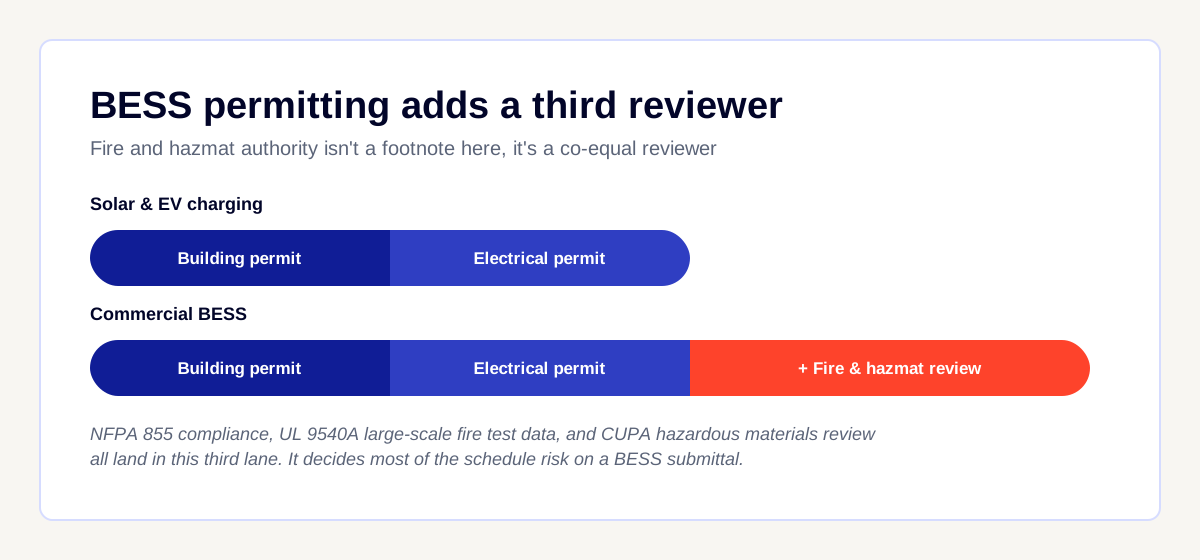
Yes. Commercial battery energy storage (BESS) projects in California need a building permit for the pad, foundation, and enclosure, and an electrical permit for the wiring, disconnects, and grid connection. Almost every commercial project also triggers a separate fire department or hazardous materials review that most solar and EV charging projects never touch in the same way.
That third reviewer is the real difference. Solar permitting in California puts fire code in the room mainly through roof access pathways and ridge setbacks, a geometry problem the fire authority checks against the site plan. BESS pulls fire code into the center of the review: NFPA 855 compliance, UL 9540A large-scale fire test data, and in many jurisdictions a distinct hazardous materials permit sit alongside the building and electrical review, not behind it. A commercial BESS project that treats fire review as a formality behind the building department is the project that stalls.
How BESS Permitting Works in California
As with solar and EV charging, the local jurisdiction is the point of contact for both the building and electrical permit. What’s different is the third authority almost every commercial BESS project has to satisfy before it gets approved.
The building permit covers the pad, foundation, and enclosure. California’s seismic design requirements under the California Building Code apply to anchorage and structural attachment the same way they apply to any other equipment pad, and the site plan needs to show separation distances between units and to property lines, since those numbers are what the fire authority checks against next.
The electrical permit is filed under the California Electrical Code (CEC), Title 24, Part 3, which adopts NEC Article 706, added to the National Electrical Code in 2017 specifically to govern energy storage system installation. Article 706 applies to any system over 1 kWh, disconnects, system ratings, and installation clearances all flow from here. On a combined solar-plus-storage project, reviewers check that the Article 706 labeling on the one-line diagram is consistent with the Article 690 and 705 labeling for the PV side. A mismatch between the two is a common source of correction.
The fire and hazmat review is where BESS diverges from solar and EV charging. California Fire Code (CFC), Title 24, Part 9, Section 1207 sets a permit threshold of 20 kWh nameplate capacity for lithium-ion systems and 70 kWh for lead-acid, low enough that essentially every commercial-scale project blows past it. Above that threshold, a construction permit is required under CFC Section 105.6.5, and the application has to include layout diagrams, separation distances, fire detection and suppression details, signage, and commissioning and decommissioning plans. Individual battery units need at least 3 feet of separation from each other unless the design is backed by UL 9540A large-scale fire test data showing a tighter spacing is safe for that specific configuration. When a fire marshal reviews that data, they’re checking that the test covers the actual installation type, that the report is current, that the suppression system in the report matches what’s proposed, and that the separation distances in the design match what the test data supports.
Sitting on top of the spacing rules is NFPA 855, the Standard for the Installation of Stationary Energy Storage Systems. California’s Office of the State Fire Marshal adopted the 2023 edition into the state’s fire code framework, effective January 1, 2026. SB 283, the Clean Energy Safety Act of 2025, signed by Governor Newsom on October 6, 2025 in the aftermath of the Moss Landing battery fire, layers additional requirements on top: developers now have to coordinate with the local fire department both before submitting a project application and after installation is complete. Local jurisdictions have moved fast on their own amendments too. Escondido put an outright moratorium on new commercial BESS projects in place after a September 2024 fire at an SDG&E battery site forced evacuations, and only lifted it in July 2026 with new rules requiring a minimum 100-foot setback plus dedicated fire suppression and explosion control systems. Many jurisdictions also require a separate hazardous materials permit. Facilities storing hazardous materials, including certain lithium battery quantities, above regulatory thresholds have to file a Hazardous Materials Business Plan through the California Environmental Reporting System with their local Certified Unified Program Agency, and CUPA inspectors show up at least once every three years after that.
Contractor licensing has its own wrinkle. A C-10 Electrical Contractor license covers full-scope BESS installation, standalone or combined with solar. C-46 Solar contractors have more limited authority: under a February 2026 CSLB settlement, a C-46 license can install and maintain battery storage only up to 80 kWh, and only on a new system or a retrofit of a PV array that contractor originally installed. A C-46 contractor listed on a commercial-scale BESS submittal is a mismatch reviewers catch quickly.
Active Jurisdictions in California
These are the jurisdictions seeing the most commercial BESS permit activity, with the same profile as our solar and EV charging guides, but with fire and hazmat authority now doing real work in the review:
| Jurisdiction | Authority | Notes |
|---|---|---|
| Los Angeles (City) | LADBS (LA Dept. of Building and Safety) | LADBS handles building and electrical plan check. LAFD reviews fire and life safety and also serves as the local CUPA, issuing hazmat permits alongside the building permit. |
| Los Angeles County (unincorporated) | LA County Public Works Building and Safety | Separate authority from the City of LA. LA County Fire Department handles fire review; confirm which fire authority and utility serve the specific site before design. |
| San Francisco | SF DBI (Dept. of Building Inspection) | SFFD reviews ESS installations under local amendments layered on the state fire code baseline. Larger commercial projects should expect a distinct SFFD sign-off separate from the building permit. |
| San Diego (City) | San Diego Development Services Dept. (DSD) | San Diego Fire-Rescue reviews commercial BESS projects against CFC Chapter 12 and NFPA 855. Coordinate with fire review early; it runs on a separate track from the building permit. |
| San Diego County (unincorporated) | San Diego County Planning & Development | San Diego County Fire Protection District’s Interim Fire Protection Guidelines require a Hazard Mitigation Analysis for lithium-ion BESS facilities above 600 kWh, including a 100-foot setback from residential, educational, or institutional occupancies where the analysis calls for it. One of the most detailed BESS-specific fire review processes documented in the state. |
| San Jose | San Jose Planning, Building and Code Enforcement | Commercial-scale BESS projects go through traditional plan review. San Jose Fire Department reviews ESS installations separately from the building and electrical permit. |
| Sacramento (City) | Sacramento Community Development | SMUD, a municipal utility outside CPUC jurisdiction, handles interconnection instead of Rule 21. Sacramento Fire Department reviews BESS fire and hazmat requirements. |
| Oakland | Oakland Planning & Building Dept. | Oakland Fire Department reviews commercial BESS projects for fire and life safety. Served by PG&E for utility coordination on larger commercial projects. |
| Riverside / San Bernardino | Varies by city/county | Significant utility-scale BESS activity in the Inland Empire, often co-located with solar. SCE territory. Fire authority and local amendments vary by city and by fire protection district. |
Don’t see your jurisdiction? California has over 480 incorporated cities. Contact us at hello@rhonda.build if you need requirements for a jurisdiction not listed here.
Relevant Code References
California Fire Code (CFC), Title 24, Part 9, Chapter 12, Section 1207
Governs stationary energy storage system installation: the 20 kWh (lithium-ion) and 70 kWh (lead-acid) permit thresholds, construction permit requirements under Section 105.6.5, unit separation distances, and the UL 9540A pathway for reduced spacing.
NFPA 855-2023, Standard for the Installation of Stationary Energy Storage Systems
Adopted into California’s fire code framework by the Office of the State Fire Marshal, effective January 1, 2026. Sets detailed installation, spacing, and fire suppression requirements for stationary ESS beyond what the base CFC chapter covers.
California Electrical Code (CEC), Title 24, Part 3, Article 706
Added to the National Electrical Code in 2017 to govern energy storage system installation directly: disconnecting means, system ratings, and installation clearances for any system over 1 kWh. Coordinates with NEC Articles 690 and 705 on combined solar-plus-storage projects.
SB 283 (2025), Clean Energy Safety Act
Signed October 6, 2025, effective January 1, 2026. Requires BESS developers to coordinate with the local fire department both before submitting a project application and after installation is complete. Passed in the aftermath of the January 2025 Moss Landing battery fire.
UL 9540 and UL 9540A
UL 9540 is the product listing standard for the energy storage system as a unit. UL 9540A is a large-scale fire test method measuring thermal runaway propagation. Fire marshals use UL 9540A test data to approve unit separation distances tighter than the 3-foot code default, when the report matches the actual proposed configuration.
Hazardous Materials Business Plan Program (CalEPA / CUPA)
Facilities storing hazardous materials, including certain lithium battery quantities, above regulatory thresholds must file a Hazardous Materials Business Plan through the California Environmental Reporting System with their local Certified Unified Program Agency, and undergo CUPA inspection at least every three years.
CSLB License Classifications: C-10, C-46
A C-10 Electrical Contractor license covers full-scope BESS installation. A C-46 Solar Contractor license is limited to installing and maintaining battery storage up to 80 kWh, and only on a new system or retrofit of a PV array that contractor originally installed.
Electric Rule 21, Generating Facility Interconnections
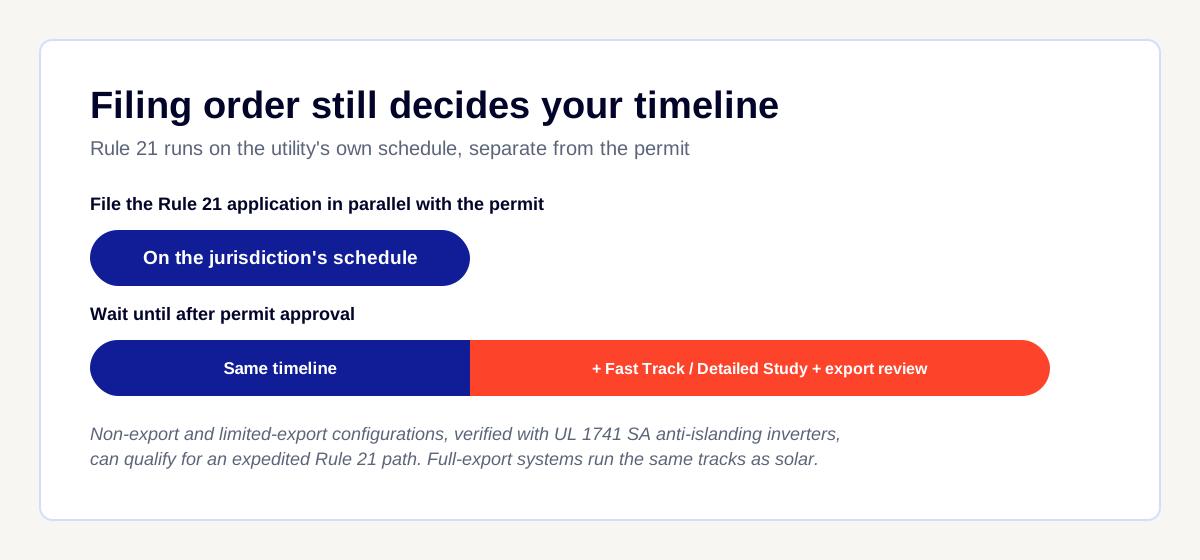
The CPUC-regulated interconnection process used for solar also applies to BESS. Non-export and limited-export battery storage facilities, verified with UL 1741 SA anti-islanding inverters, can qualify for an expedited review path; full-export configurations run the same Fast Track and Detailed Study tracks as solar.
Common Permit Corrections and Rejections for Commercial BESS Projects in California
Commercial BESS permitting in California touches the local jurisdiction, the fire or hazmat authority, and the serving utility, each with its own review and its own way to send a project back. The corrections that show up most often fall into three categories.
Fire & Life Safety
Incomplete CFC Section 1207 documentation
Since almost every commercial project exceeds the 20 kWh / 70 kWh threshold, the full Section 1207 documentation package applies by default: layout diagrams, separation distances, fire detection and suppression details, signage, and commissioning and decommissioning plans. Submittals missing any of these get sent back before fire review even starts.
UL 9540A test report doesn’t match the proposed installation
A test report that covers a different battery chemistry, enclosure configuration, or separation distance than what’s on the site plan doesn’t support the design. Fire marshals check the report’s installation type, edition currency, suppression system, and separation distances against the actual proposal, and a mismatch on any of those four items is a correction.
No separate fire department or hazmat permit filed
Many jurisdictions require an operational or hazmat permit distinct from the building and electrical permit, and in unincorporated San Diego County, a Hazard Mitigation Analysis above 600 kWh. Teams used to the solar or EV charging review process, where fire involvement is narrower, often miss that this is a separate submission with its own timeline.
Missing Hazardous Materials Business Plan
Projects that exceed the hazardous materials threshold and haven’t filed an HMBP through CERS with the local CUPA get flagged during fire and hazmat review, sometimes after the building and electrical permits have already cleared.
Electrical
NEC Article 706 disconnects or labeling missing from the one-line diagram
Reviewers check the one-line diagram for system disconnects, ratings, and clearances required under Article 706. On combined solar-plus-storage projects, an Article 706 label that doesn’t reconcile with the Article 690 or 705 labeling on the PV side is a common correction.
Contractor license doesn’t match project scope
A C-46 Solar contractor listed on a project above the 80 kWh threshold, or on a standalone BESS installation they didn’t originally install as PV, is a mismatch reviewers catch at intake. Full-scope BESS work needs a C-10 Electrical Contractor license.
Layout plan and electrical one-line don’t reconcile
Unit counts, spacing, and enclosure locations shown on the electrical one-line sometimes don’t match what’s on the site and fire layout plans. Since the fire authority is checking separation distances against the layout plan specifically, this discrepancy gets caught in cross-review.
Utility Coordination
Starting Rule 21 interconnection after permit approval
Interconnection runs on the utility’s own schedule, separate from the jurisdiction’s permit process, the same dynamic as solar. Filing the Rule 21 application in parallel with the permit is the biggest lever available to keep a BESS project on schedule.
Export configuration decided too late
Whether a project is non-export, limited-export, or full-export changes which Rule 21 review path it qualifies for and what inverter and anti-islanding configuration the utility expects to see. Projects that finalize this decision after filing often have to restart part of the interconnection review.
SMUD and LADWP territory: different rules
PG&E, SCE, and SDG&E are investor-owned utilities regulated by the CPUC under Rule 21. Sacramento Municipal Utility District (SMUD) and Los Angeles Department of Water and Power (LADWP) are municipal utilities with their own interconnection processes, outside CPUC jurisdiction. Projects in Sacramento or LADWP territory that apply Rule 21 assumptions to their interconnection planning will run into gaps.
Permitting shouldn’t be the bottleneck on your next storage site.
Rhonda makes permitting for commercial solar, battery storage, and EV charging infrastructure predictable. Pre-check your plan set against California’s state code and the specific local amendments for your jurisdiction before you submit, so corrections don’t cost you weeks. See how Rhonda can help.
← Back to the State and City Requirement Guide Library
Footnotes
- California Fire Code (CFC), Title 24 Part 9, Chapter 12, Section 1207, Table 1207.1.3 permit thresholds (up.codes / California Building Standards Commission)
- California Fire Code Section 1207, unit separation distances and the UL 9540A large-scale fire test pathway (up.codes)
- California Office of the State Fire Marshal adoption of NFPA 855-2023 into the California Fire Code, effective January 1, 2026 (referenced in SB 283 legislative analysis, trackbill.com)
- SB 283 (2025), Clean Energy Safety Act, signed October 6, 2025 (Office of Senator John Laird, sd17.senate.ca.gov)
- EPA, Moss Landing Vistra Battery Fire Response, January 16, 2025 (epa.gov)
- Hazardous Materials Business Plan Program, California Environmental Reporting System (CalEPA, calepa.ca.gov)
- CSLB, Battery Energy Storage System (BESS) FAQ, C-10 and C-46 license scope (cslb.ca.gov)
- San Diego County Fire Protection District, Interim Fire Protection Guidelines for BESS Facilities, May 15, 2025 (sandiegocounty.gov)
- City of Escondido battery storage safety ordinance, adopted July 29, 2026, ending the city’s BESS moratorium imposed after the September 5, 2024 SDG&E battery fire (KPBS Public Media, kpbs.org)
- UL 9540 and UL 9540A factsheet (California Solar & Storage Association, calssa.org)
- NEC Article 706, Energy Storage Systems, added 2017 (IAEI Magazine, iaeimagazine.org)
- California Energy Storage Permitting Guidebook (Center for Sustainable Energy, prepared for the California Energy Commission, efiling.energy.ca.gov)
- Electric Rule 21, Generating Facility Interconnections, non-export and limited-export battery storage provisions (CPUC, webtraining.cpuc.ca.gov)